The Jakarta Post
Please Update your browser
Your browser is out of date, and may not be compatible with our website. A list of the most popular web browsers can be found below.
Just click on the icons to get to the download page.


Popular Reads
Top Results
No results found. Please check your search term and try again
Can't find what you're looking for?
View all search results
Popular Reads
Top Results
No results found. Please check your search term and try again
Can't find what you're looking for?
View all search resultsAnalysis: A sugar excise too small to matter
Change text size
Gift Premium Articles
to Anyone
Share the best of The Jakarta Post with friends, family, or colleagues. As a subscriber, you can gift 3 to 5 articles each month that anyone can read—no subscription needed!
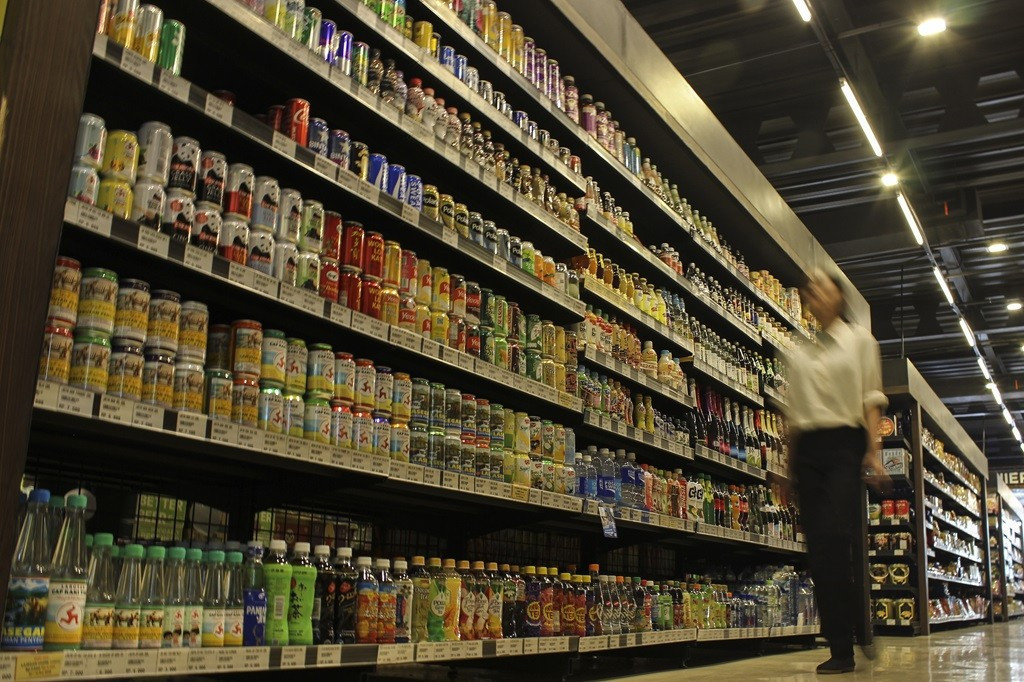 A customer passes by a rack of sweetened drinks in a retail supermarket in Jakarta on Dec. 14, 2023. A survey from the Indonesian Consumers Foundation (YLKI) revealed that 58 percent of 800 respondents support the plan to impose excise tax on sweetened beverages to control their consumption and prevent diabetes prevalence in children, which increased 70-fold in 2023 compared with 2010. (Antara/Cahya Sari)
A
tax on sugar-sweetened beverages (SSB) is planned from the second half of 2027, the government has said, after making similar promises almost every year since 2022. The levy is expected to raise Rp 1.7 trillion (US$95 million), while diabetes care alone cost the national health insurance an estimated Rp 12.6 trillion in 2024. At its planned scale, the proposed levy risks falling short as both a public health measure and a revenue-generating instrument.
Customs and Excise Director General Djaka Budi Utama told a budget briefing on Oct. 9 that the 2027 state budget would provide for the levy. The implementing regulations were still being discussed, Budi said, adding that he hoped to introduce the excise in the second half of next year.
Notably, the announcement came from ministerial officials and not Finance Minister Suahasil Nazara, who took office on Sept. 14 and has yet to state his position on the proposed SSB tax.
His predecessor Purbaya Yudhi Sadewa had taken a position directly opposing Budi’s, saying in August that the excise would not be implemented in 2027, was not included in revenue projections and that he would reconsider it once economic growth exceeded 6 percent.
The plan has been discussed since 2020, with revenue targets included in the state budget almost every year since 2022, although implementing regulations were never issued. The government targeted Rp 4.38 trillion in 2024, Rp 3.8 trillion in 2025 and Rp 7.6 trillion in 2026, but implementation was repeatedly postponed, most recently over concerns about consumer purchasing power.
The 2027 target represents a reduction of around 78 percent from this year's figure. The sharp cut raises a question: Is the government trying to change what people drink or simply fill another revenue line in the budget?

Officially, the objective is public health. The Finance Ministry has cited the health consequences of excessive sugar consumption and their impact on claims paid by BPJS Kesehatan, noting that 115 jurisdictions worldwide already impose similar levies.