The Jakarta Post
Please Update your browser
Your browser is out of date, and may not be compatible with our website. A list of the most popular web browsers can be found below.
Just click on the icons to get to the download page.


Popular Reads
Top Results
No results found. Please check your search term and try again
Can't find what you're looking for?
View all search results
Popular Reads
Top Results
No results found. Please check your search term and try again
Can't find what you're looking for?
View all search resultsDissent in the halls of power: The intellectual’s dilemma
The ultimate test of an intellectual is not challenging power from the outside, but refusing to become its mouthpiece once invited inside.
Change text size
Gift Premium Articles
to Anyone
Share the best of The Jakarta Post with friends, family, or colleagues. As a subscriber, you can gift 3 to 5 articles each month that anyone can read—no subscription needed!
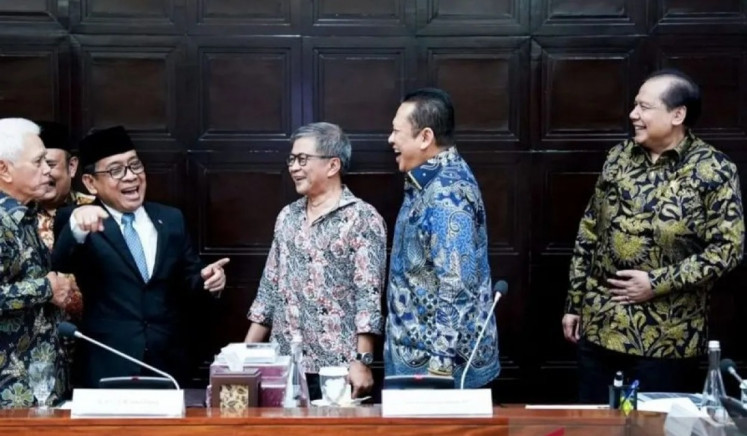
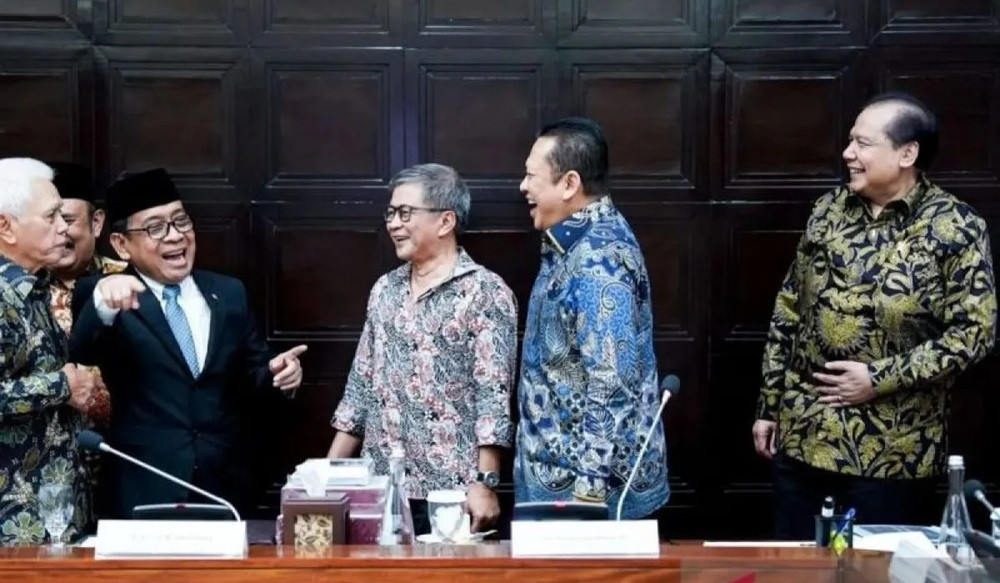 Big tent: Chairman of the Presidential Advisory Council (Wantimpres) Pratikno (second left) shares a light moment with fellow council members including former government critic Rocky Gerung (third left) on Oct. 21, 2026 on the sidelines of their meeting. (Antara/Personal collection)
T
he real test of an intellectual is not whether one can criticize power from outside the establishment, but whether one can preserve independence after being invited inside. Access to power may create opportunities to influence policy; it also exerts subtle pressure to conform.
Rocky Gerung’s transition from an outspoken critic during the administration of President Joko “Jokowi” Widodo to a presidential adviser under President Prabowo Subianto brings this dilemma into sharp relief: Can an intellectual maintain critical candor when the subject of scrutiny becomes the person one advises?
Indonesia’s democracy remains in urgent need of independent scrutiny. Political competition does not automatically produce meaningful checks and balances, particularly when parties that contest elections fiercely subsequently coalesce to form broad government coalitions. In such an environment, public intellectuals, investigative journalists and civil society advocates serve an indispensable function: interrogating official claims, evaluating policy substance and exposing discrepancies between political rhetoric and tangible outcomes.
During Jokowi’s presidency, an understated public persona and the aura of a political outsider earned him broad support, notably among a middle class and intelligentsia weary of entrenched elites. Yet widespread popularity inevitably complicates accountability.
In a 2018 Asia Times analysis, John McBeth framed Jokowi’s governance through the metaphor of “smoke and mirrors,” observing that compelling political imagery and signature infrastructure projects often diverted attention from fundamental policy shortcomings. The central issue was not that his administration's achievements were entirely illusory, but that political goodwill should never immunize governance from rigorous examination.
Rocky emerged as one of the most prominent critics of Jokowi’s political conduct. His acerbic commentary challenged official narratives and galvanized public debate. At its best, this fulfills a vital democratic role: intellectuals should not merely recite theory in the abstract but deploy it to interrogate contemporary power dynamics.

Nonetheless, rhetorical force is not synonymous with intellectual autonomy. The value of an intellectual’s contribution must ultimately be weighed by the empirical evidence provided, the consistency of the evaluative criteria applied, and the capacity to confront complexity.