The Jakarta Post
Please Update your browser
Your browser is out of date, and may not be compatible with our website. A list of the most popular web browsers can be found below.
Just click on the icons to get to the download page.


Popular Reads
Top Results
No results found. Please check your search term and try again
Can't find what you're looking for?
View all search results
Popular Reads
Top Results
No results found. Please check your search term and try again
Can't find what you're looking for?
View all search resultsHambali: Southeast Asia’s last Guantanamo detainee
More than two decades after his capture, Southeast Asia’s most notorious jihadist remains trapped in legal purgatory at Guantanamo Bay, a relic of a forgotten war that neither Washington nor Jakarta has the political will or legal means to resolve.
Change text size
Gift Premium Articles
to Anyone
Share the best of The Jakarta Post with friends, family, or colleagues. As a subscriber, you can gift 3 to 5 articles each month that anyone can read—no subscription needed!
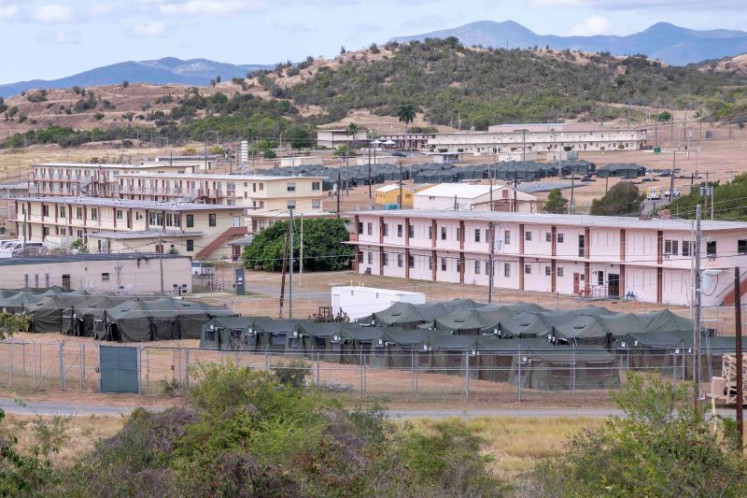
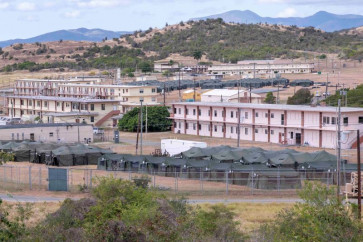
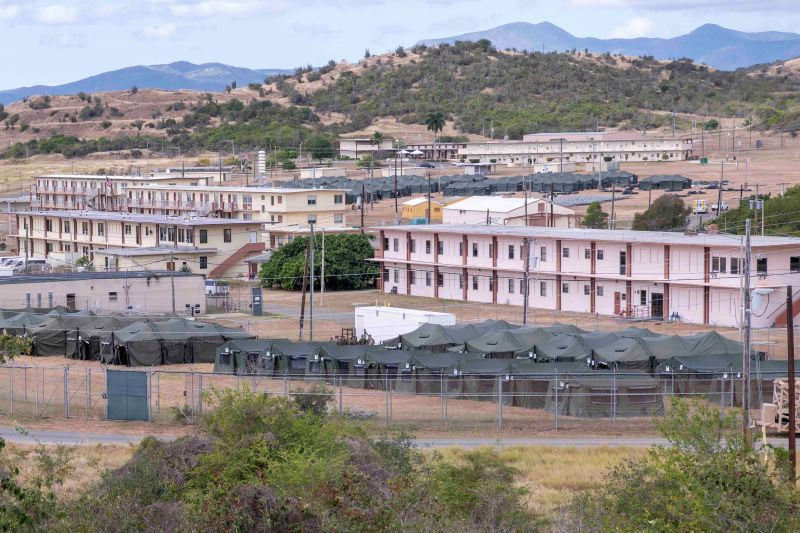 Migrant deterrent: A tent camp for holding immigrant detainees stand in a yard at the Illegal Alien Holding Operations Center at the Guantanamo Bay United States military prison in Cuba on Feb. 6, 2025.
(AFP/Getty Image/US Navy)
C
aptured in Thailand in August 2003 during the height of the United States-led war on terror, Nurjaman Riduan Isamuddin, also known as Hambali, has spent more than two decades in detention.
Southeast Asia’s most infamous jihadist figure was shuttled through CIA “black sites” before his 2006 transfer to the US military prison at Guantanamo Bay, where, more than 22 years after his capture, he still awaits trial.
The December 2024 repatriation of his two Malaysian codefendants, Mohammed Farik bin Amin and Mohammed Nazir bin Lep, has left Hambali as the last Southeast Asian detainee at Guantanamo Bay. The Malaysian duo pleaded guilty for their roles in the Oct. 12, 2002 Bali bombings. Yet rather than signaling that Hambali’s case was nearing resolution, this has only sharpened the question of whether it ever will.
His case is no longer simply about one man’s alleged role in terrorism. Instead, it reflects shifting US foreign policy priorities under President Donald Trump and the declining relevance of the war on terror in Washington’s strategic thinking.
Recruited by Jamaah Islamiyah (JI) cofounder Abdullah Sungkar, Hambali rose within the militant organization amid the expansion of transnational jihadist networks following the Soviet-Afghan War. Like many militants of his generation, Hambali traveled to Afghanistan during the 1980s, training at the Sada Camp run by Afghan jihadist leader Abdul Rasul Sayyaf.
The Afghan conflict became a critical networking hub for militants worldwide, allowing Southeast Asian extremists to forge ties with Arab jihadists, including figures linked to al-Qaeda.

When Hambali returned to Malaysia, he played a crucial part in JI’s regional expansion, eventually rising to become its operational commander and the head of its shura (advisory) council, according to his profile on the United Nations Security Council website. He also led JI’s Mantiqi 1, the division overseeing Malaysia and Singapore.