The Jakarta Post
Please Update your browser
Your browser is out of date, and may not be compatible with our website. A list of the most popular web browsers can be found below.
Just click on the icons to get to the download page.


Popular Reads
Top Results
No results found. Please check your search term and try again
Can't find what you're looking for?
View all search results
Popular Reads
Top Results
No results found. Please check your search term and try again
Can't find what you're looking for?
View all search resultsHow Indonesian language could bridge education gaps
Advancing alternative and equitable ways of thinking about education is urgently needed, and the Indonesian language may have a role to play.
Change text size
Gift Premium Articles
to Anyone
Share the best of The Jakarta Post with friends, family, or colleagues. As a subscriber, you can gift 3 to 5 articles each month that anyone can read—no subscription needed!
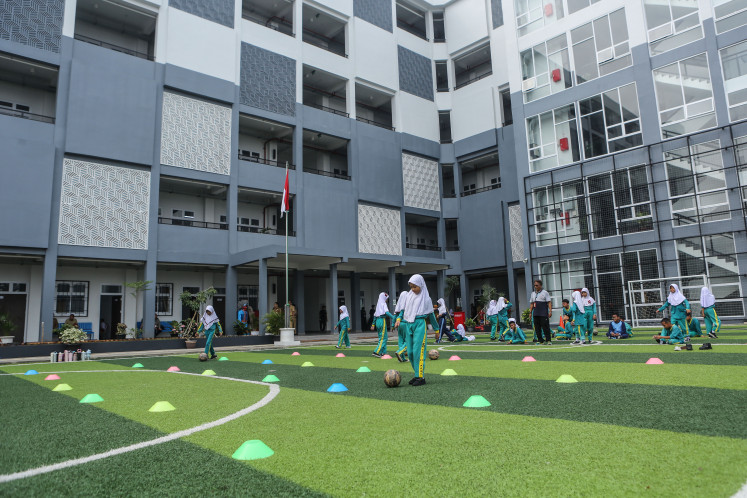
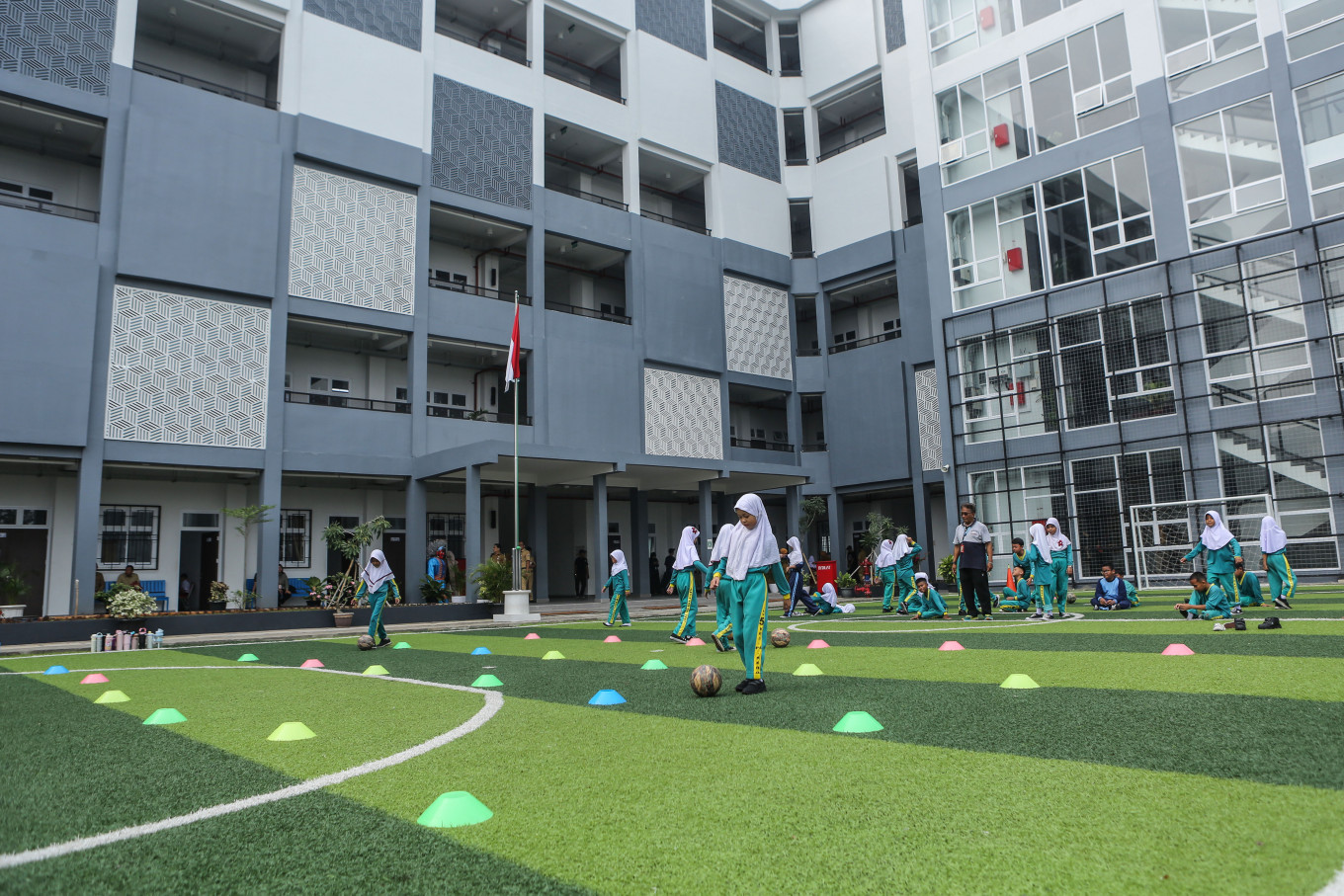 Students attend classes at state elementary school SD Pekayon 05 and state junior high school SMP 91 in Jakarta on Oct. 12, 2026. (Antara/Asprilla Dwi Adha)
O
n Sept. 22, United Nations Secretary-General António Guterres opened the General Assembly with a warning: “inequalities have intensified […] cracks have become canyons”. Such canyons have rarely been deeper in education. Thousands of learners in conflict zones, from Palestine to South Sudan and Myanmar, are denied access to education.
Elsewhere, learning achievements have stalled or declined. Where progress is made, it is concentrated among the privileged. School dropout rates remain among the highest on record, with students with disabilities and other marginalized communities experiencing disproportionate exclusion.
Advancing alternative and equitable ways of thinking about education is therefore urgently needed, and the Indonesian language may have a role to play.
During the lead author’s first six months in Indonesia, his half-Italian and half-British, non-disabled, educationalist self has been struck by the Indonesian language, particularly its Malay, Sanskrit and Arabic orientations. This more “indigenous bahasa” can foreground a philosophy of continuity that challenges established ways of thinking in education and beyond.
Let us explore this idea through three sentences in Indonesian and their English translations.
The first: “Lorenzo [lead author] kuliah di sebuah universitas,” which literally translates to Lorenzo studies/studied/will study at a university. Unlike English and many Western languages, Indonesian does not mark verbs to distinguish explicitly between temporal moments; kuliah (studying) can signal a past, present or future action. In Indonesian, the past is not necessarily separate from the present or future. Time can thus be understood as continuous: Lorenzo’s past learning continues into the present, shaping who he is as an educationalist and who he may become.

The continuity of time is also reflected in the absence of a verb equivalent to “to be” in Indonesian, and consequently in the absence of an explicitly marked state of being in the past, present or future. Everything is temporally continuous; everything is in a state of becoming.