The Jakarta Post
Please Update your browser
Your browser is out of date, and may not be compatible with our website. A list of the most popular web browsers can be found below.
Just click on the icons to get to the download page.


Popular Reads
Top Results
No results found. Please check your search term and try again
Can't find what you're looking for?
View all search results
Popular Reads
Top Results
No results found. Please check your search term and try again
Can't find what you're looking for?
View all search resultsASEAN has the tools to tackle the haze crisis
ASEAN doesn’t need a new treaty to end the haze choking Southeast Asia.
Change text size
Gift Premium Articles
to Anyone
Share the best of The Jakarta Post with friends, family, or colleagues. As a subscriber, you can gift 3 to 5 articles each month that anyone can read—no subscription needed!
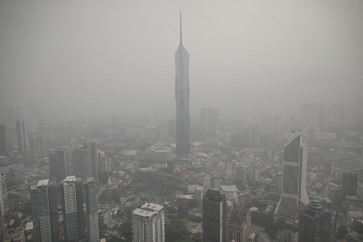
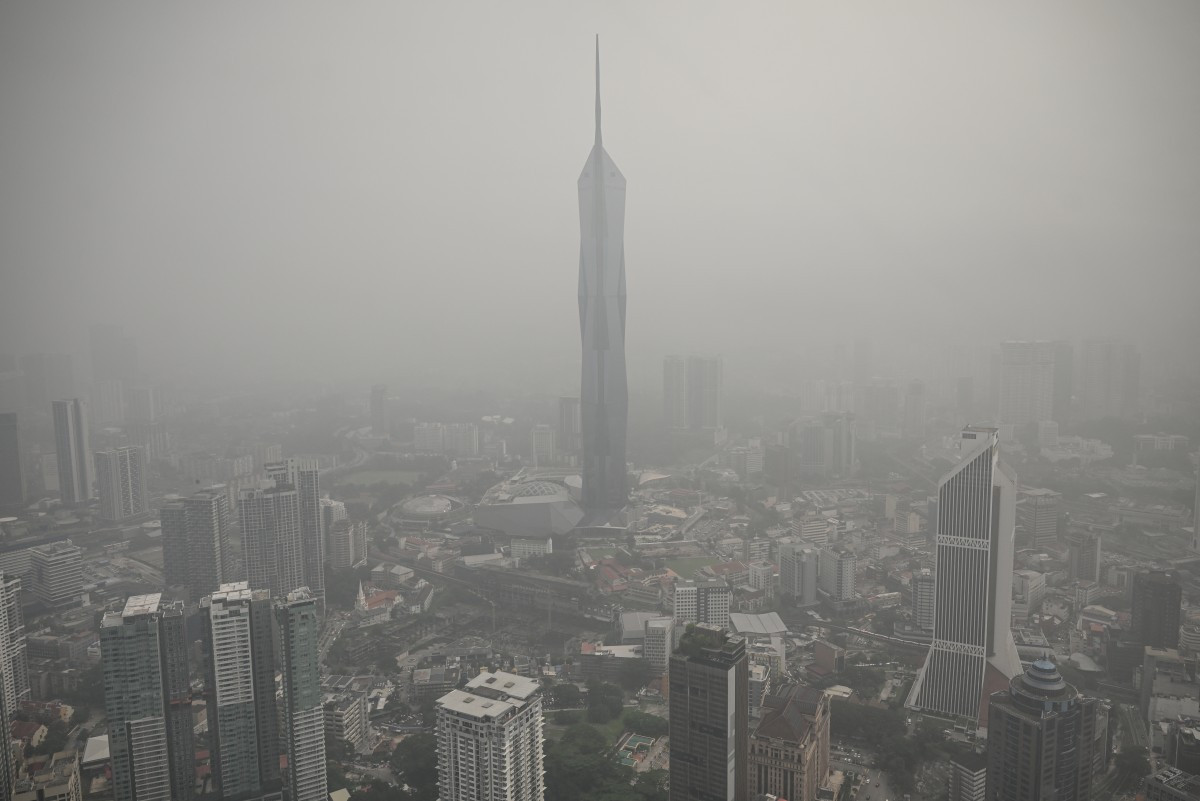 Buildings are shrouded in haze on Oct. 16 in Kuala Lumpur caused by fires in Indonesia. (AFP/Jam Sta Rosa)
F
or weeks, a grey shroud has hung over Kuala Lumpur and Singapore, and Kalimantan’s smoke has also reached Jakarta. On Oct. 13, fine particulate levels in Kuala Lumpur reached 166 micrograms per cubic meter, more than ten times the World Health Organization’s 24-hour guideline. Independent monitors estimate that nearly 900,000 hectares had burned in Indonesia by late August.
Every haze season tempts us to assign blame; we resist it. The people who suffer most from these fires are Indonesians: farmers and indigenous communities in Kalimantan and Sumatra, children in Pontianak and Pekanbaru, firefighters working through the smoke. The question before ASEAN is not whose fault the haze is, but when the region will use the instruments it has already agreed.
When ASEAN foreign ministers meet in the Philippines in November, haze will again be on the agenda. Malaysia’s foreign minister notes that ASEAN’s disaster mechanisms do not cover haze. He is right that haze sits awkwardly between our institutions, but the gap is one of enforcement, not law.
The ASEAN Agreement on Transboundary Haze Pollution was adopted in 2002 and ratified by every state then a member. Under Article 3, each Party accepted, without reservation, the obligation to ensure that activities within its jurisdiction do not harm its neighbors. Last year, the International Court of Justice confirmed that states must exercise stringent due diligence against foreseeable environmental harm. Non-interference protects a state’s right to manage its own affairs; it was never meant to cover harm that crosses borders. Asking a Party to honour a commitment it freely made is not interference.
What is missing is the machinery. Twenty-four years on, the agreement’s coordinating centre is still not legally in force, although its secretariat office opened in Jakarta in April. No protocol has ever been adopted. The Haze Fund remains voluntary, with an initial target of just US$500,000, against World Bank estimates of $16.1 billion in losses to Indonesia alone from the 2015 fires.
One of us was secretary-general when the ASEAN Agreement on Disaster Management and Emergency Response was negotiated in four months after the 2004 Indian Ocean tsunami. The other has spent decades in regional humanitarian responses. We have both seen the AHA Centre earn member states’ trust by being useful to governments rather than overriding them, as in 2018 when it supported Indonesia’s leadership of the Central Sulawesi response. That is the model for haze.

We propose five steps. They need no new treaty, only the will to use the one we have.