The Jakarta Post
Please Update your browser
Your browser is out of date, and may not be compatible with our website. A list of the most popular web browsers can be found below.
Just click on the icons to get to the download page.


Popular Reads
Top Results
No results found. Please check your search term and try again
Can't find what you're looking for?
View all search results
Popular Reads
Top Results
No results found. Please check your search term and try again
Can't find what you're looking for?
View all search resultsLink and match: MSCI, the deep state and weapons procurement
Indonesia might think it is diversifying its weapons suppliers, but it is buying from the very same financial architecture in New York that grades its markets and sets the price of its defense.
Change text size
Gift Premium Articles
to Anyone
Share the best of The Jakarta Post with friends, family, or colleagues. As a subscriber, you can gift 3 to 5 articles each month that anyone can read—no subscription needed!
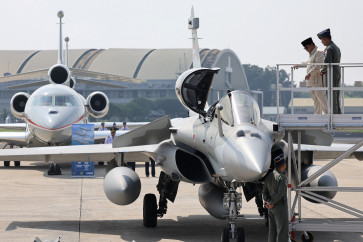
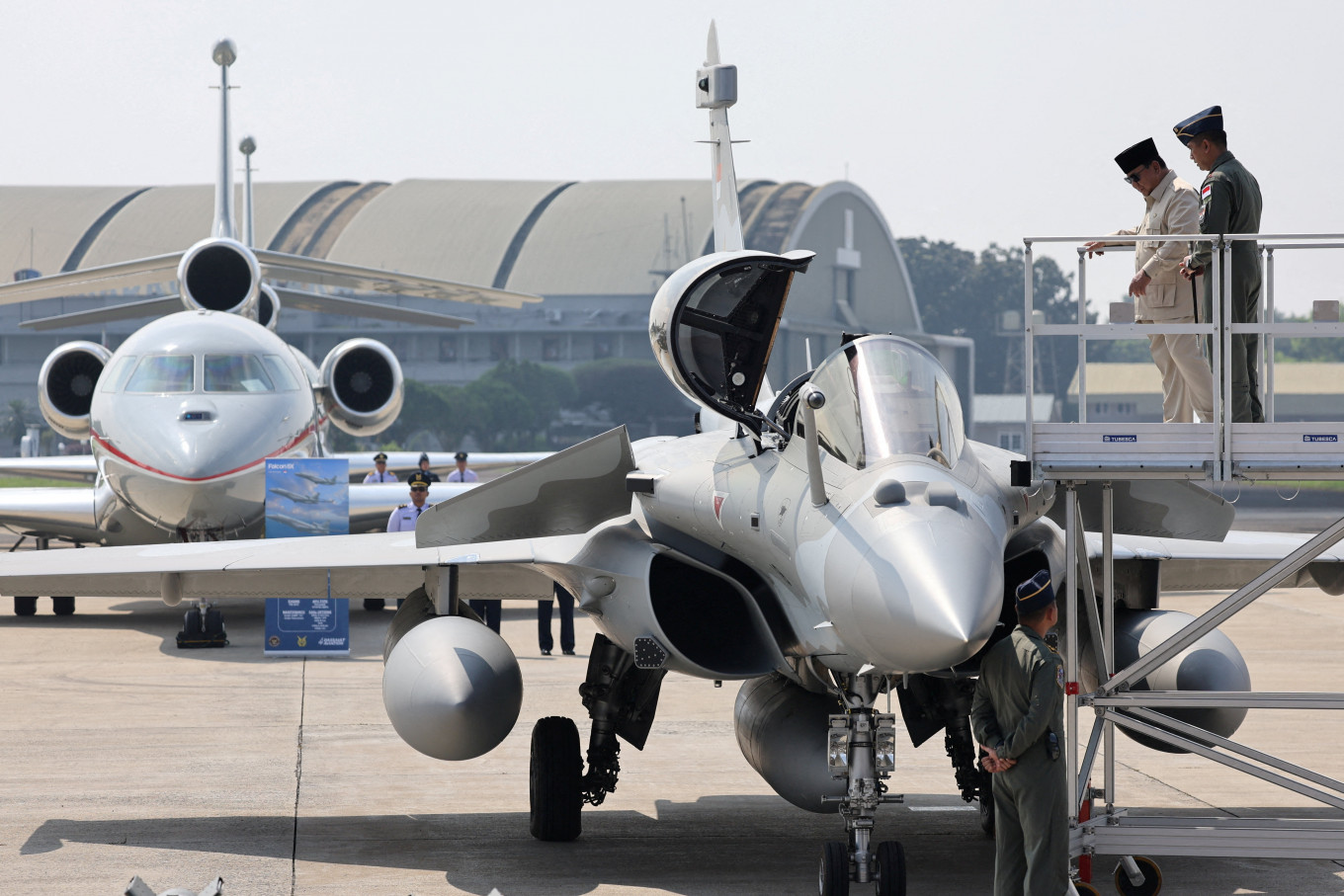 President Prabowo Subianto (second left), accompanied by an Air Force officer, inspects a Rafale fighter jet on May 18, 2026, during a handover ceremony for six Rafale jets, one Airbus A400M military transport aircraft and four Dassault Falcon 8X planes at Halim Perdanakusuma Air Force Base in East Jakarta. (Reuters/Ajeng Dinar Ulfiana)
"MSCI is up to something. It wants to scare us," President Prabowo Subianto told a plenary cabinet meeting on Oct. 21. "The Indonesian nation is not afraid of anyone and will not be intimidated."
The President was responding to MSCI, the global index provider whose benchmarks steer trillions of dollars, which has signaled that Indonesia could nosedive from “emerging market” to “standalone” status. The decision itself rests with a private index provider, outside any ministry or legislature.
This matters most where Indonesia spends its strategic money: on weapons.
As defense minister (2019-2024), Prabowo signed for Rafale fighters, Scorpene submarines and Italian patrol ships; as president, he has added KAAN fighters from Turkey and talks on J-10s from China, while a private integrator, Republikorp, has opened 21 partnerships since 2023. Much of it rests on foreign credit, which a downgrade makes dearer. The President has also said Indonesia is prepared to accept spending cuts if needed.
From Jakarta, the move can look like pressure on the government. Seen through a network lens, it reflects structure more than intent. MSCI is not acting against Indonesia's strategic program; it is part of the system that finances this.
The index that grades our market belongs to the same weapons system architecture as the fighters we buy. That architecture is what I call the deep state. To see it, follow the money upward. A network analysis at Laboratorium Indonesia 2045 traced our acquisitions through seven layers, from 13 supplier states and 28 defense firms to their owners, lenders, graders and financial centers.

The paradox is that Indonesia's arsenal is diversified at the bottom and concentrated at the top. What sits at the top is not the deep state of Indonesian memory, from Malari in 1974 to the bloody attack on the Indonesian Democratic Party (PDI) headquarters in 1996. That deep state was agency: Someone made the decisions. This one is architecture: Positions decide.