The Jakarta Post
Please Update your browser
Your browser is out of date, and may not be compatible with our website. A list of the most popular web browsers can be found below.
Just click on the icons to get to the download page.


Popular Reads
Top Results
No results found. Please check your search term and try again
Can't find what you're looking for?
View all search results
Popular Reads
Top Results
No results found. Please check your search term and try again
Can't find what you're looking for?
View all search resultsThe UN must reform before it loses international trust
A fractured world can no longer afford an architecture where five states hold the power to paralyze the collective security of 193 nations.
Change text size
Gift Premium Articles
to Anyone
Share the best of The Jakarta Post with friends, family, or colleagues. As a subscriber, you can gift 3 to 5 articles each month that anyone can read—no subscription needed!
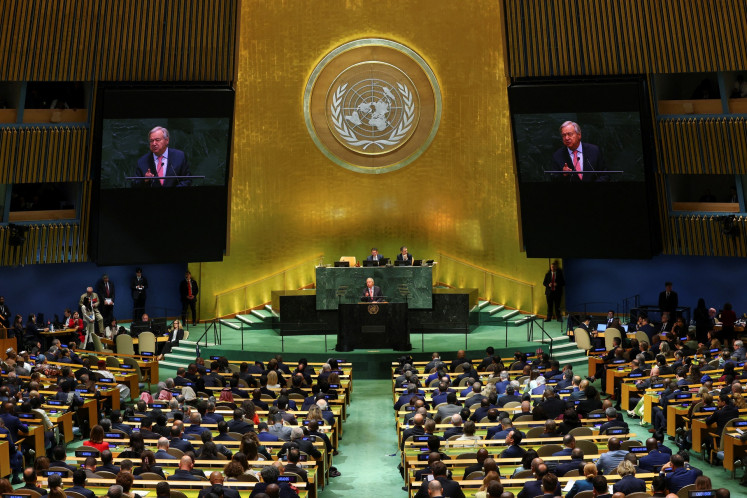
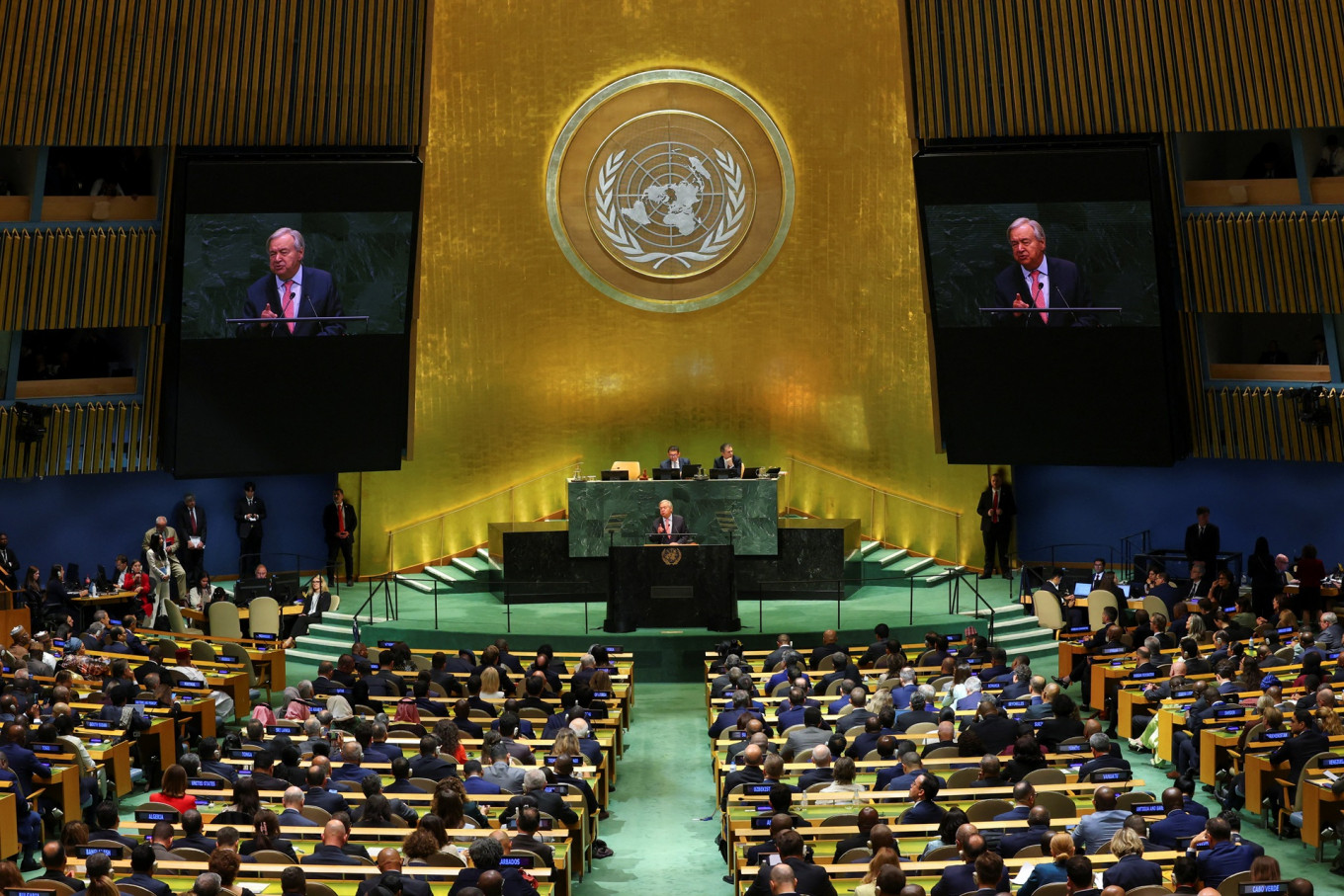 United Nations Secretary-General Antonio Guterres is projected onto large screens on Sept. 22, 2026, as he addresses the 81st UN General Assembly at the international organization’s headquarters in New York, the United States. (Reuters/Mike Segar)
T
he United Nations was created to ensure that international peace and security would no longer be determined solely by military and economic might. Yet its principal organ tasked with maintaining global stability suffers from a fundamental democratic and structural deficit.
While the UN comprises 193 member states, the Security Council consists of only 15. Five of them, China, France, Russia, the United Kingdom and the United States, wield permanent seats and substantive veto power. Under Article 27 of the UN Charter, a substantive Security Council resolution requires nine affirmative votes, including the concurring votes of the permanent members. In practice, a single permanent member can paralyze the council.
The consequences are far from theoretical. In April 2024, 12 of the 15 Security Council members voted to recommend full UN membership for Palestine. The US voted against. Because of Washington's permanent status, that solitary vote blocked the resolution.
When the General Assembly subsequently adopted a resolution by an overwhelming majority affirming Palestine’s qualification for membership and calling for renewed consideration, it underscored an intolerable structural flaw: The international community can arrive at a decisive consensus, only for a single capital to frustrate collective action. This reality makes Security Council reform a vital political priority for the Non-Aligned Movement (NAM).
The veto was an understandable compromise in 1945: The victorious Allied powers were unwilling to endorse an international body capable of enforcing decisions against them without their consent. But the world of today is unrecognizably different. UN membership has expanded nearly fourfold from 51 to 193 states, while global demographic, economic and political dynamics have fundamentally shifted.
To that end, NAM should champion a sequenced, four-stage reform framework.

First, every veto must automatically trigger a General Assembly plenary debate requiring a formal, public explanation from the vetoing state, expanding upon the precedent established by General Assembly Resolution 76/262.