The Jakarta Post
Please Update your browser
Your browser is out of date, and may not be compatible with our website. A list of the most popular web browsers can be found below.
Just click on the icons to get to the download page.


Popular Reads
Top Results
No results found. Please check your search term and try again
Can't find what you're looking for?
View all search results
Popular Reads
Top Results
No results found. Please check your search term and try again
Can't find what you're looking for?
View all search resultsAnalysis: Pinpointing corporate culprits behind Indonesia’s wildfires
Change text size
Gift Premium Articles
to Anyone
Share the best of The Jakarta Post with friends, family, or colleagues. As a subscriber, you can gift 3 to 5 articles each month that anyone can read—no subscription needed!
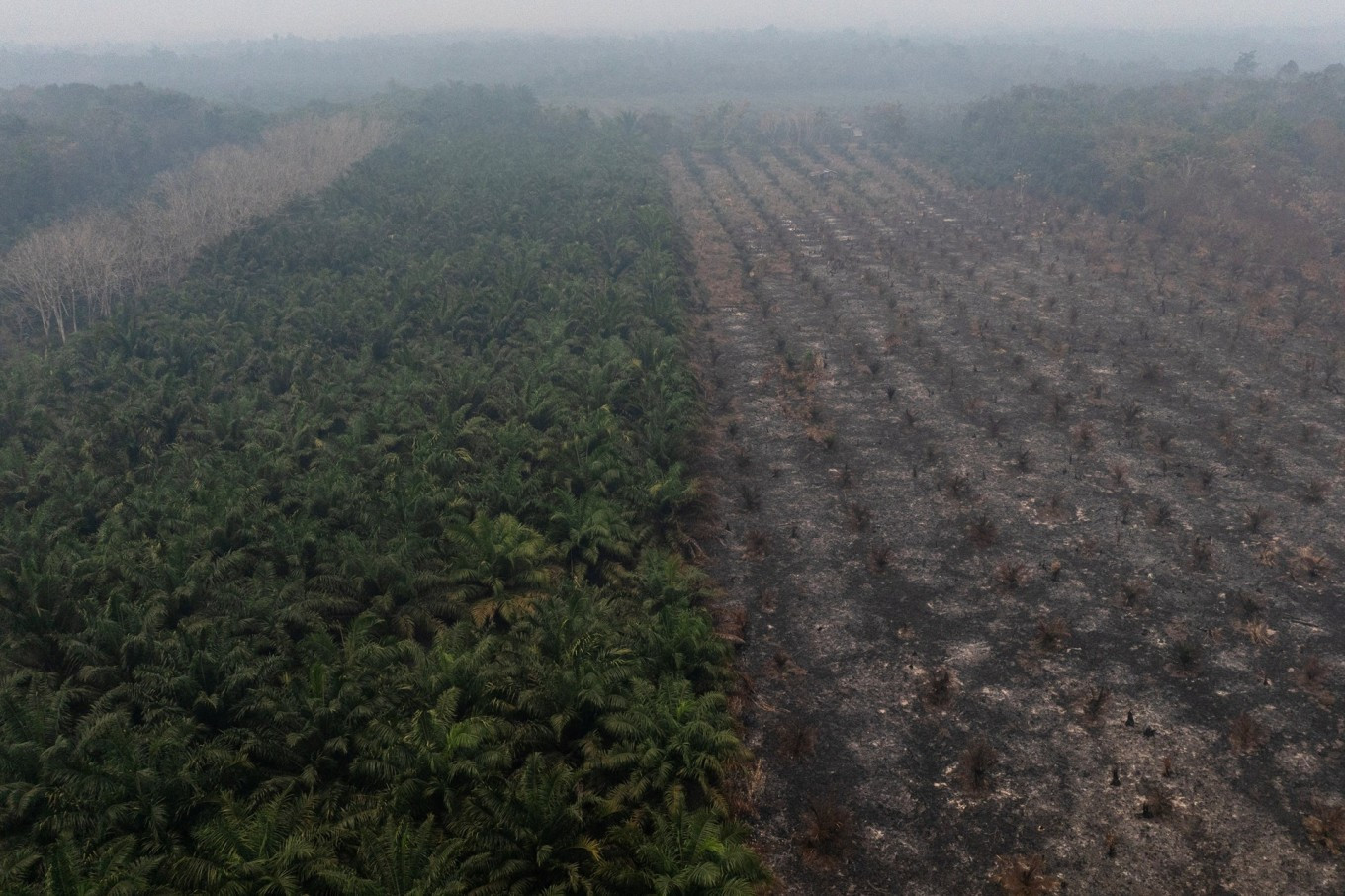 A partially burned oil palm plantation is blanketed by haze on Aug. 30 in Kuala Satong village, Ketapang regency, West Kalimantan. (Reuters/Willy Kurniawan)
A
s Indonesia continues to grapple with spreading wildfires and recurring haze, scrutiny has increasingly shifted toward corporate culpability, driven by investigative reports linking vast networks of foreign investors and multinational firms to the blazes. With Jakarta’s domestic response perceived as largely muted, neighboring ASEAN member states have begun mounting diplomatic pressure and pursuing independent investigations into the entities allegedly responsible for the transboundary haze choking the region.
Much of the recent attention stems from an investigation published by the Indonesian Forum for the Environment (Walhi), which identified nine corporations directly tied to major wildfire hot spots: PT Kayung Agro Lestari, PT Panca Surya Agrindo, PT Arjuna Utama Sawit, PT Sumber Mardhika Graha, PT Finnantara Intiga, PT Hutan Ketapang Industri, PT Mayawana Persada, PT Hermes Sugar Indonesia and PT Globalindo Alam Perkasa.
Walhi’s findings reveal that all nine maintain parent companies or principal shareholders based primarily in Singapore, Malaysia and Hong Kong, alongside additional financial links to the British Virgin Islands, Samoa and India. Given that Singapore and Malaysia bear the brunt of the cross-border haze outside Indonesia, these commercial ties are especially consequential.
Beyond these nine entities, an estimated 93 companies affiliated with Malaysian and Singaporean palm oil conglomerates have been implicated in the fires. Of these, 66 are linked to Singapore-headquartered giants - most notably Sinar Mas and Wilmar, which account for the largest shares - while the remaining 27 trace back to Malaysian conglomerates, specifically Sime Darby and Genting Group. These complex, cross-border ownership structures significantly complicate efforts to hold individual firms accountable, deepening regional frustration with Indonesia’s management of the perennial crisis.
Singapore, for its part, has escalated unilateral enforcement. Authorities have identified seven companies operating in Indonesia suspected of responsibility for the blazes, including PT Bumi Andalas Permai, PT Bumi Mekar Hijau and PT Paramitra Mulia Langgeng. The Singaporean government announced that these firms will receive preventive measures notices requiring them to deploy firefighting teams, halt all burning, refrain from igniting new fires, and submit formal action plans to Singapore’s National Environment Agency (NEA).
Domestically, amid persistent criticism over strategic shortcomings, the Forestry Ministry announced administrative sanctions against 32 companies accused of igniting concession fires. The penalties range from operational suspensions to outright license revocations and mandatory ecosystem restoration within affected concessions. However, transparency remains a hurdle, as the government has yet to release the names of the penalized firms.

Beyond immediate enforcement, the deeper structural drivers demand scrutiny. Today’s fires and resultant haze are the cumulative legacy of decades of peatland drainage and forest conversion - practices, as Walhi Executive Director Boy Jerry Even Sembiring emphasized, systematically enabled by state-issued concession permits.