The Jakarta Post
Please Update your browser
Your browser is out of date, and may not be compatible with our website. A list of the most popular web browsers can be found below.
Just click on the icons to get to the download page.


Popular Reads
Top Results
No results found. Please check your search term and try again
Can't find what you're looking for?
View all search results
Popular Reads
Top Results
No results found. Please check your search term and try again
Can't find what you're looking for?
View all search resultsIndonesia needs to fight fires, not its neighbors
Weaponizing gas pipes and subsea cables won’t clear Southeast Asia’s skies; genuine leadership means putting out the fires together before burning down ASEAN unity.
Change text size
Gift Premium Articles
to Anyone
Share the best of The Jakarta Post with friends, family, or colleagues. As a subscriber, you can gift 3 to 5 articles each month that anyone can read—no subscription needed!
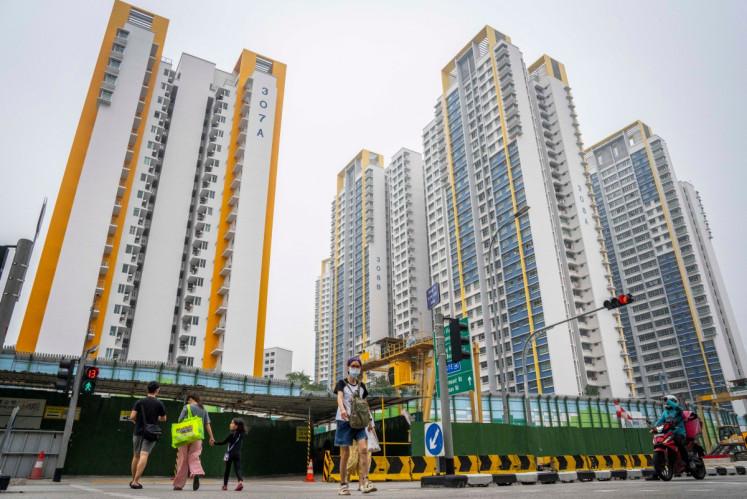
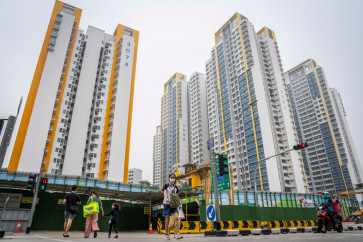
 A woman wearing a face mask crosses a street in front of government public housing apartments in Singapore on Oct. 17, 2026, as the country continues to be shrouded in haze caused by fires in Indonesia. (AFP/Yuichi Yamazaki)
T
he escalating diplomatic row between Indonesia and Singapore over transboundary haze has reached an unnecessary, even dangerous point. While Indonesia continues to battle fires across Sumatra, Kalimantan and Papua, the smoke from which has drifted into neighbors like Singapore, Malaysia and Timor-Leste, the focus has shifted away from pooling resources to combat the blazes and toward an exchange of inflammatory, nationalistic rhetoric.
Rather than deescalating the crisis, some Indonesian officials have floated economic retaliation, suggesting halts to natural gas supplies as payback for what they perceive as a lack of respect for Jakarta’s fire management efforts. Others have doubled down, pointedly referencing Singapore’s reliance on subsea communications cables or urging umrah (minor haj) operators to bypass Singapore and Kuala Lumpur as transit hubs.
These punitive measures will surely not clear the skies; they will only deepen fractures in ASEAN’s already fragile unity.
Persisting with this posture steers Jakarta in the wrong direction. Indonesia is bound by both domestic and international law to protect critical infrastructure traversing its territorial waters, including undersea cables. Furthermore, as the International Court of Justice emphasized in its recent advisory opinion on climate change, states bear a strict duty of due diligence to prevent transboundary environmental harm.
This same obligation underpins the ASEAN Agreement on Transboundary Haze Pollution (ATHP), ratified by Indonesia in 2014. International partners expect Jakarta to honor these legal commitments. For them, an unpredictable, unreliable and uncommitted Indonesia is attractive to no one.
Since every crisis must bring lessons, what can we learn now?

First, ASEAN matters. While the current administration is not so much invested in ASEAN, such a regional crisis definitely requires close regional cooperation. As Ambassador Ong Keng Yong and Dr. Mahmood pointed out in their article in this paper, ASEAN already has the instrument, the ATHP, ready to be utilized.