The Jakarta Post
Please Update your browser
Your browser is out of date, and may not be compatible with our website. A list of the most popular web browsers can be found below.
Just click on the icons to get to the download page.


Popular Reads
Top Results
No results found. Please check your search term and try again
Can't find what you're looking for?
View all search results
Popular Reads
Top Results
No results found. Please check your search term and try again
Can't find what you're looking for?
View all search resultsKeeping emerging market status: Lessons from 1998
To save Indonesia from a humiliating market downgrade, policymakers must abandon defensive rhetoric and deploy the painful, proven audit blueprint that rescued the nation’s banks in 1998.
Change text size
Gift Premium Articles
to Anyone
Share the best of The Jakarta Post with friends, family, or colleagues. As a subscriber, you can gift 3 to 5 articles each month that anyone can read—no subscription needed!
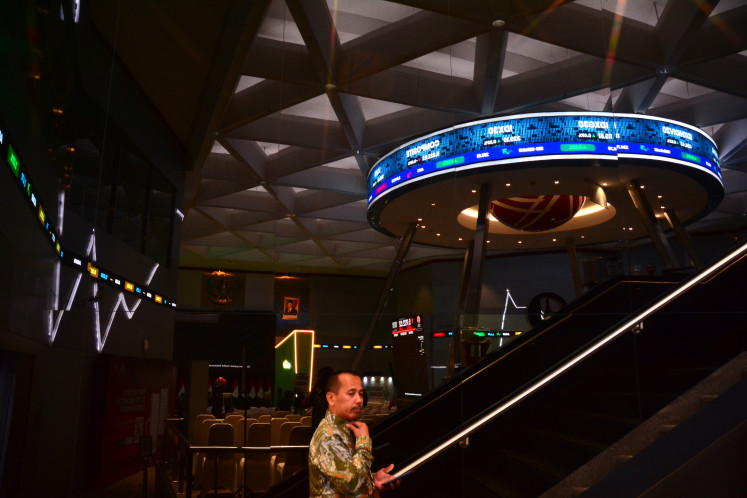
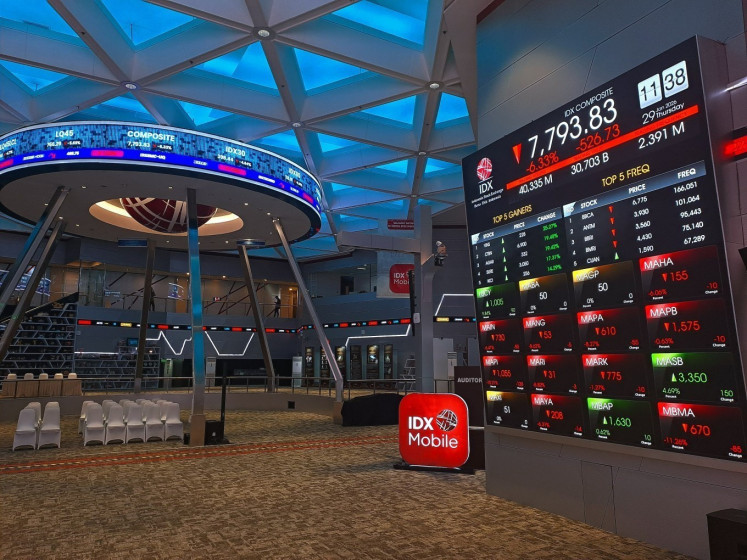
 A visitor walks past a screen displaying the movement of the Jakarta Composite Index (JCI) on Oct. 19 at the Indonesia Stock Exchange in South Jakarta. (JP/Iqro Rinaldi)
T
he 1998 Asian financial crisis impressed upon policymakers an indelible lesson: financial markets can endure bad news, but they cannot survive unchecked uncertainty. When asset valuations are transparent, capital can be priced, managed and deployed. When transparency collapses, capital simply flees.
That fundamental principle has become acutely relevant once again.
On Oct. 15, MSCI initiated a formal market consultation on whether Indonesia should be stripped of its Emerging Market designation and reclassified as a Standalone Market. The immediate market reaction was swift and unforgiving. The following day, the Jakarta Composite Index (IHSG) plunged by approximately 11 percent, logging its steepest single-day decline in twenty-eight years.
It is understandable that many Indonesians view this development as undue external coercion. President Prabowo Subianto is justified in asserting that our sovereign nation must never be intimidated by outside institutions. Yet true national strength and institutional courage require an unflinching willingness to confront and rectify our domestic market vulnerabilities. Defensive posturing cannot substitute for structural reform.
The economic stakes could hardly be higher. More than US$2.2 trillion in institutional capital tracks or benchmarks against the MSCI Emerging Markets Index. Historically, Indonesia commanded roughly 3 percent of that global weighting. Today, our footprint has dwindled to a mere 0.46 percent - falling well behind regional peers such as Malaysia and Thailand.
As recently as late 2025, Indonesia’s representation stood at 1.16 percent. Within a single year, that presence was cut by more than half, while the number of constituent Indonesian corporations fell from eighteen to just nine. By comparison, China represents nearly 20 percent of the index. In absolute terms, foreign institutional assets passively and actively allocated to Indonesian equities have collapsed from approximately $25 billion to around $10 billion.

The macroeconomic fallout is already reverberating through the broader financial system. The IHSG has declined roughly 39 percent year-to-date. Foreign portfolio outflows surpassed Rp 88 trillion ($4.84 billion) by mid-October. As international funds liquidate local equity holdings, the resulting demand for foreign exchange has driven an 8 percent depreciation of the rupiah against the greenback. Compounding these pressures, rating agencies Moody’s and Fitch have both revised Indonesia’s sovereign credit rating outlook to negative.