The Jakarta Post
Please Update your browser
Your browser is out of date, and may not be compatible with our website. A list of the most popular web browsers can be found below.
Just click on the icons to get to the download page.


Popular Reads
Top Results
No results found. Please check your search term and try again
Can't find what you're looking for?
View all search results
Popular Reads
Top Results
No results found. Please check your search term and try again
Can't find what you're looking for?
View all search resultsThe promise of ‘Sumpah Pemuda’, the promise of a first job
Nearly a century after the Youth Pledge, Indonesia’s demographic promise will not be fulfilled in speeches, but in whether its economy can offer millions of waiting young people their critical first job.
Change text size
Gift Premium Articles
to Anyone
Share the best of The Jakarta Post with friends, family, or colleagues. As a subscriber, you can gift 3 to 5 articles each month that anyone can read—no subscription needed!
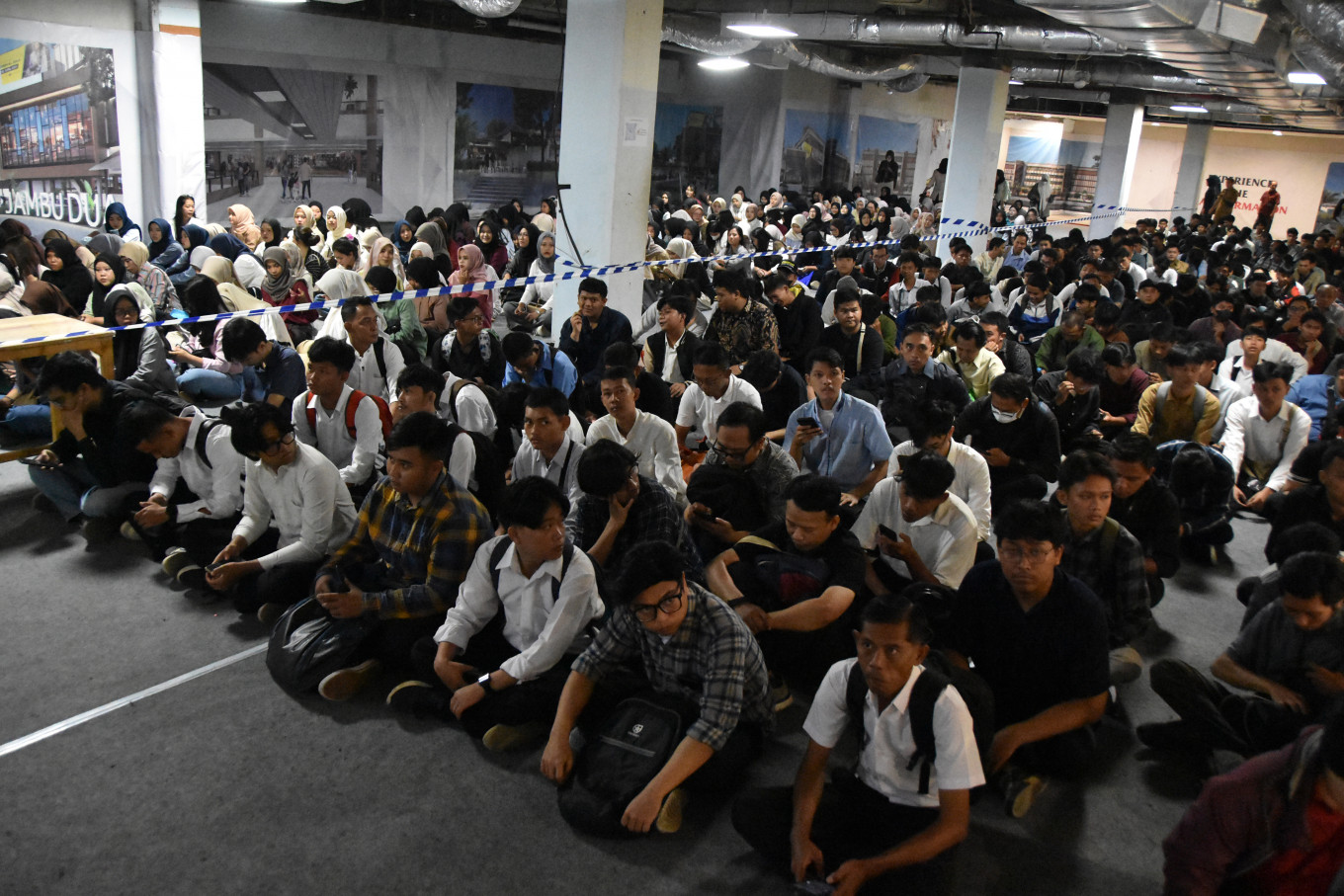 Job seekers wait in line during the opening of the 2026 Bogor Job Fair on June 8 at Plaza Jambu Dua in Bogor, West Java. The job fair, organized by the Bogor Manpower Office and attended by 30 local and national companies offering 3,212 job vacancies, aims to connect job seekers directly with employers and help reduce unemployment in West Java. (Antara/Arif Firmansyah)
O
n Oct. 28, 1928, young people from across the archipelago declared their commitment to one homeland, one nation and one unifying language. Their declaration, known as the Sumpah Pemuda (Youth Pledge), was an insistence on a future they intended to build together.
Nearly a century later, we recite their vow each October. But what does that promise mean to a young Indonesian sending out applications, waiting for an interview or watching peers begin their careers while their own remain on hold? A nation’s future may be celebrated in speeches, but for those trying to enter the economy, it becomes real only through the chance to find a first job.
A first job is more than a paycheck. It is a foothold into adulthood—a chance to gain experience, develop skills, achieve financial independence and begin shaping one’s own future. When that opening fails to materialize, independence is deferred. Experience remains out of reach, reliance on family persists and each passing month widens the divide between ambition and reality.
The first rung of the career ladder is often the hardest to secure: employers demand demonstrated competence, while applicants simply need the chance to prove it. Prolonged waiting quickly becomes its own barrier, eroding confidence and compounding the lack of experience prospective employers expect.
The data reflects the scale of this uncertainty. In February 2026, Indonesia’s unemployment rate stood at 4.68 percent, representing 7.24 million people out of work. Approximately 3.55 million of them were aged 15 to 24—nearly half of the entire unemployed population. Behind these statistics are millions of individuals seeking an avenue to apply their skills and earn a sustainable living.
Indonesia frequently speaks of its demographic dividend as though a large working-age population automatically guarantees economic strength. In practice, that dividend materializes only if workers can secure productive employment, acquire relevant skills and translate their potential into tangible economic value. Employability alone does not generate employment. Enterprises hire when demand expands, capital investment flows and macroeconomic conditions reward productive activity.

Indonesia must therefore strengthen not only the pipeline of skilled labor, but also the broader economy’s capacity to create formal jobs. Young people cannot shoulder the nation's future on optimism alone; they need a genuine opportunity to help build it.