The Jakarta Post
Please Update your browser
Your browser is out of date, and may not be compatible with our website. A list of the most popular web browsers can be found below.
Just click on the icons to get to the download page.


Popular Reads
Top Results
No results found. Please check your search term and try again
Can't find what you're looking for?
View all search results
Popular Reads
Top Results
No results found. Please check your search term and try again
Can't find what you're looking for?
View all search resultsEngineering the future: Closing the gender gap in STEM
Modern nationalism should require Indonesian women and girls to also spearhead science and technology in all spheres of life.
Change text size
Gift Premium Articles
to Anyone
Share the best of The Jakarta Post with friends, family, or colleagues. As a subscriber, you can gift 3 to 5 articles each month that anyone can read—no subscription needed!
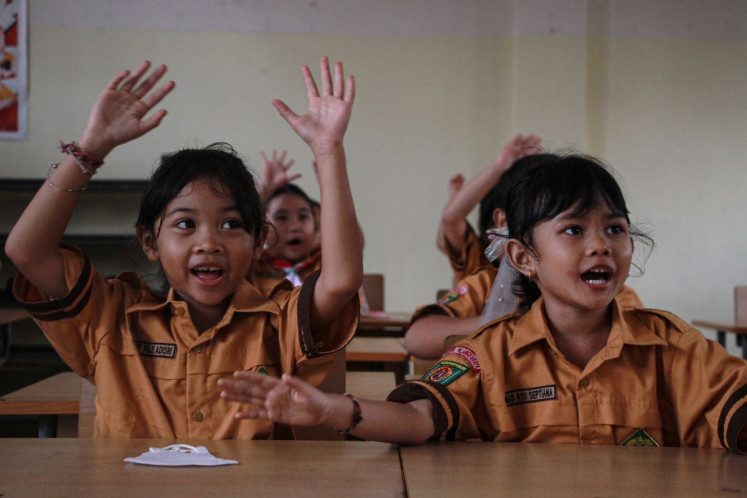
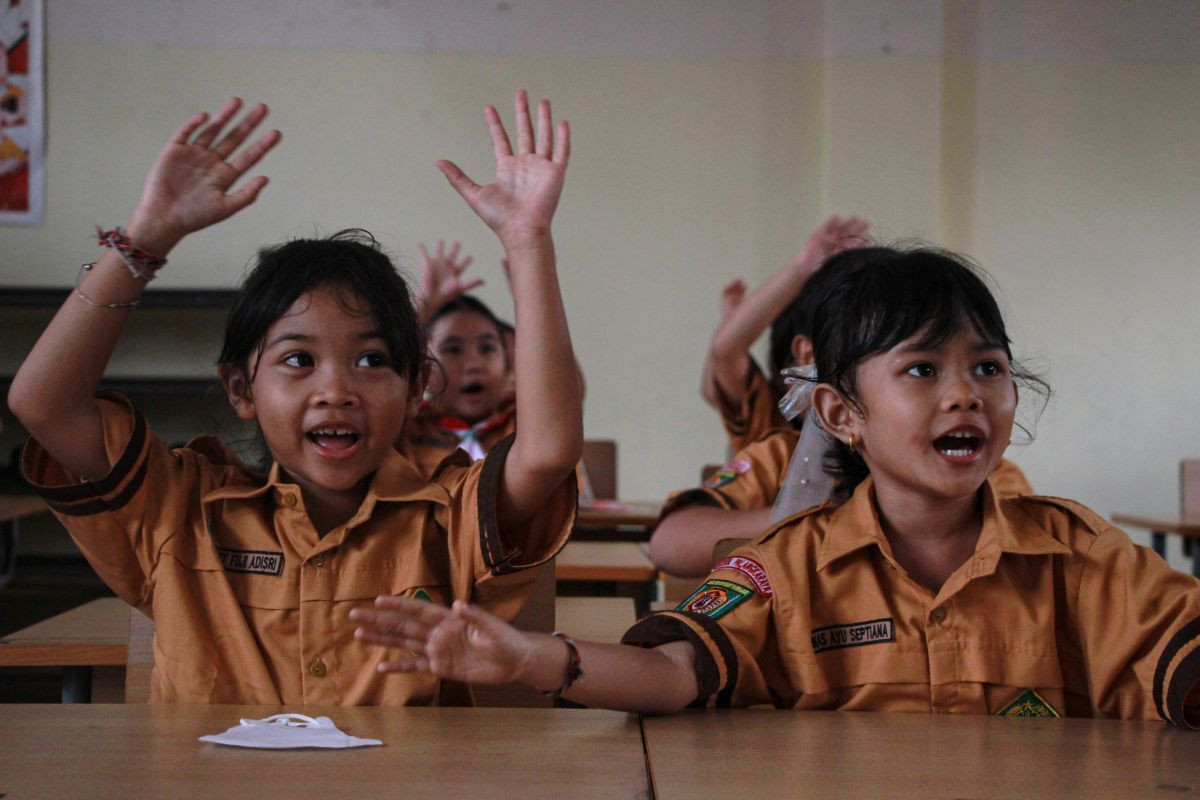 Back in school: Students participate in a classroom activity on Oct. 29, 2026 at SDN 4 Menteng public elementary school in Palangka Raya, Central Kalimantan, after two months of online learning due to haze. (Antara/Auliya Rahman)
I
n the run-up to a centennial milestone for the 1928 Youth Pledge Day, our sense of nationalism should include an awakening to strengthen our nation’s global standing. The spirit of nationalism in the digital age should serve as an active blueprint toward an agile and resilient nation that is driven by cultural pride, innovation, digital competence and scientific achievements.
Our historical trajectory demonstrates that collective identity is only fully realized when all citizens bear the agency to share and shape the future. The opening line of Sumpah Pemuda - Kami putra dan putri Indonesia (We sons and daughters of Indonesia) - strategically put women as equals in the nation’s building. Just as young men and women at that time recognized that true independence required intellectual parity, modern nationalism should require Indonesian women and girls to also spearhead science and technology in all spheres of life.
According to 2024 International Labour Organization (ILO) data, the percentage of female students majoring in science, technology, engineering and mathematics (STEM) in Indonesia was around 35 percent. The number decreased when it came to graduation and dropped further in employment.
Indonesia reflects the region’s overall trend for women and girls in STEM. Data from the ASEAN Secretariat and United Nations entities such as the UNDP and UNESCO highlight that in Southeast Asia, only about 40 percent of STEM students are women. Just like in Indonesia, their representation in the overall regional STEM workforce decreases to around 30 percent and drops significantly in decision-making level positions.
However, some countries in the region are doing relatively much better than Indonesia. In Myanmar, women make up the majority of researchers in natural sciences (72 percent) and engineering technology (almost 80 percent). Malaysia ranks among UNESCO’s top global leaders for female tertiary STEM graduation rates and leads the region in board representation for life sciences (71 percent) and engineering research (47 percent). The Philippines has a high baseline with strong performance across information technology, health care and research and high performance in math and science education at the secondary level. Singapore’s female enrolment in engineering rate is under 20 percent and in ICT is 32 percent, but the country leads the region in absolute tech workforce volume and female tech board representation (22 percent).
Interestingly, at the global level, better economic performance and gender parity do not necessarily run parallel to representation of women in STEM. Western European countries have lower percentages of female STEM graduates, whereas several developing and middle-income countries in Eastern Europe, South Asia, the Middle East and Latin America lead the world in female STEM university enrolment.

Ensuring women and girls’ meaningful participation and contribution in STEM at all levels, global, regional and national, is a prerequisite for economic competitiveness, social equity and technological innovation and competence.