The Jakarta Post
Please Update your browser
Your browser is out of date, and may not be compatible with our website. A list of the most popular web browsers can be found below.
Just click on the icons to get to the download page.


Popular Reads
Top Results
No results found. Please check your search term and try again
Can't find what you're looking for?
View all search results
Popular Reads
Top Results
No results found. Please check your search term and try again
Can't find what you're looking for?
View all search resultsIndonesia signed Badr to escape a veto. Pakistan knows where vetoes go
In its rush to escape Western arms embargoes, Indonesia risks trading an American veto for Russian and Turkish ones - discovering, as Pakistan did, that true air power cannot simply be bought on foreign credit.
Change text size
Gift Premium Articles
to Anyone
Share the best of The Jakarta Post with friends, family, or colleagues. As a subscriber, you can gift 3 to 5 articles each month that anyone can read—no subscription needed!
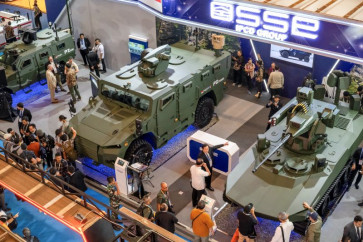
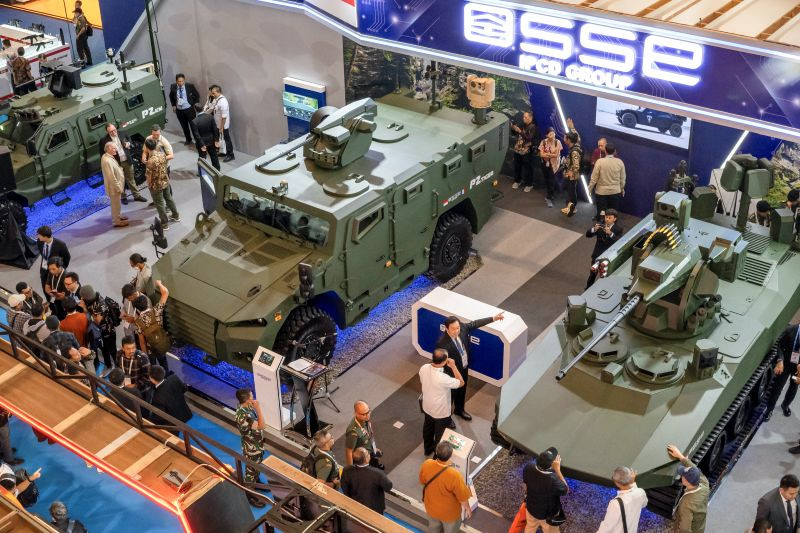 Line of defense: Visitors examine armored fighting vehicles produced by Indonesian defense solutions companies Sentra Surya Ekajaya and IPCD Group during the Indo Defense Expo and Forum military equipment exhibition at Jakarta International Expo in Jakarta on June 12, 2025. (AFP/Bay Ismoyo)
P
akistan once paid US$658 million for 28 F-16s it never flew. When Washington invoked the Pressler Amendment in 1990, the jets stayed in America, and the money, already paid to Lockheed and its suppliers, stayed there too. In 1998 the White House settled the remaining $463.7 million claim with cash and up to $140 million in goods, including about $60 million of wheat. A fighter squadron, refunded partly in grain.
Islamabad drew the obvious lesson and built the JF-17 with China. The second lesson came more slowly. The jet flies on a Russian RD-93, and since 2014 Pakistan has bought those engines directly from Moscow. Russia sells the engine, not the know-how. Pakistan did not escape the veto. It moved it.
That history shapes how a columnist in Karachi reads the Badr memorandum Indonesia signed in Doha last week with Qatar, Turkey and Pakistan. Yusuf Jauhari, the newly installed deputy defense minister, said Jakarta valued the initiative because it respects each member’s sovereignty, national priorities and laws. Sovereignty is easy to sign. Indonesia will have to buy it clause by clause.
Badr is narrower than its name. It covers joint production, technology sharing, research and training, and carries no mutual-defense commitment. Kompas calls it Indonesia’s first minilateral platform beyond its own region. An executive board will propose four-nation projects and a strategic board will approve them, with a first project in training and research expected soon.
Jakarta’s motive is its own history. After the 1999 violence in Timor-Leste, Washington cut off lethal arms sales. When the ban lifted in November 2005, Indonesia’s first priority was spare parts for its 10 aging F-16s.
In 2018 Jakarta agreed to barter commodities for 11 Su-35s worth about $1.1 billion. Fadjar Prasetyo, then air force chief, dropped the deal in December 2021, citing the budget. This paper’s own analysis called fear of CAATSA sanctions an open secret. Washington never sanctioned Indonesia. The threat did the work.

Since then, Jakarta has bought widely. The first three of 42 Rafales reached Pekanbaru in January. Forty-eight KAANs were signed in Istanbul in July 2025. Sixteen KF-21s from Seoul are in negotiation, and a Chinese J-10 purchase has been announced. India supplies BrahMos missiles. In April, Jakarta and Washington agreed a Major Defense Cooperation Partnership.