The Jakarta Post
Please Update your browser
Your browser is out of date, and may not be compatible with our website. A list of the most popular web browsers can be found below.
Just click on the icons to get to the download page.


Popular Reads
Top Results
No results found. Please check your search term and try again
Can't find what you're looking for?
View all search results
Popular Reads
Top Results
No results found. Please check your search term and try again
Can't find what you're looking for?
View all search resultsJakarta’s creative pulse: Building toward five centuries
Jakarta is positioning itself not merely as Indonesia’s largest city, but as a place where global talent and local energy meet on terms that benefit residents.
Change text size
Gift Premium Articles
to Anyone
Share the best of The Jakarta Post with friends, family, or colleagues. As a subscriber, you can gift 3 to 5 articles each month that anyone can read—no subscription needed!
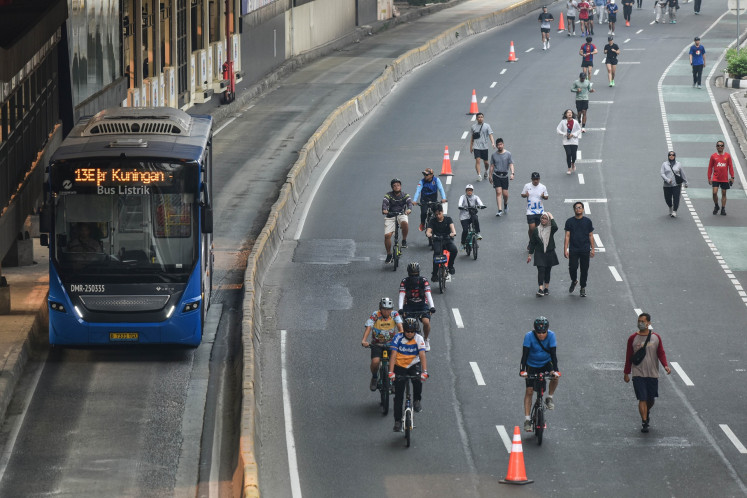
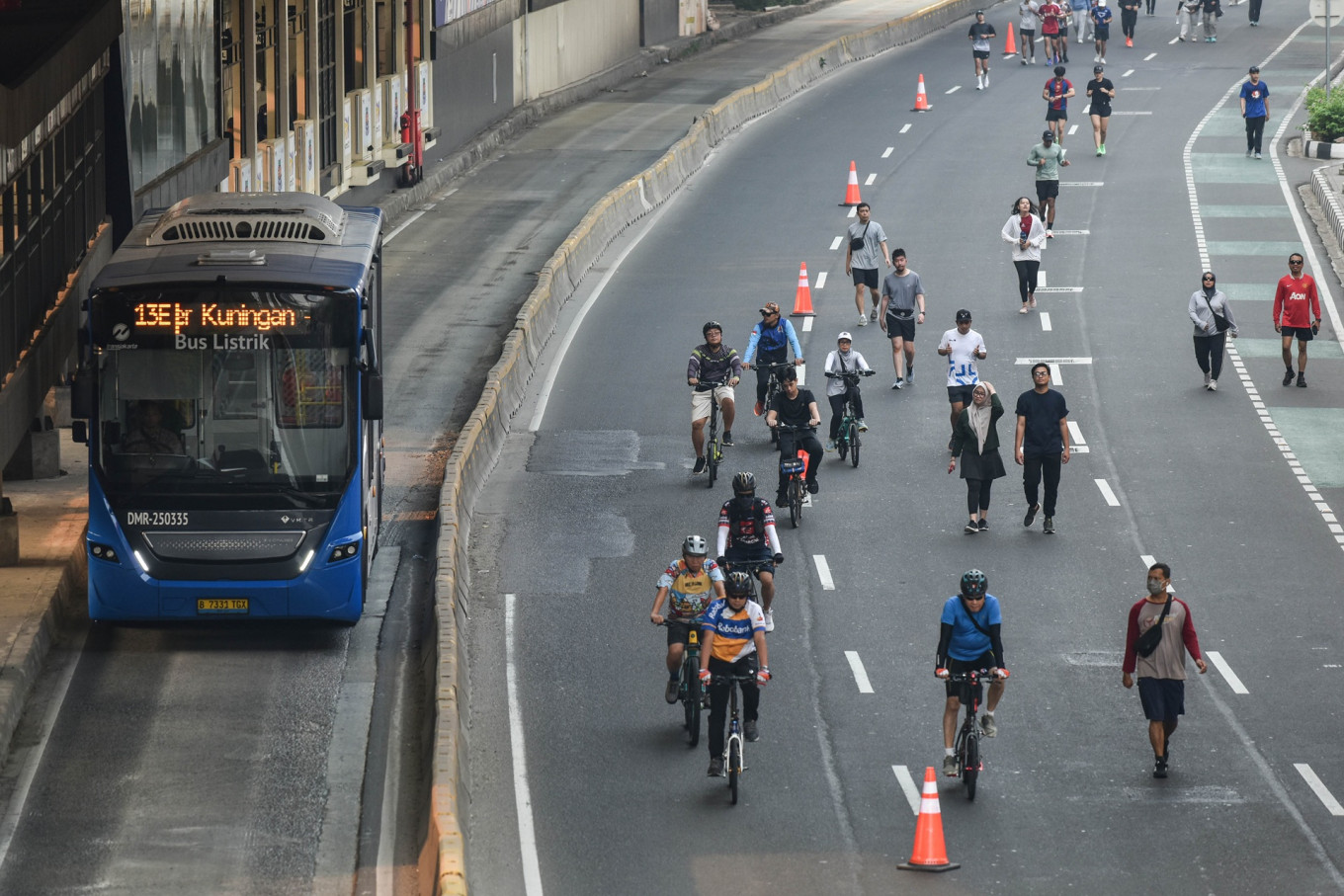 People flock to the Car Free Day event on Jl. Rasuna Said in South Jakarta on June 21, 2026. (Antara/Fakhri Hermansyah)
I
n the space of a single late-October week, Jakarta hosted a constellation of events that together offered a clear signal of the city’s direction.
On one night, an estimated 50,000 people filled Gelora Bung Karno Stadium for Ye’s only Southeast Asian stop on his 2026 tour, with organizers reporting more than 20,000 international visitors from dozens of countries.
Over the same weekend, the myBCA Jakarta Running Festival drew some 37,000 runners from nearly 50 countries and its half-marathon earned World Athletics Gold Label status. Just days earlier, the Jakarta Film Summit and the sixth edition of Jakarta Film Week opened in sequence, the former inaugurated by Governor Pramono Anung and the latter by Deputy Governor Rano Karno, bringing together more than 150 films from nearly 60 countries and hundreds of industry professionals.
These are the visible results of deliberate policy choices by the city administration under the leadership of Governor Pramono, supported by Deputy Governor Rano, to treat culture, sport and the creative economy as strategic assets.
As the city prepares to mark its 500th anniversary on June 22, 2027, these events illustrate how Jakarta is positioning itself: not merely as Indonesia’s largest city, but as a place where global talent and local energy meet on terms that benefit residents.
Governor Pramono has been consistent in framing the approach. At the Jakarta Film Summit on Oct. 20, he noted that roughly 80 percent of Indonesia’s production houses already operate in the capital, supported by more than 100 filming locations. The summit, which brought together more than 1,000 film professionals from Indonesia and abroad, focused on practical enablers: streamlined permits through the Jakarta Film Commission and the Filming in Jakarta service, a 50 percent reduction in the specific goods and services tax for national film screenings, and partnerships that connect production needs with financing and investment.

Governor Pramono has repeatedly expressed the hope that one day Jakarta will be spoken of in the same breath as Busan when people discuss cinema in Asia. The goal is not vanity; it is to expand the creative economy’s contribution, already significant within Jakarta’s gross regional domestic product, while generating wider activity in hospitality, transport, food and beverage, and small enterprises.