The Jakarta Post
Please Update your browser
Your browser is out of date, and may not be compatible with our website. A list of the most popular web browsers can be found below.
Just click on the icons to get to the download page.


Popular Reads
Top Results
No results found. Please check your search term and try again
Can't find what you're looking for?
View all search results
Popular Reads
Top Results
No results found. Please check your search term and try again
Can't find what you're looking for?
View all search resultsNo resting on fleeting rain
Brief showers won’t stop El Niño’s burn. Jakarta must put pride aside and trigger ASEAN’s haze pact before the fires spiral further out of control.
Change text size
Gift Premium Articles
to Anyone
Share the best of The Jakarta Post with friends, family, or colleagues. As a subscriber, you can gift 3 to 5 articles each month that anyone can read—no subscription needed!
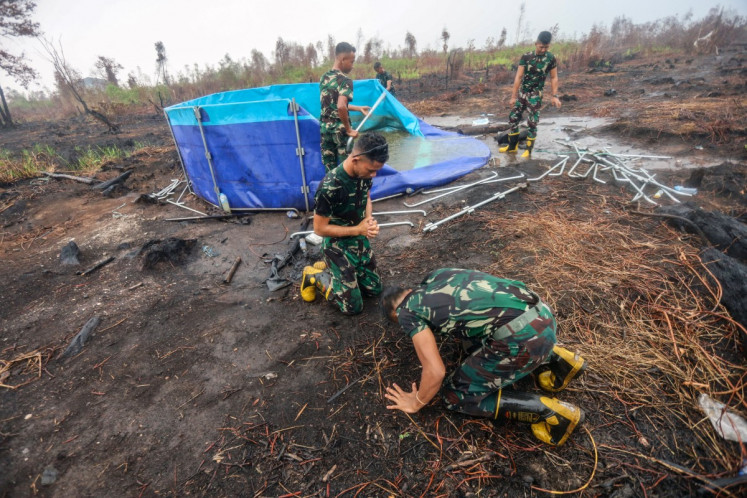
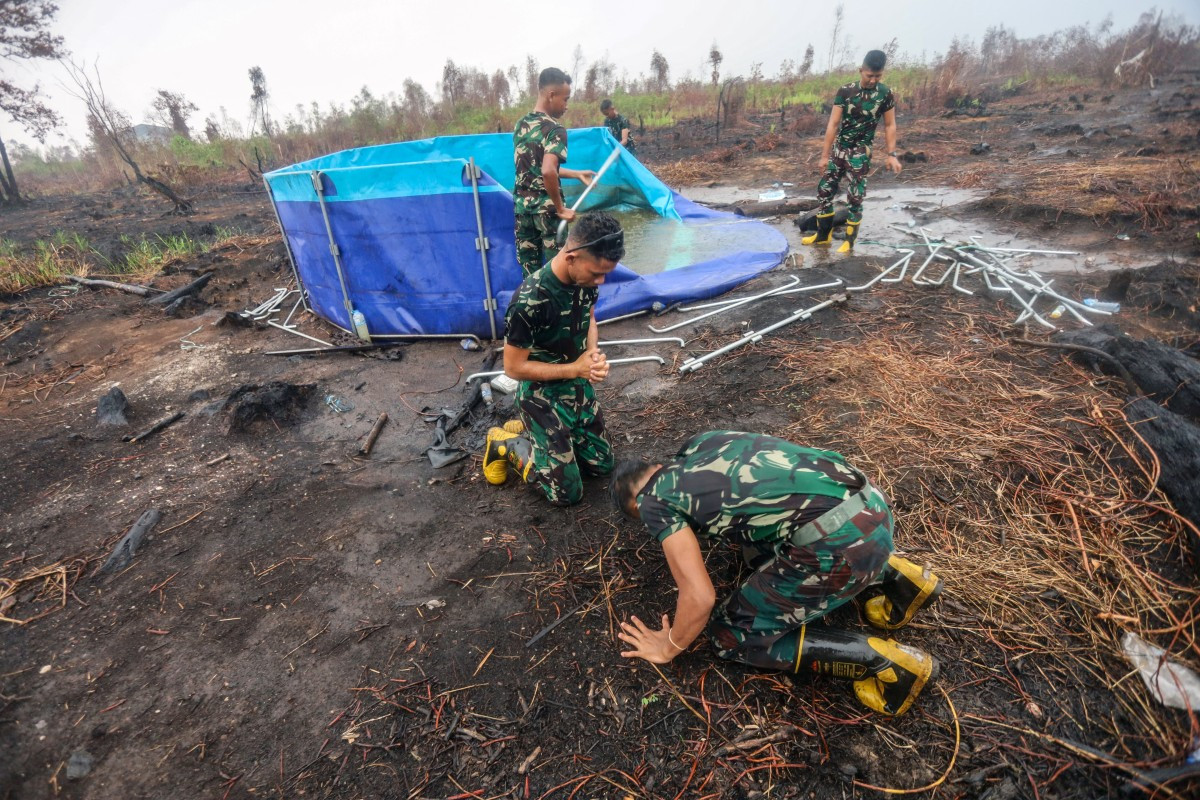 Indonesian soldiers, tasked with fighting forest and land fires, celebrate as it rains on Oct. 28 in Banjar Baru, South Kalimantan, following months of forest and peatland fires. (AFP/Muda Sagala)
A
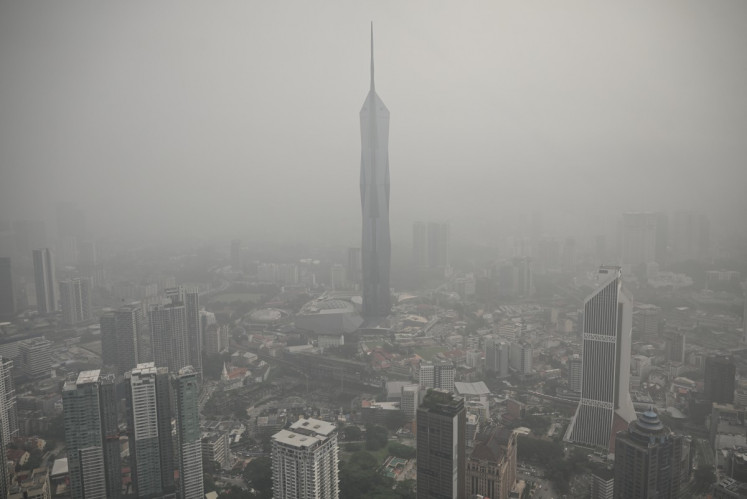
fter months of choking on toxic haze and enduring obscured skies from forest and peatland fires, residents across Sumatra, Kalimantan and other wildfire-stricken islands have finally received welcome news from above.
Intermittent rainfall has descended upon several hot spots across the country. In Palembang, the capital of South Sumatra, residents rejoiced after weeks of hazardous air quality and severely restricted visibility. Similar scenes unfolded in Palangka Raya, Central Kalimantan, where exhausted firefighters dropped to their knees, welcoming the downpour that helped douse the blazes they battled for months.
Rainfall also reached other regions, including Greater Jakarta, offering brief respite from prolonged scorching heat and a reservoir-depleting drought imperiling the metropolitan area’s clean water supply.
While we share the relief of the firefighters and communities now welcoming these rains, the central government and regional authorities must not succumb to complacency. A temporary downpour cannot serve as a pretext to abandon the systemic reforms required to prevent these fires from igniting in the first place.
Meteorologists attribute the recent precipitation to short-lived atmospheric dynamics around the Indonesian archipelago, notably Super Typhoon Champi making landfall in Taiwan and a moist air stream from Australia facilitating cloud formation. These patterns offer fleeting relief; Typhoon Champi dissipated shortly after striking Taiwan’s central mountain range.
The phenomenon with far greater staying power is El Niño. With sea surface temperatures in the east-central Pacific surging more than 3 degrees Celsius above normal, projections indicate that El Niño’s drying influence could persist over the archipelago well into early 2027, further delaying the onset of the regular monsoon season.

Without sustained rainfall, El Niño will plunge emergency teams back into severe firefighting operations in the few months ahead. Even amid the recent showers, satellite monitoring continues to detect persistent hot spots.