The Jakarta Post
Please Update your browser
Your browser is out of date, and may not be compatible with our website. A list of the most popular web browsers can be found below.
Just click on the icons to get to the download page.


Popular Reads
Top Results
No results found. Please check your search term and try again
Can't find what you're looking for?
View all search results
Popular Reads
Top Results
No results found. Please check your search term and try again
Can't find what you're looking for?
View all search resultsAnalysis: The Prabowo-Gibran government is clearly falling short
Change text size
Gift Premium Articles
to Anyone
Share the best of The Jakarta Post with friends, family, or colleagues. As a subscriber, you can gift 3 to 5 articles each month that anyone can read—no subscription needed!
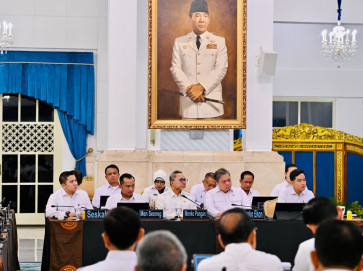
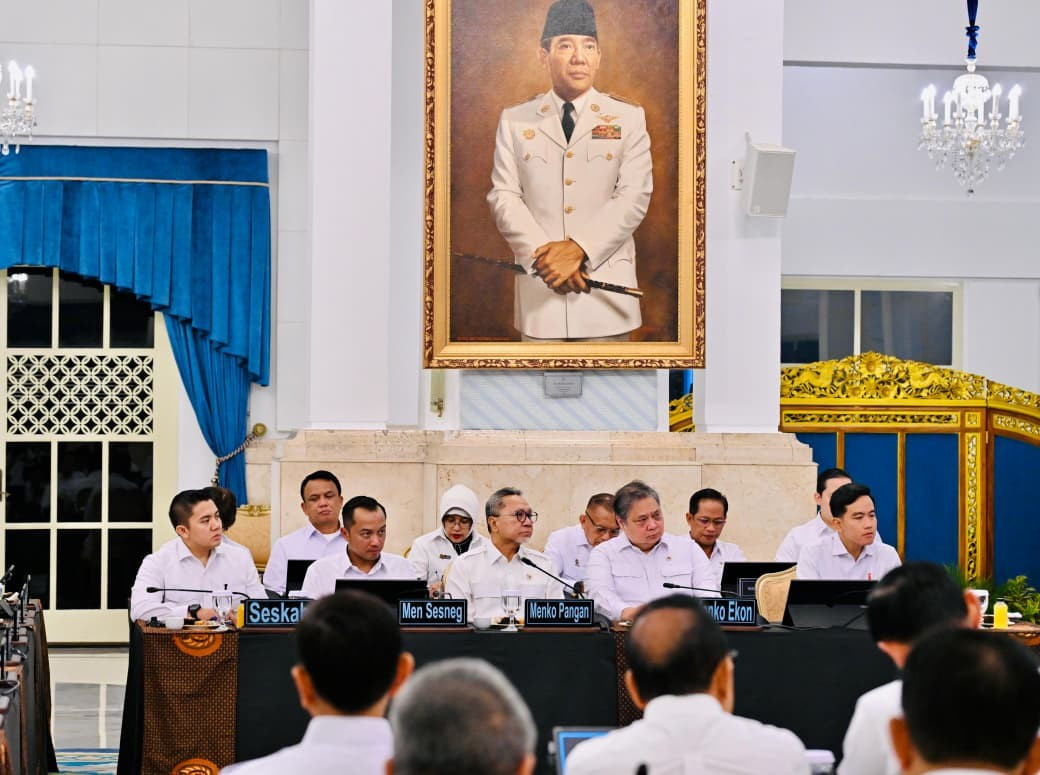 Vice President Gibran Rakabuming Raka (right), sits with coordinating ministers and cabinet ministers on Monday during a plenary cabinet meeting at the State Palace in Jakarta. ( Presidential Secretariat/Laily Rachev) ( Presidential Secretariat/Laily Rachev)
T
wo years into their five-year mandate, President Prabowo Subianto and Vice President Gibran Rakabuming Raka face mounting public dissatisfaction. Widespread protests and falling survey indicators point to deepening frustration over the administration’s performance.
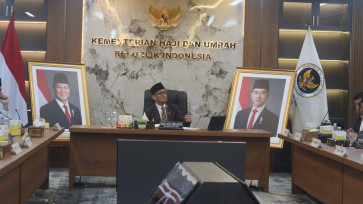
At a plenary cabinet meeting on Oct. 21 titled “Two Years of the First Term: Delivering Tangible Results for the Nation,” ministers and officials confidently presented what they framed as key government achievements. Prabowo declared that the administration had accomplished a great deal and remained on the right track, singling out the free nutritious meal program as a flagship strategic initiative while acknowledging that its rollout was not yet flawless.
Public sentiment, however, paints a far less reassuring picture. Discontent spilled onto the streets on Oct. 20 when Greenpeace Indonesia activists unfurled a big banner at the Welcome Monument in Jakarta’s Hotel Indonesia roundabout, drawing immediate traction across social media and catalyzing broader public action.
That initial protest sparked a sustained wave of demonstrations through Oct. 28, mobilizing students, labor unions and civil society nationwide. Protests took place at Tugu Tani in Jakarta, as well as in Bandung, Yogyakarta and Makassar on Oct. 20. The following day, hundreds gathered for a peaceful demonstration in Malang, followed by thousands taking to the streets in Semarang on Oct. 22. In Bandung, the Indonesian Student Executive Bodies Alliance (BEM SI) organized another major rally on Oct. 26. The latest wave culminated on Oct. 28, coinciding with Youth Pledge Day commemorations in Jakarta, Lampung and Malang.
Protesters called for stronger forest and land fire management, including the declaration of a national disaster status, alongside targeted measures to address soaring living costs. Other key demands included robust protections for free expression, decisive enforcement against corruption, collusion and nepotism (KKN) and reliable access to affordable public services. Demonstrators also urged the military and police to return strictly to their core constitutional functions and demanded a comprehensive audit of ongoing national strategic projects (PSN).
An October 2026 survey by Poltracking Indonesia found that public trust in the Prabowo-Gibran administration stood at 64.8 percent while public satisfaction fell to 55.3 percent - down sharply from 78.1 percent a year prior. A separate poll by Saiful Mujani Research and Consulting (SMRC) recorded government satisfaction at 44.5 percent in October 2026, dropping precipitously from 81.2 percent in November 2025.

Popular support for Prabowo eroded significantly over the same timeframe: in a semi-open presidential preference simulation, his numbers slid from 34.9 percent in November 2025 to just 9.8 percent in October 2026. Meanwhile, an assessment by the Center of Economic and Law Studies (CELIOS) assigned the Red and White Cabinet an average performance rating of 4.7 out of 10 among the public and 2.9 out of 10 among policy experts. These low marks reflect widespread anxiety over heavy tax burdens, strained household budgets, persistent underemployment, escalating basic commodity prices and fragile labor protections.