The Jakarta Post
Please Update your browser
Your browser is out of date, and may not be compatible with our website. A list of the most popular web browsers can be found below.
Just click on the icons to get to the download page.


Popular Reads
Top Results
No results found. Please check your search term and try again
Can't find what you're looking for?
View all search results
Popular Reads
Top Results
No results found. Please check your search term and try again
Can't find what you're looking for?
View all search resultsAttacking Iran amid Turkish, Saudi opposition is a strategic mistake
Attacking Iran against the explicit warnings of Turkey and Saudi Arabia risks a catastrophic regional war where military superiority delivers neither stability nor a viable political endgame.
Change text size
Gift Premium Articles
to Anyone
Share the best of The Jakarta Post with friends, family, or colleagues. As a subscriber, you can gift 3 to 5 articles each month that anyone can read—no subscription needed!
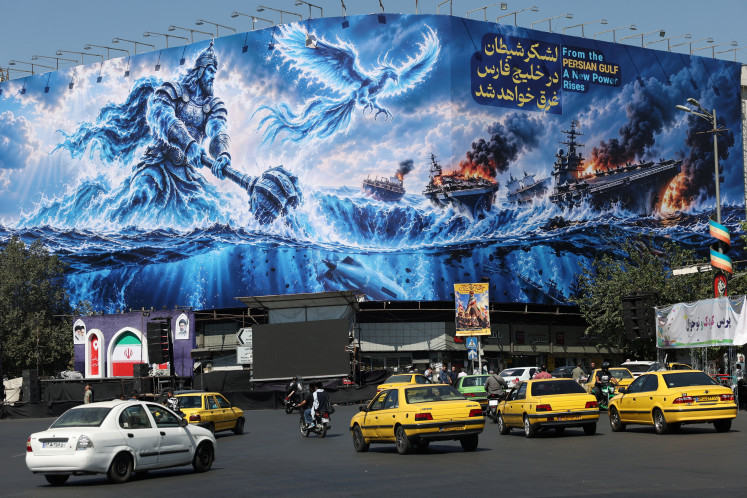
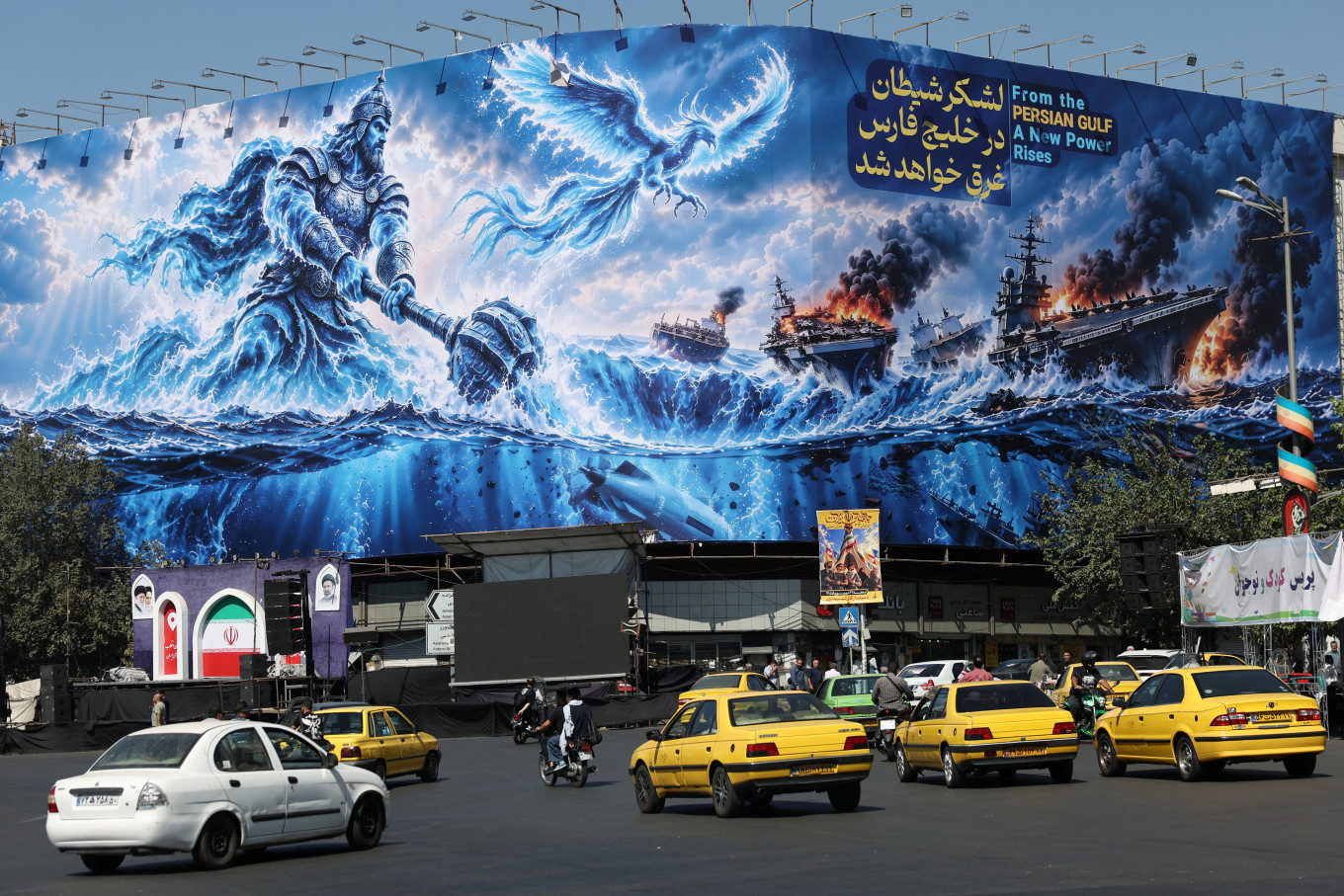 Motorist drive past a building in Tehran with a massive billboard about the Strait of Hormuz on Sept. 16, 2026. (Reuters/West Asia News Agency/Majid Asgaripour)
T
he ongoing military confrontation involving the United States, Israel and Iran has exposed a fundamental contradiction in the strategic architecture of West Asia: Military superiority does not automatically translate into political legitimacy, regional acceptance or lasting stability. This contradiction becomes especially pronounced when two of the region’s most consequential powers, Turkey and Saudi Arabia, explicitly oppose further escalation.
Turkey is a pivotal NATO member with one of the alliance’s largest standing militaries, occupying an indispensable position bridging Europe, the Black Sea, the Caucasus and West Asia. Saudi Arabia remains central to Gulf security, global energy markets and the diplomatic architecture of the Islamic world. Neither state can be sidelined as strategically negligible.
Their resistance to further strikes raises a fundamental question: Can continued military operations against Iran produce an acceptable political settlement, or will they merely entrench a catastrophic conflict whose fallout extends far beyond the region?
In this context, the diplomatic gathering in Istanbul on Oct. 23 carries undeniable weight. Convening European and Middle Eastern foreign ministers, the meeting reflected mounting international alarm that renewed strikes on Iran would widen the confrontation rather than resolve it.
What makes this development particularly notable is the convergence of states that do not share identical strategic interests. Historically, Ankara and Riyadh have approached Tehran through divergent geopolitical lenses: Turkey has sought to balance competition with pragmatic economic engagement, whereas Saudi Arabia has viewed Iranian power projection through the critical lens of Gulf security and regime survival.
Yet both powers grasp the severe perils of allowing West Asia to descend into an open, systemic war. Their opposition to escalation is not an endorsement of Iranian conduct; rather, it reflects a clear distinction between military deterrence and strategic recklessness.

Furthermore, the Mecca defense understanding involving Turkey, Saudi Arabia and Pakistan introduces an additional layer to this evolving security landscape, underscoring regional ambitions to consolidate strategic autonomy amid growing doubts over the predictability and collateral consequences of external military intervention.