The Jakarta Post
Please Update your browser
Your browser is out of date, and may not be compatible with our website. A list of the most popular web browsers can be found below.
Just click on the icons to get to the download page.


Popular Reads
Top Results
No results found. Please check your search term and try again
Can't find what you're looking for?
View all search results
Popular Reads
Top Results
No results found. Please check your search term and try again
Can't find what you're looking for?
View all search resultsWhy Ukraine’s food exports matter to Indonesia
From the Black Sea to your bowl of noodles, war in Ukraine directly shakes Indonesia’s food prices—and reveals why Europe and Indonesia must partner to secure what’s on our tables.
Change text size
Gift Premium Articles
to Anyone
Share the best of The Jakarta Post with friends, family, or colleagues. As a subscriber, you can gift 3 to 5 articles each month that anyone can read—no subscription needed!
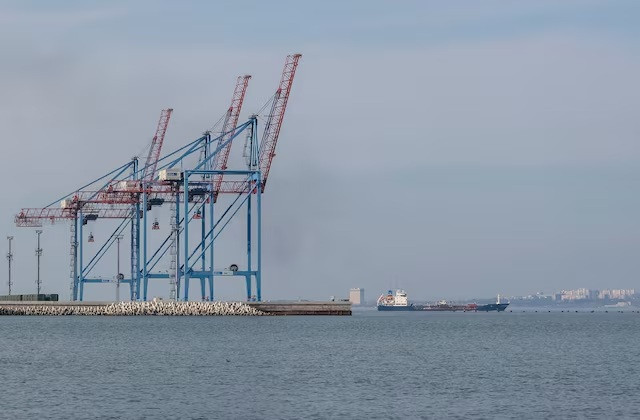 A cargo vessel leaves a port in the Black Sea on March 26, amid Russia's attack on Ukraine. (Reuters/Nina Liashonok)
F
or many Indonesians, the war in Ukraine can seem far away. Odessa is thousands of kilometers from Jakarta. But in an interconnected food system, distant events still affect prices at home. When grain ships cannot move safely through the Black Sea, the effects travel through global markets and reach everyday foods, from noodles and bread to biscuits.
That matters for Indonesia, one of the world’s largest wheat importers, with important food security and nutrition priorities. In 2025, the country imported around 10.8 million tonnes of wheat and meslin, including almost 870,000 tonnes from Ukraine. In 2024, Ukraine supplied 2.4 million tonnes, roughly one in every five tonnes entering Indonesia.
When Ukraine’s food exports are disrupted, the effects travel far beyond Europe
Ukraine has long been a major agricultural exporter. Before Russia’s full-scale invasion in February 2022, it accounted for roughly 15–17 percent of global maize exports, 10–12 percent of wheat exports, around 15–20 percent of barley exports and about half of sunflower-oil exports. Food for families in Asia, Africa and the Middle East.
Today, those export routes are again under severe pressure due to the protracted war. The United Nations has warned that the growing risks to Black Sea agricultural trade are pressuring global grain markets while food systems are already under strain. It has also called for the protection of civilian ports and freedom of navigation under international law.
The effects are visible. Between Aug. 1 and Aug. 26, Ukraine exported only 1.4 million tonnes of grain, oilseeds and processed agricultural products, around one-third of its potential volume.

This pressure on food supply affects prices. In September, the UN Food and Agriculture Organization (FAO) reported that its Food Price Index rose 1.5 percent and its Cereal Price Index 5.1 percent. World wheat prices rose 6.3 percent, reaching their highest level since August 2023. As climate pressures affect multiple crop-producing regions simultaneously, reliable Black Sea exports are increasingly important to global market stability.