The Jakarta Post
Please Update your browser
Your browser is out of date, and may not be compatible with our website. A list of the most popular web browsers can be found below.
Just click on the icons to get to the download page.


Popular Reads
Top Results
No results found. Please check your search term and try again
Can't find what you're looking for?
View all search results
Popular Reads
Top Results
No results found. Please check your search term and try again
Can't find what you're looking for?
View all search resultsThe wiretap as a deep-state move into Indonesia’s democracy
When the police can wiretap the president without a warrant, the fall of a few generals reveals not just a rogue plot, but a deep-state surveillance apparatus that will outlast any prosecution unless the system itself is dismantled.
Change text size
Gift Premium Articles
to Anyone
Share the best of The Jakarta Post with friends, family, or colleagues. As a subscriber, you can gift 3 to 5 articles each month that anyone can read—no subscription needed!
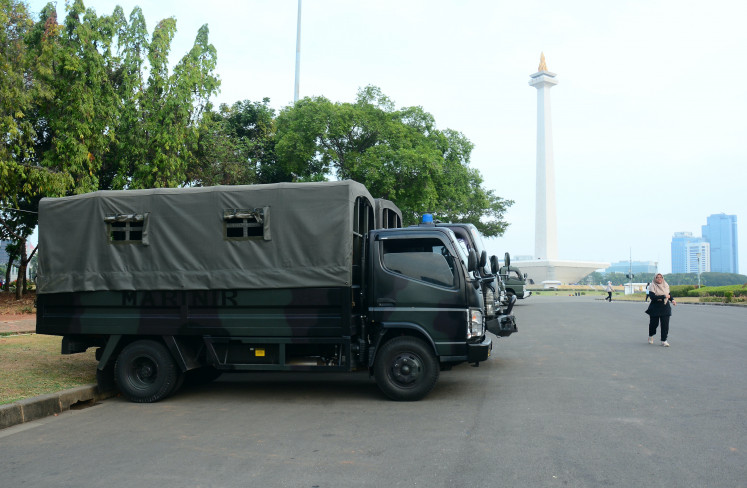
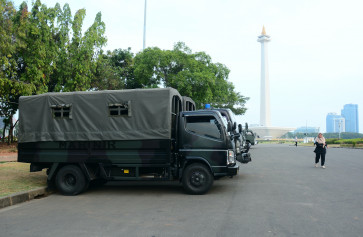
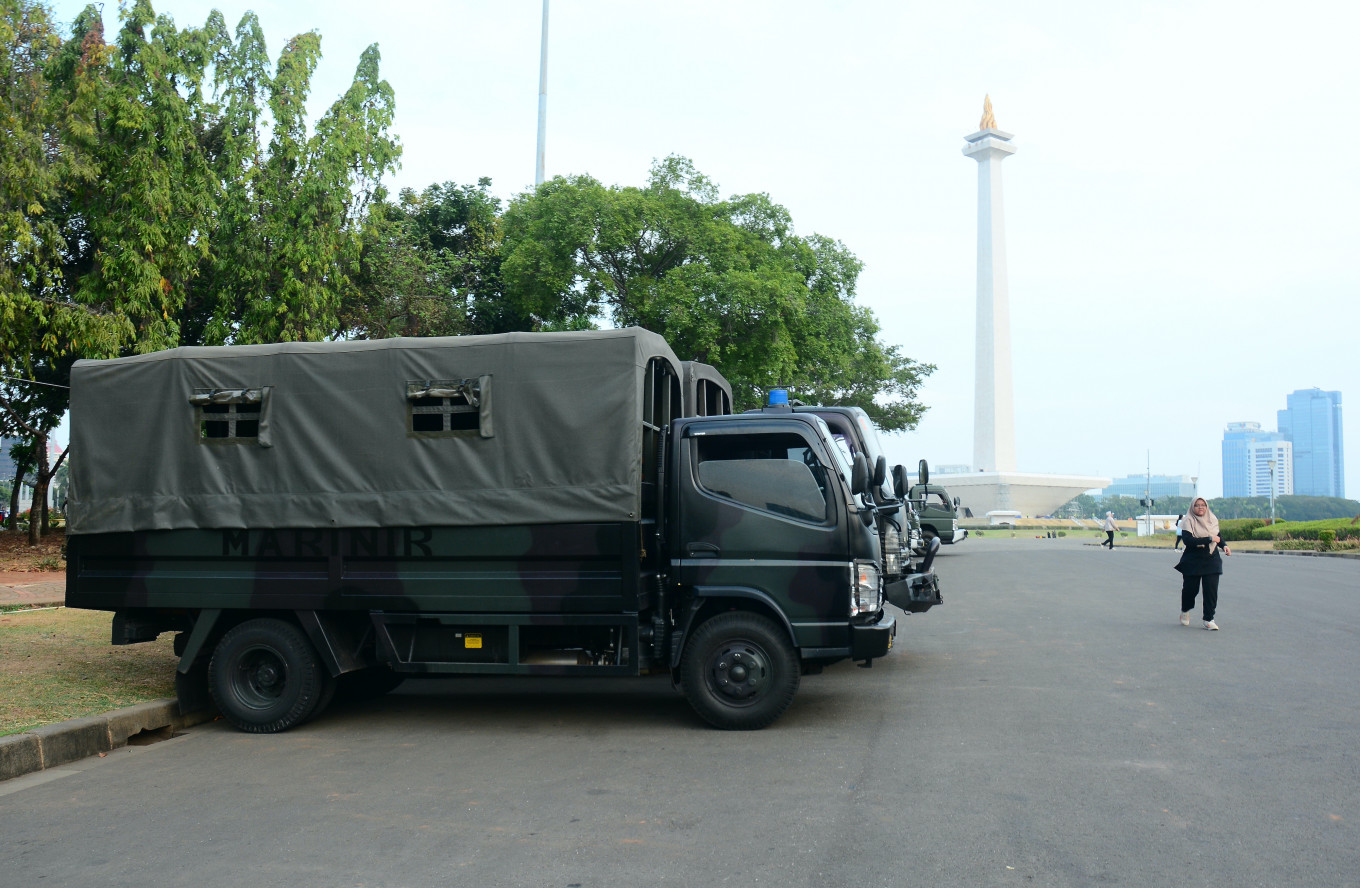 A woman goes for an afternoon run past several Marine Corps trucks parked within the National Monument (Monas) complex in Central Jakarta on Nov.4, 2026. Jakarta is on high alert, with thousands of military personnel deployed across the capital following the arrest of three police generals over alleged illegal wiretapping of President Prabowo Subianto. (JP/Iqro Rinaldi)
O
n Tuesday the National Police named its own former chief, Gen. Listyo Sigit Prabowo, a suspect in the illegal wiretapping of President Prabowo Subianto and other high-ranking officials. Two inspectors general were detained with Listyo, who was subsequently dismissed as the presidential chief of staff.
According to the police's Criminal Investigation DEpartment (Bareskrim), the President's number had been entered into the police's Lawful Interception Management System (LIMS) without a warrant or a case file, as had those of officials, politicians, journalists, activists and businesspeople. When the scheme was detected in October, someone ordered the files and logs deleted.
On Wednesday the Presidential Palace raised the stakes. State Secretary Prasetyo Hadi put the act in the category of makar (treason). “What was done may already fall into the category we can regard as an act leading to makar,” he told reporters at the Palace. A case ostensibly about the abuse of a police system is now, in the government's words, a matter of state security.
It is tempting to read this as the fall of three generals. It is more useful to read it as a move by a deep state. Not a cabal of plotters, but an architecture: the parts of the state that hold information, coercion and leverage over capital, and that outlast the presidents who nominally command them.
Such an architecture has three properties. It owns infrastructure the elected state cannot easily see into. It is staffed by career networks whose loyalties cross administrations. And it turns what it knows into leverage over those who hold money and votes.
Indonesia's interception apparatus has all three. LIMS rests on a 2010 police regulation, not on a statute with judicial warrants. The officers who ran the system rose through patronage paths between Jakarta and Surakarta in Central Java. And the targets Bareskrim described, from the President to ministers, media, civil society and tycoons, do not add up to a criminal investigation. They add up to a map of the people whose secrets are worth holding.

Other democracies have been here before. Watergate began in 1972 as a bugging job run from inside the White House. Richard Nixon fell, but the lasting reform came later, with the Church Committee and a 1978 law putting national-security wiretaps under a special court.