The Jakarta Post
Please Update your browser
Your browser is out of date, and may not be compatible with our website. A list of the most popular web browsers can be found below.
Just click on the icons to get to the download page.


Popular Reads
Top Results
No results found. Please check your search term and try again
Can't find what you're looking for?
View all search results
Popular Reads
Top Results
No results found. Please check your search term and try again
Can't find what you're looking for?
View all search resultsIndonesia’s dilemma: Giving police too much power
A new police chief may wield power differently, but Indonesia’s true test of reform is deciding how much unchecked authority any one official should ever inherit.
Change text size
Gift Premium Articles
to Anyone
Share the best of The Jakarta Post with friends, family, or colleagues. As a subscriber, you can gift 3 to 5 articles each month that anyone can read—no subscription needed!
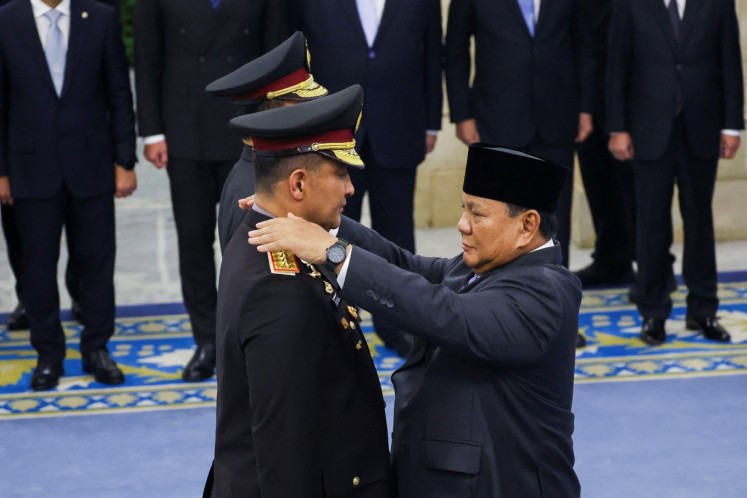
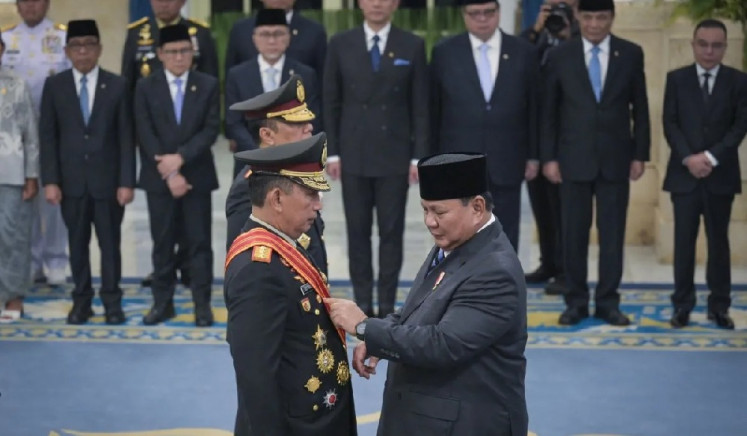
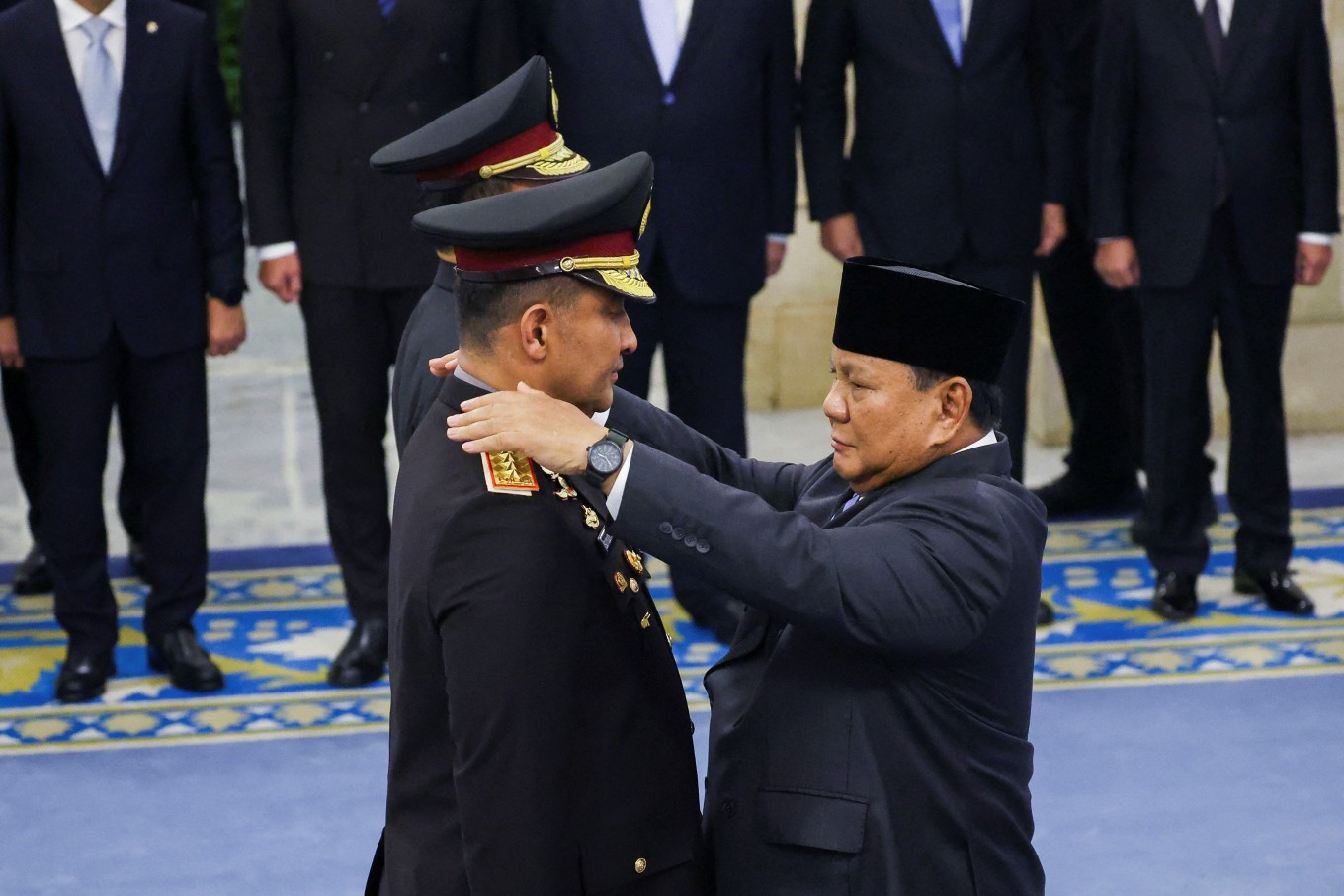 President Prabowo Subianto (right) attaches rank insignia on Oct. 1, 2026, to the uniform of newly appointed National Police chief Suyudi Ario Seto (left) during his inauguration at the State Palace in Central Jakarta. (Reuters/Ajeng Dinar Ulfiana)
R
eading the allegations of illegal surveillance involving Indonesia’s former police chief, I was reminded of Clint Eastwood’s J. Edgar. The movie portrays how access to other people’s secrets can grant a law enforcement official extraordinary political influence. An institution entrusted to investigate others gradually acquires the means to make scrutiny of itself increasingly difficult.
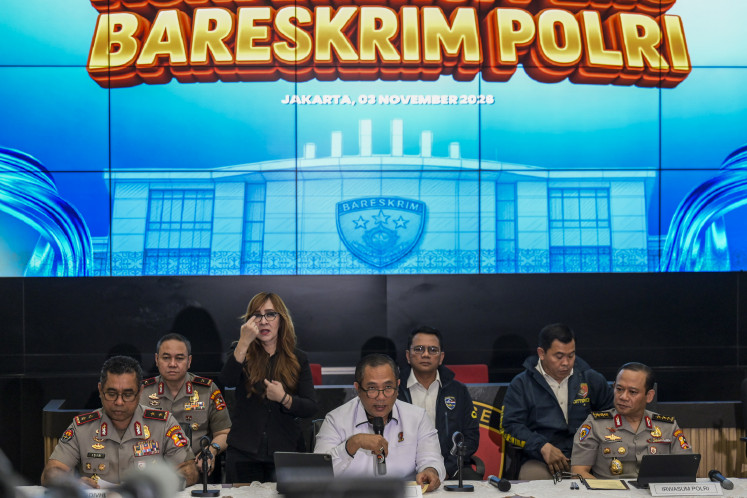
At a recent press conference, the National Police’s Criminal Investigation Department (Bareskrim) announced that three senior officers, identified only by the initials LSP, ASN and EH, had been named suspects in an alleged unlawful surveillance scheme. The reported targets included President Prabowo Subianto, prominent political figures, journalists, civil society activists and business leaders. While these allegations remain to be tested in court, the dangerous concentration of authority they bring into view demands immediate public attention.
The investigation emerged only after transitions in both the presidency and police leadership. That timing should temper any celebration of institutional independence: scrutiny exercised under a new political configuration offers little assurance that the same institution could have acted while the targets retained office and political patronage.
Legal merit and political opportunity can, of course, coexist. A justified investigation often becomes feasible only when previous obstacles recede. Yet we must be careful not to mistake an opening created by shifting political winds for a lasting structural correction of institutional power. Any successor still inherits the very authority that obstructed scrutiny in the first place. This is the central dilemma police reform must resolve.
The National Police’s authority extends from issuing driver’s licenses and patrolling neighborhoods to conducting complex criminal investigations and gathering state intelligence. These functions generate continuous contact with citizens, businesses and political actors through an unmediated national hierarchy. Administrative authority establishes everyday civilian dependencies, investigative discretion carries severe coercive weight and intelligence access yields proprietary information unavailable to anyone outside the apparatus.
Together, these powers grant the organization leverage far beyond the resolution of individual crimes. Where internal oversight relies on this identical chain of command, confronting misconduct requires defying the exact hierarchy upon which an officer’s career depends. Changing the individual at the top leaves the underlying machinery intact for future exploitation. Indonesia must therefore reconsider whether so much unchecked power belongs under a single roof.

Article 30 of the 1945 Constitution establishes the National Police’s mandate for public security, protection and law enforcement, but leaves its operational structure, status and precise powers to law. The institution's constitutional status does not require every conceivable policing function to sit within a unified national command.