The Jakarta Post
Please Update your browser
Your browser is out of date, and may not be compatible with our website. A list of the most popular web browsers can be found below.
Just click on the icons to get to the download page.


Popular Reads
Top Results
No results found. Please check your search term and try again
Can't find what you're looking for?
View all search results
Popular Reads
Top Results
No results found. Please check your search term and try again
Can't find what you're looking for?
View all search resultsAnalysis: We have not seen the full political fallout of the police scandal
Change text size
Gift Premium Articles
to Anyone
Share the best of The Jakarta Post with friends, family, or colleagues. As a subscriber, you can gift 3 to 5 articles each month that anyone can read—no subscription needed!
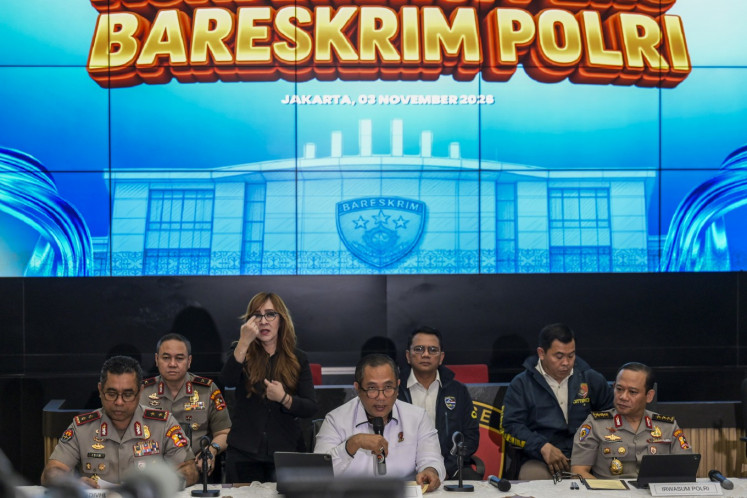
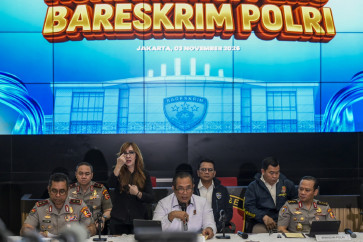
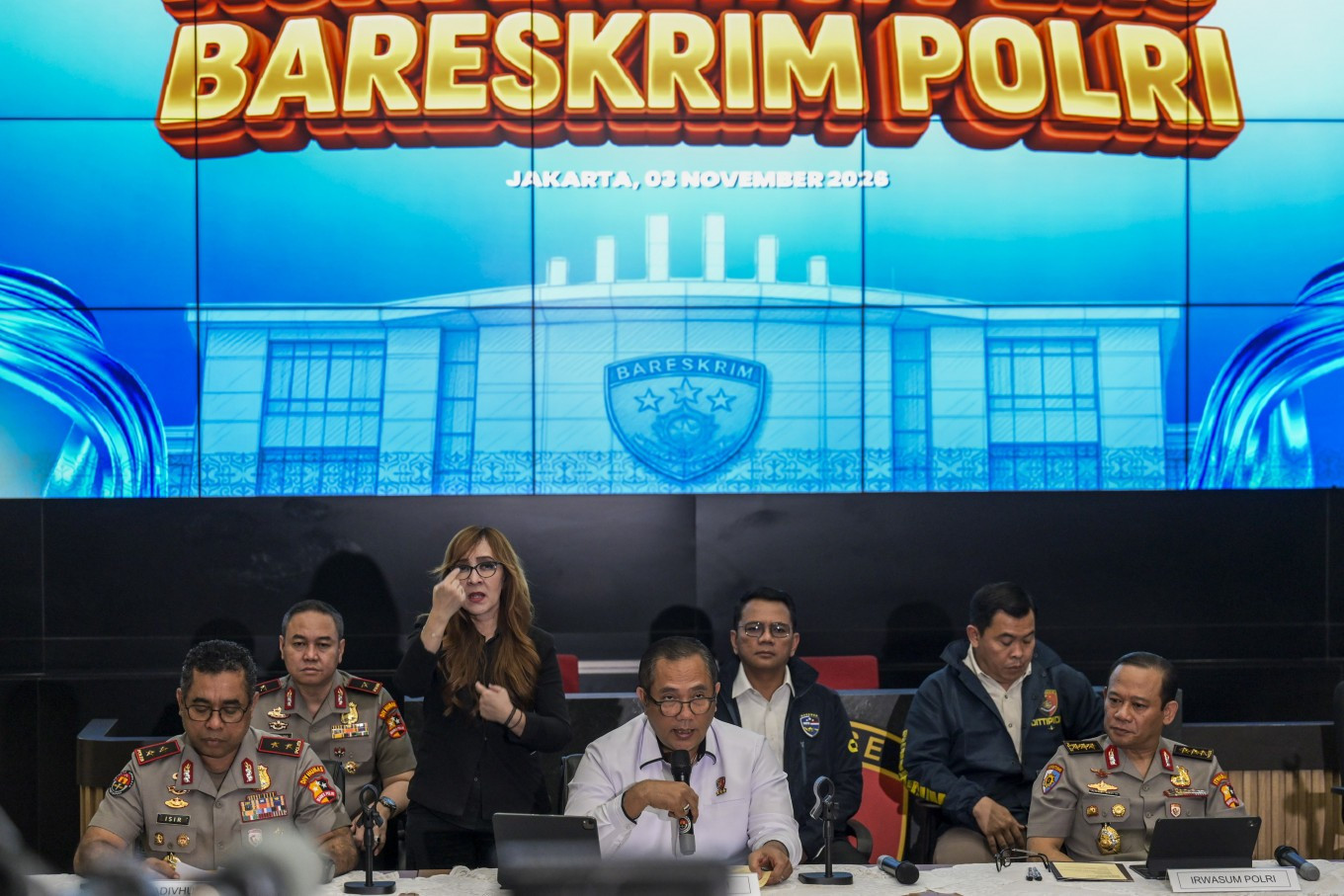 National Police Criminal Investigation Department (Bareskrim) chief Comr. Gen. Asep Safrudin (center) addresses a news conference in Jakarta on Nov. 3, 2026. Bareskrim has named three generals, Listyo Sigit Prabowo, Ahrie Sonta Nasution and Eko Hadi Santoso, as suspects for unlawful wiretapping of President Prabowo Subianto. (Antara/Galih Pradipta)
T
he detention of former National Police chief Gen. Listyo Sigit Prabowo on allegations of illegal wiretapping has become one of the most consequential political scandals in recent Indonesian history. Yet the country has probably not seen its full fallout. If anything, the affair is only beginning to reveal how deeply police power penetrated the political system and how weak oversight and accountability have become.
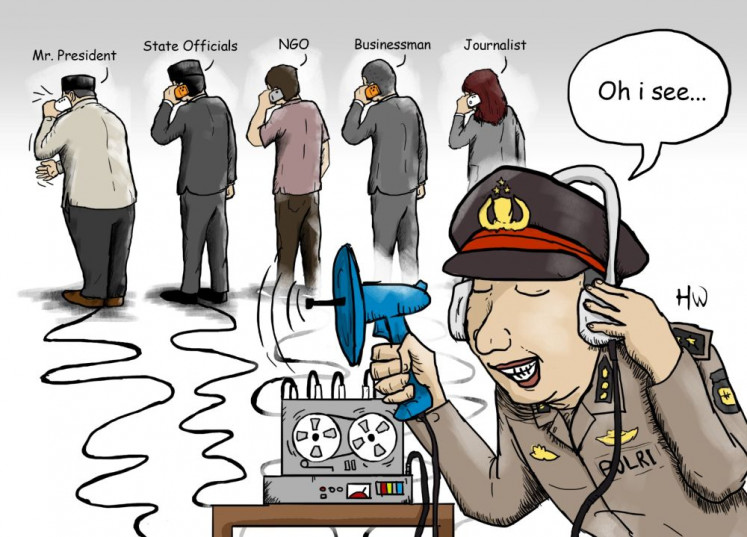
For now, investigators have confined the case to unlawful surveillance carried out without authorization, in violation of the Criminal Code and the Electronic Information and Transactions (ITE) Law. Police have named three generals as suspects, and prosecutors are focusing on wiretapping allegedly conducted between January 2025 and October 2026. The charges carry maximum sentences of up to 10 years. According to investigators, the targets included President Prabowo Subianto himself, as well as senior officials, politicians, journalists, activists and businesspeople.
The scandal shows how much power the police accumulated over the past decade. In a democracy with effective checks and balances, surveillance of a sitting president by the police would be unthinkable. Yet the allegations suggest parts of the institution operated with extraordinary autonomy and confidence. It is telling that the case became public only after Listyo was removed from the post he had held for more than five years and moved to the Presidential Office as chief of staff. Without that reshuffle, the alleged activities might never have come to light. The timing raises uncomfortable questions about what senior political figures knew, and why the matter surfaced only after the balance of power shifted.
Constitutionally, the police answer to the president. In practice, that arrangement may have produced the opposite effect: because the National Police reports directly to the president, it has become one of the country’s most powerful political actors, able to negotiate concessions and expand its influence under successive administrations. Listyo, like several predecessors, leveraged both the institutional power of the National Police and the personal influence that came with leading it.
Governments increasingly relied on the police for tasks far beyond law enforcement, and active and retired officers moved into civilian posts across government agencies, state-owned enterprises and regulatory bodies. The line between policing and governance blurred. Rather than serving solely as an instrument of public security, the institution became a political stakeholder with interests of its own. If the allegations are proven, they will reveal not just individual misconduct but systemic failure.
If the surveillance extended to the President, senior officials and others, it may have gathered not only intelligence of national importance but also deeply private, potentially damaging material. Whoever has access to it could retain leverage over the political process, including the investigation itself. Authorities, politicians and even alleged victims may hesitate to push the case to its conclusion if they fear leaks, selective release or blackmail. Whether or not such pressure is being exerted, the mere possibility shows the corrosive effect of unchecked surveillance.

Surveillance on this scale, sustained for nearly two years against prominent figures, would almost certainly have required technicians, analysts, supervisors and operational support at multiple levels. And if the former police chief is shown to have led the operation from the top, it is hard to believe it was conceived and sustained by three officers acting alone. The investigation may reveal a far broader network of participants, beneficiaries and enablers, inside and perhaps outside the institution.