The Jakarta Post
Please Update your browser
Your browser is out of date, and may not be compatible with our website. A list of the most popular web browsers can be found below.
Just click on the icons to get to the download page.


Popular Reads
Top Results
No results found. Please check your search term and try again
Can't find what you're looking for?
View all search results
Popular Reads
Top Results
No results found. Please check your search term and try again
Can't find what you're looking for?
View all search resultsBeyond elite conflicts: How state surveillance swept up lives
A massive wiretapping scandal targeting over 6,000 people, ranging from politicians to activists, reveals that Indonesia’s surveillance apparatus isn't just guarding the state. It's systematically dismantling democracy from the shadows.
Change text size
Gift Premium Articles
to Anyone
Share the best of The Jakarta Post with friends, family, or colleagues. As a subscriber, you can gift 3 to 5 articles each month that anyone can read—no subscription needed!
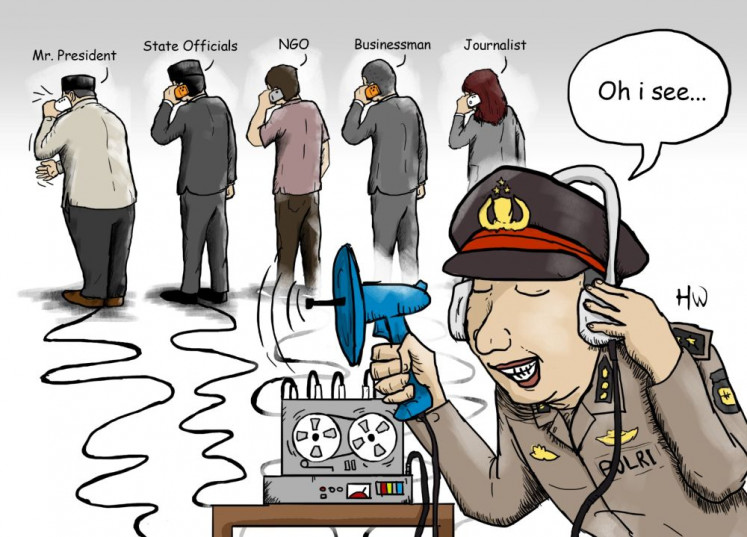
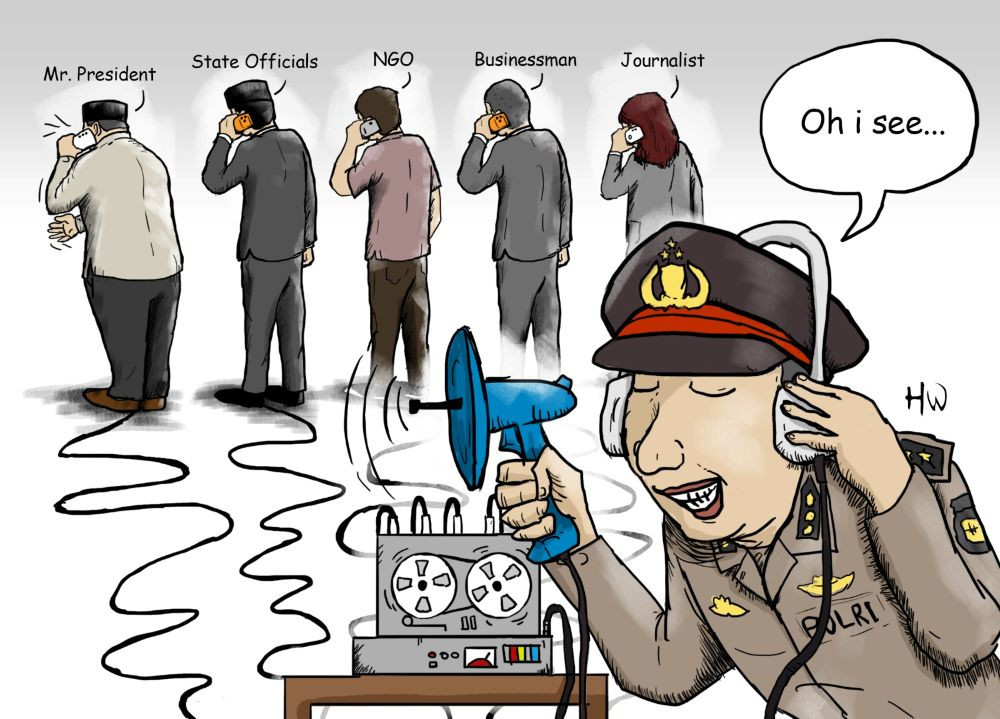 A police officer listens to phone conversations in this undated illustration of a police wiretapping cartoon. (JP/Hengky Wijaya)
P
ublic discourse has fixated on treason ever since the illegal wiretapping scandal allegedly involving former National Police chief Gen. Listyo Sigit Prabowo and his inner circle came to light. The dominant narrative reduces this entire episode to a fight over the head of state, treating the President as the sole target that matters.
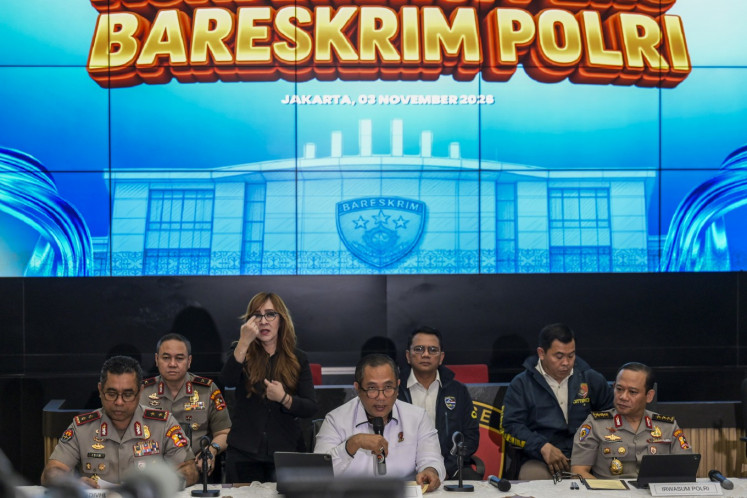
But official data from the National Police’s Criminal Investigation Agency (Bareskrim) paints a far darker reality. The surveillance network did not stop at the palace gates; it swept up over 6,000 phone numbers.
According to Bareskrim head Comr. Gen. Asep Safrudin, operators pumped thousands of phone numbers straight into the Lawful Interception Management System (LIMS) server. They bypassed judicial warrants, skipped procedural checks and trampled basic legal standards.
Police records sort the targets into five clear clusters. First came senior politicians and government executives, including at least 43 high-profile figures such as former president Susilo Bambang Yudhoyono and Cabinet Secretary Teddy Indra Wijaya. Second came the police’s own ranks, ensnaring intelligence chief Comr. Gen. Dedy Kusuma Bakti. Third were journalists, editors and media executives. Fourth were civil society leaders and human rights activists who regularly challenge official policy. Fifth were prominent entrepreneurs and business leaders.
This breadth proves the wiretapping operation was never just an elite political conspiracy against the head of state. It was a dragnet tracking everyday communication across politics, media, commerce and grassroots advocacy.
Without downplaying threats to a sitting president, the fallout runs far deeper. It strikes at civil liberties, political rights, press freedom and the basic right to privacy. Leaving such apparatus unchecked pulls Indonesia into covert policing designed to neutralize dissent, echoing the total surveillance George Orwell warned about decades ago.

These risks were already laid bare in Amnesty International’s May 2024 report on spyware exports to Indonesia. That investigation exposed how state bodies like the National Police and the National Cyber and Crypto Agency (BSSN) quietly acquired commercial, military-grade spyware through opaque intermediaries.