The Jakarta Post
Please Update your browser
Your browser is out of date, and may not be compatible with our website. A list of the most popular web browsers can be found below.
Just click on the icons to get to the download page.


Popular Reads
Top Results
No results found. Please check your search term and try again
Can't find what you're looking for?
View all search results
Popular Reads
Top Results
No results found. Please check your search term and try again
Can't find what you're looking for?
View all search resultsProgress achieved, promise unfulfilled: Eradicating poverty in Asia-Pacific
Poverty in Asia and the Pacific concentrates among large rural households and in remote areas, among people with little or no education, among children, among informal workers and among women..
Change text size
Gift Premium Articles
to Anyone
Share the best of The Jakarta Post with friends, family, or colleagues. As a subscriber, you can gift 3 to 5 articles each month that anyone can read—no subscription needed!
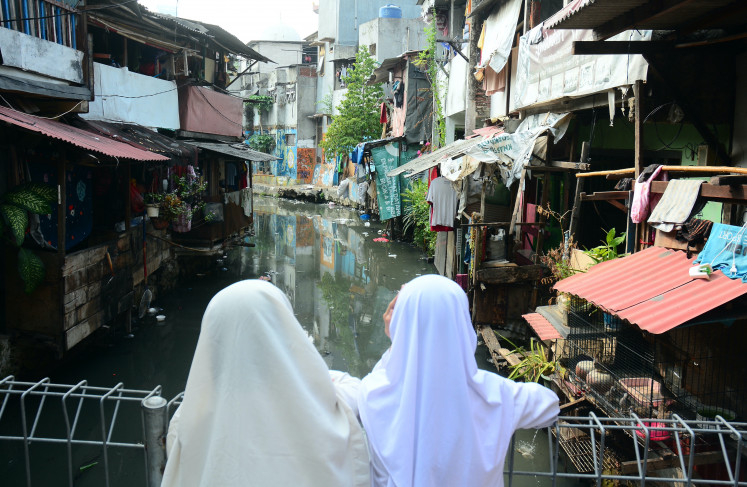
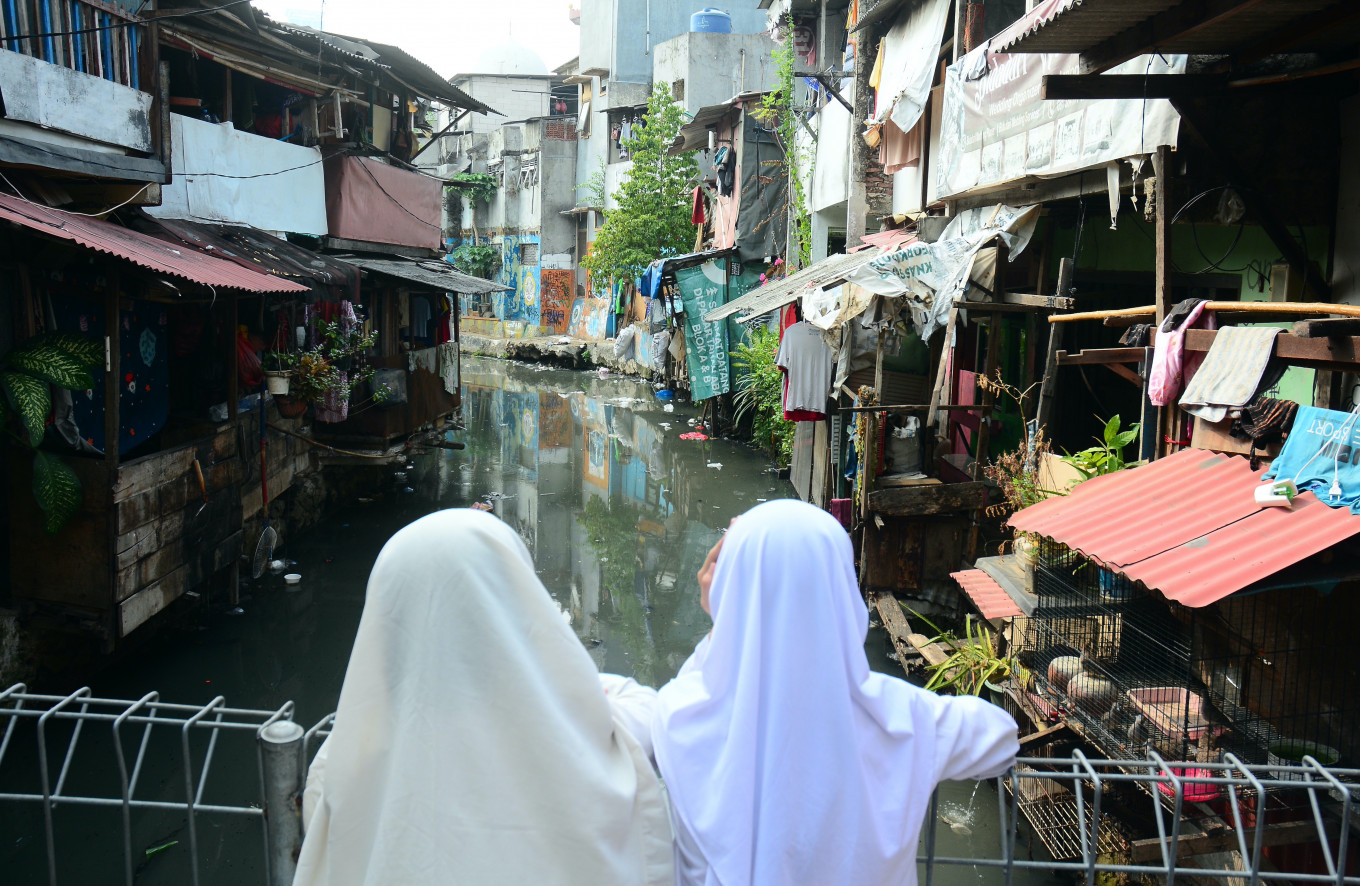 Two schoolchildren look over a densely populated informal settlement in the Kebon Melati neighborhood of Jakarta, on Aug. 7, 2026. Statistics Indonesia reported that the country's poverty rate stood at 8.07% in March 2026, with 22.93 million people living below the poverty line, down by 430,000 from September 2025. (JP/Iqro Rinaldi)
C
ountries across Asia and the Pacific have made remarkable strides over the past three decades in tackling poverty through a combination of economic growth, government-led programs and community-based initiatives.
At the same time, the nature of poverty and vulnerability is evolving as climate change, population ageing, digital transformation and recurring economic shocks reshape who is poor, how people experience deprivation and their exposure to future risks. But we have the tools and evidence to address these challenges.
We have myriad examples from across the region: Universal health coverage in Thailand cut out-of-pocket health spending and infant mortality, with the largest gains for the poorest households. Nepal nearly halved child stunting through coordinated nutrition policy, despite limited economic growth. China established targeted employment assistance mechanisms for people in vulnerable situations to broaden their employment channels.
Additionally, Malaysia is expanding access to childcare and eldercare through public investment, community-based services and financial incentives. Mongolia supports unpaid family caregivers through a government-funded care allowance. Cooperatives from Cambodia, India, Kiribati and Vietnam are already showing how community-owned, participatory models can generate income and resilience, especially in rural areas.
These actions have helped the region to record one of the most significant success stories in modern human development. Driven primarily by economic growth, extreme poverty, the reality for roughly half of the region’s population only 30 years ago, has fallen to just 4 per cent in 2024, with hundreds of millions of people being lifted out of acute deprivation. Yet this headline figure masks a significant reality: 190 million people continue to live in extreme poverty; nearly 500 million people are multidimensionally poor while 660 million are vulnerable to multidimensional poverty.
Considering hybrid poverty lines that reflect what a dignified life actually costs in each country, the trends are even starker: more than 1.1 billion people live in poverty in 2026, an additional 1.2 billion people live above but very close to their respective poverty lines and 310 million people are classified as extremely poor. People are deprived not only of income, but of adequate housing, education, nutrition or social protection. More critically, millions remain one shock away from falling, or slipping deeper, into poverty.

Because so many drivers of poverty cross borders, regional cooperation is not optional but essential. Through regional public goods such as the Leaving No One Behind Platform, the Social Protection Online Toolbox, the Risk and Resilience Platform and the SDG Gateway, we help translate shared regional knowledge into nationally adapted, evidence-based policy, while platforms such as the ESCAP Action Plan to Strengthen Regional Cooperation on Social Protection allow governments to facilitate knowledge exchange and scale policy approaches. And because government action alone cannot close the gap, the private sector and civil society organizations have a critical role to play too, through inclusive business models that reach people in vulnerable situations.