The Jakarta Post
Please Update your browser
Your browser is out of date, and may not be compatible with our website. A list of the most popular web browsers can be found below.
Just click on the icons to get to the download page.


Popular Reads
Top Results
No results found. Please check your search term and try again
Can't find what you're looking for?
View all search results
Popular Reads
Top Results
No results found. Please check your search term and try again
Can't find what you're looking for?
View all search resultsThe unemployment rate is falling, rural distress is not
Indonesia's falling unemployment rate looks like an economic triumph, until you realize the country’s poorest villages have the lowest joblessness, masking a hollowed-out manufacturing sector and millions driven into survival farming.
Change text size
Gift Premium Articles
to Anyone
Share the best of The Jakarta Post with friends, family, or colleagues. As a subscriber, you can gift 3 to 5 articles each month that anyone can read—no subscription needed!
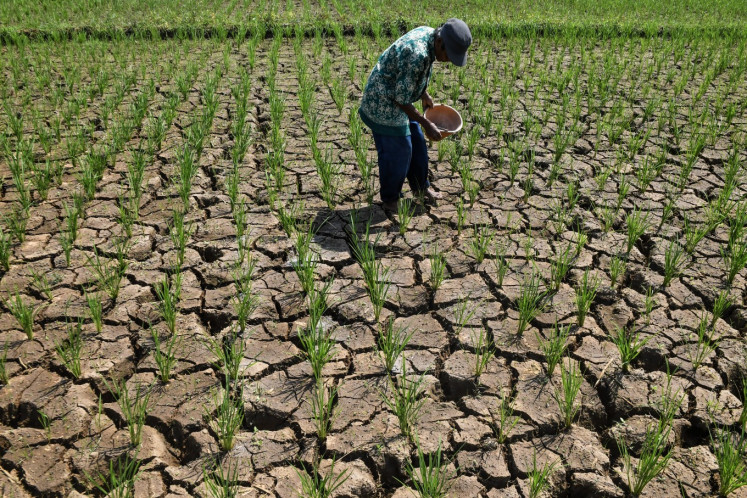
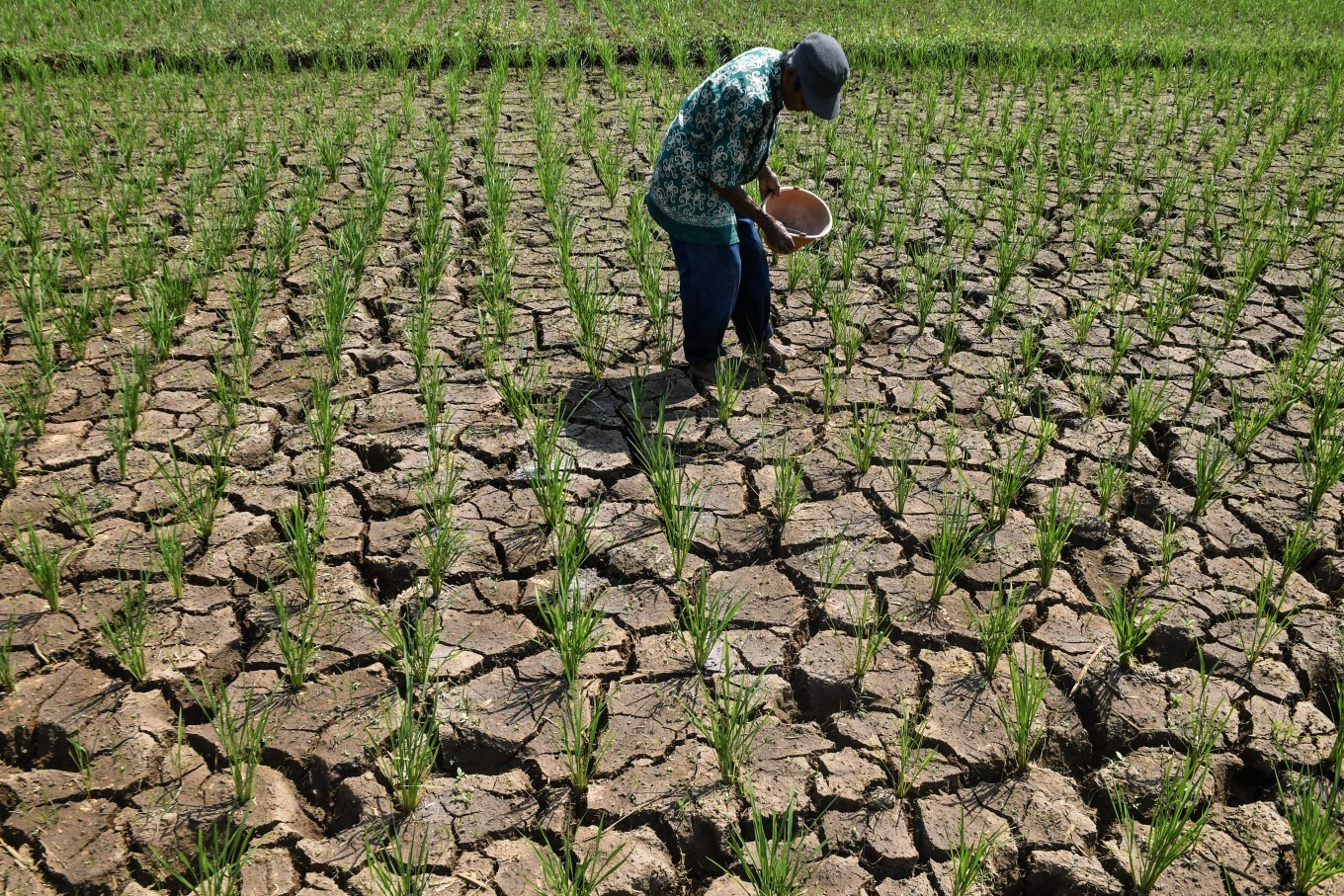 A farmer applies urea to paddy on June 10, 2026, at a drought-affected rice farm in Handapherang village, Ciamis regency, West Java, where around 12 hectares of rice fields have been left parched and cracked as the dry season intensifies. ( Antara/Adeng Bustomi)
O
n Oct. 27, the Office of Coordinating Economic Minister announced that Indonesia’s open unemployment rate had dipped to 4.65 percent. Its spokesperson Haryo Limanseto hailed it as near the lowest mark since 1994, well below the 5.28 percent logged in August 2019.
Take a closer look at the release, and the celebratory gloss peels away. The 1994 benchmark cited is 4.36 percent, meaning officials are reporting that Indonesia has not reached that baseline yet.
The release also claims a doubling of job creation. Yet the underlying math merely charts the growth of the labor force since the 1990s, from 83.32 million to 155.41 million people. It tracks demographic expansion, not jobs created.
Meanwhile, official data from Statistics Indonesia (BPS) presents an instructive paradox. In May 2026, urban unemployment stood at 5.54 percent, while rural unemployment was just 3.15 percent. Turn to the March poverty headcount, however, and the picture flips: 6.34 percent in urban centers versus 10.67 percent in villages.
Rural hardship was also substantially deeper. The poverty gap index was 1.744 against 0.951 in cities, and the severity index 0.414, nearly twice the urban figure of 0.209. The communities where almost nobody is formally unemployed happen to be where poverty cuts deepest.
Indeed, BPS notes that 47.94 percent of Indonesians living in extreme poverty work in agriculture. These figures are not at war; they describe one fractured labor market from two sides.

Standard unemployment metrics assume a wage economy where workers either earn a regular paycheck or look for one. Smallholder farming functions entirely differently.