The Jakarta Post
Please Update your browser
Your browser is out of date, and may not be compatible with our website. A list of the most popular web browsers can be found below.
Just click on the icons to get to the download page.


Popular Reads
Top Results
No results found. Please check your search term and try again
Can't find what you're looking for?
View all search results
Popular Reads
Top Results
No results found. Please check your search term and try again
Can't find what you're looking for?
View all search resultsWhen state capitalism fails to keep destructive entrepreneurs at bay
Adopting aggressive state capitalism without a strong state monitoring capacity leaves the strategy vulnerable to capture by politically connected rent-seekers.
Change text size
Gift Premium Articles
to Anyone
Share the best of The Jakarta Post with friends, family, or colleagues. As a subscriber, you can gift 3 to 5 articles each month that anyone can read—no subscription needed!
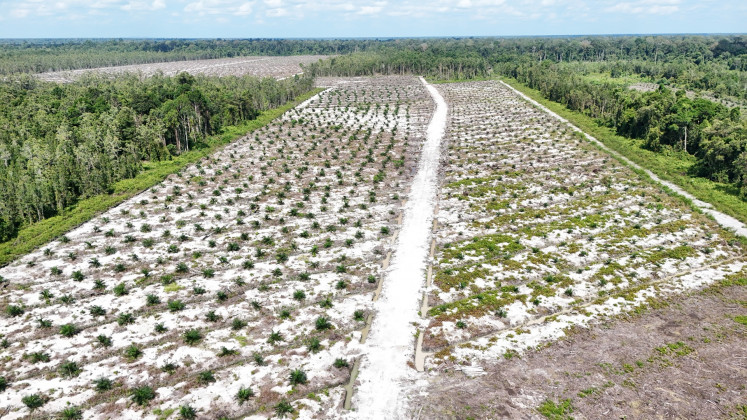
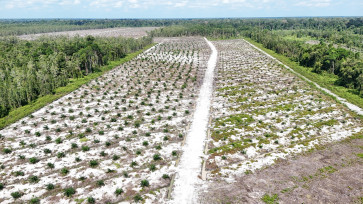
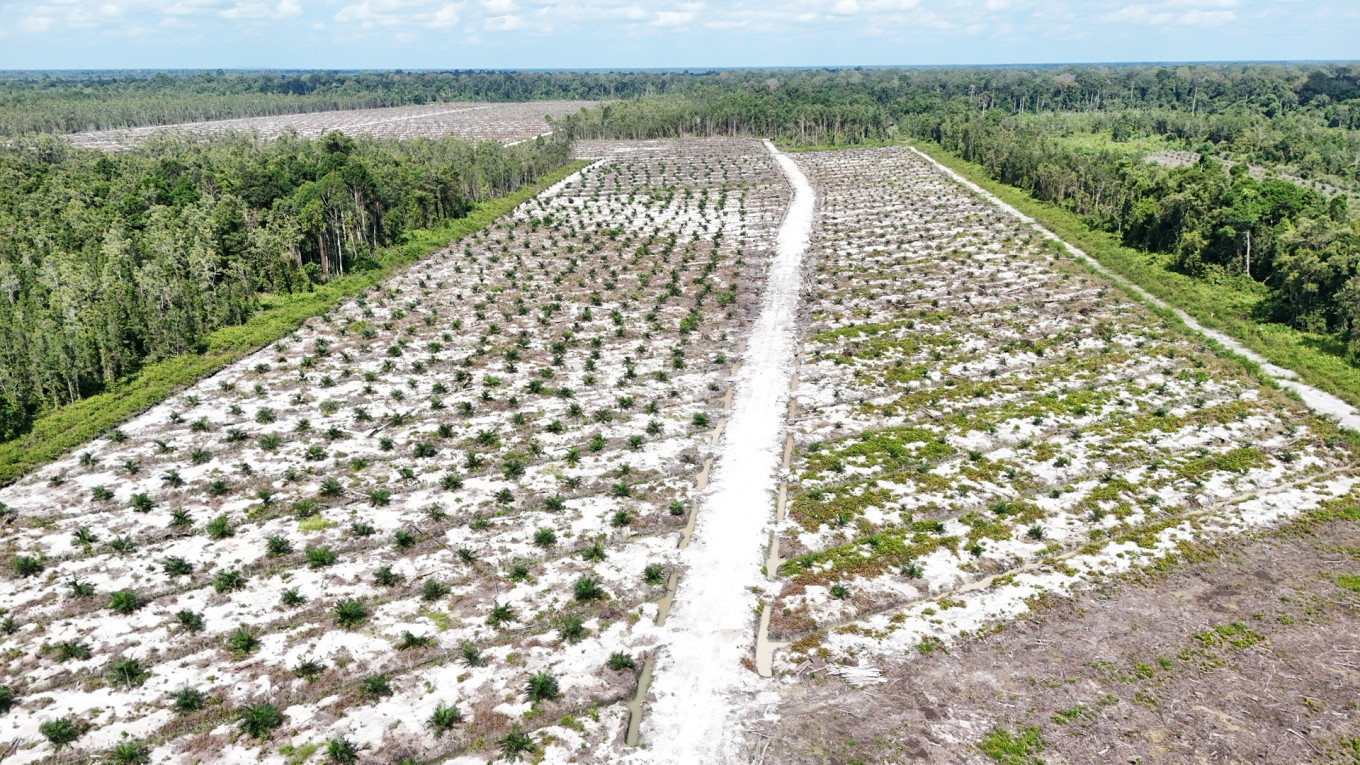 Rows of young oil palm trees are planted on April 28 just on the border of Sebangau National Park area in Central Kalimantan. (JP/Noufal Helmy)
T
wo years into President Prabowo Subianto’s administration, the Indonesian economy is steadily marching toward state capitalism. Establishing a massive sovereign wealth fund was just an opening salvo in a battery of policies designed to shift control of commercial activities from the private sector to the state.
To justify state-led development, the administration regularly invokes Article 33, Paragraph 3 of the 1945 Constitution with the familiar proclamation of "negara harus hadir" (the state must be present) in strategic economic sectors, especially natural resources.
The intention here is to harness state power to safeguard national resilience and prevent state revenue leakages. Yet, a far more troubling trend is emerging.
While the intent of "the state must be present" is noble, it is dangerously warping into “the state must get a cut” ("negara harus dapat jatah"). This shift may be driven by the urgency to increase state revenue, but adopting aggressive state capitalism without a strong state monitoring capacity leaves the strategy vulnerable to capture by politically connected rent-seekers.
To understand how well-intentioned state intervention can degrade into rent extraction, we must look to Article 33’s legal architecture. Indonesian constitutional scholars generally define state control (dikuasai negara) of resources not as ownership, but as a policymaking (beleid) authority carried out through four instruments: regulation (regelendaad), administration (bestuursdaad), management (beheersdaad) and oversight (toezichthoudensdaad). All these should work together to achieve "the greatest prosperity of the people."
Direct economic participation through state-owned enterprises (SOEs) falls under the managerial function, which also allows for private participation. Nevertheless, professional management was never intended to supersede other functions of the state as a neutral regulator, impartial administrator and objective supervisor of the market.

When an administration uses its regulatory power to create licenses that is allocated to its own commercial managers without sufficient oversight, a rent-seeking loophole emerges. Creating new administrative gates without adequate monitoring opens the opportunity to extract public value for individual gain.