The Jakarta Post
Please Update your browser
Your browser is out of date, and may not be compatible with our website. A list of the most popular web browsers can be found below.
Just click on the icons to get to the download page.


Popular Reads
Top Results
No results found. Please check your search term and try again
Can't find what you're looking for?
View all search results
Popular Reads
Top Results
No results found. Please check your search term and try again
Can't find what you're looking for?
View all search resultsCarbon recycling: A climate game-changer or costly distraction?
Turning emissions into valuable industrial goods sounds like a climate game-changer, but for Indonesia, carbon recycling is neither an outright silver bullet nor an affordable fix, unless policymakers learn to separate viable solutions from costly distractions.
Change text size
Gift Premium Articles
to Anyone
Share the best of The Jakarta Post with friends, family, or colleagues. As a subscriber, you can gift 3 to 5 articles each month that anyone can read—no subscription needed!
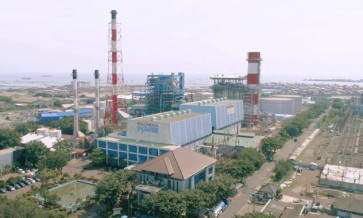
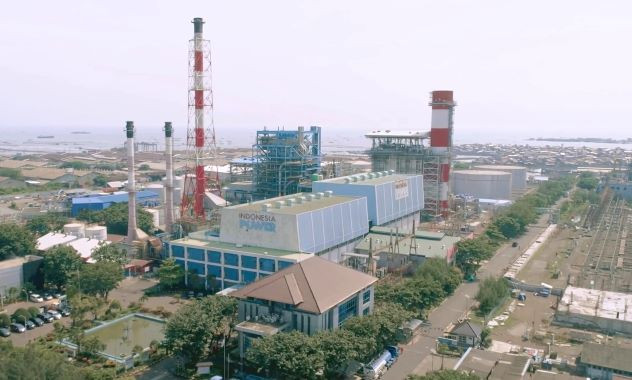 The Tambak Lorok gas-fired power plant in Semarang, Central Java, is among several power plants where state electricity company PLN is studying the implementation of carbon capture and storage (CCS) technology to reduce carbon emissions. (Courtesy /of Indonesia Power)
I
ndonesia's journey to net-zero emissions as part of the global commitment to fighting climate change will not be won by ambition alone. It will require difficult choices about where to invest limited resources, and which technologies can deliver the greatest environmental impact.
One technology attracting growing attention is carbon recycling, an approach that captures carbon dioxide (CO₂) emissions and converts them into useful products such as construction materials, fertilizers, chemicals and industrial goods. Supporters see it as an opportunity to cut emissions while creating new economic value. Critics view it as an expensive distraction from cheaper and proven climate solutions.
So, where does the truth lie?
Our recent research examined the feasibility of carbon recycling technologies in Indonesia. The conclusion is neither wholly optimistic nor pessimistic. Carbon recycling has genuine potential, but only in selected sectors and under the right policy and economic conditions.
As Southeast Asia's largest economy and one of Asia's major greenhouse gas emitters, Indonesia faces a unique challenge. The country must reduce emissions while continuing to industrialize, create jobs and support economic growth. This balancing act is particularly important in sectors such as power generation, cement, steel, petrochemicals and manufacturing, all of which remain heavily dependent on carbon-intensive processes.
Indonesia is not starting from zero. The country has already taken important steps in developing carbon capture, utilization and storage (CCUS) projects. Pilot initiatives began more than two decades ago, and major projects such as BP's Tangguh CCUS development demonstrate increasing interest from both government and industry. Yet while carbon capture has gained momentum, turning captured carbon into valuable products remains largely at the experimental stage.

This matters because carbon recycling represents a different proposition from traditional carbon storage. Rather than burying emissions underground, carbon recycling seeks to create economic value from them. In theory, this could transform carbon from an environmental liability into an industrial resource.