The Jakarta Post
Please Update your browser
Your browser is out of date, and may not be compatible with our website. A list of the most popular web browsers can be found below.
Just click on the icons to get to the download page.


Popular Reads
Top Results
No results found. Please check your search term and try again
Can't find what you're looking for?
View all search results
Popular Reads
Top Results
No results found. Please check your search term and try again
Can't find what you're looking for?
View all search resultsMahasewa and the commodification of the Youth Pledge
The true moral failing lies with the orchestrators, the political elites who exploit this poverty, handing out costumes to the disenfranchised to ensure the "play" goes on flawlessly under the sacred banner of the Youth Pledge.
Change text size
Gift Premium Articles
to Anyone
Share the best of The Jakarta Post with friends, family, or colleagues. As a subscriber, you can gift 3 to 5 articles each month that anyone can read—no subscription needed!
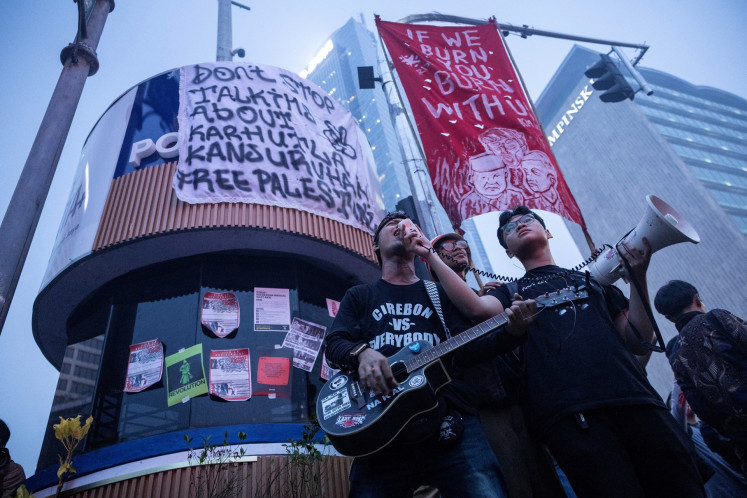
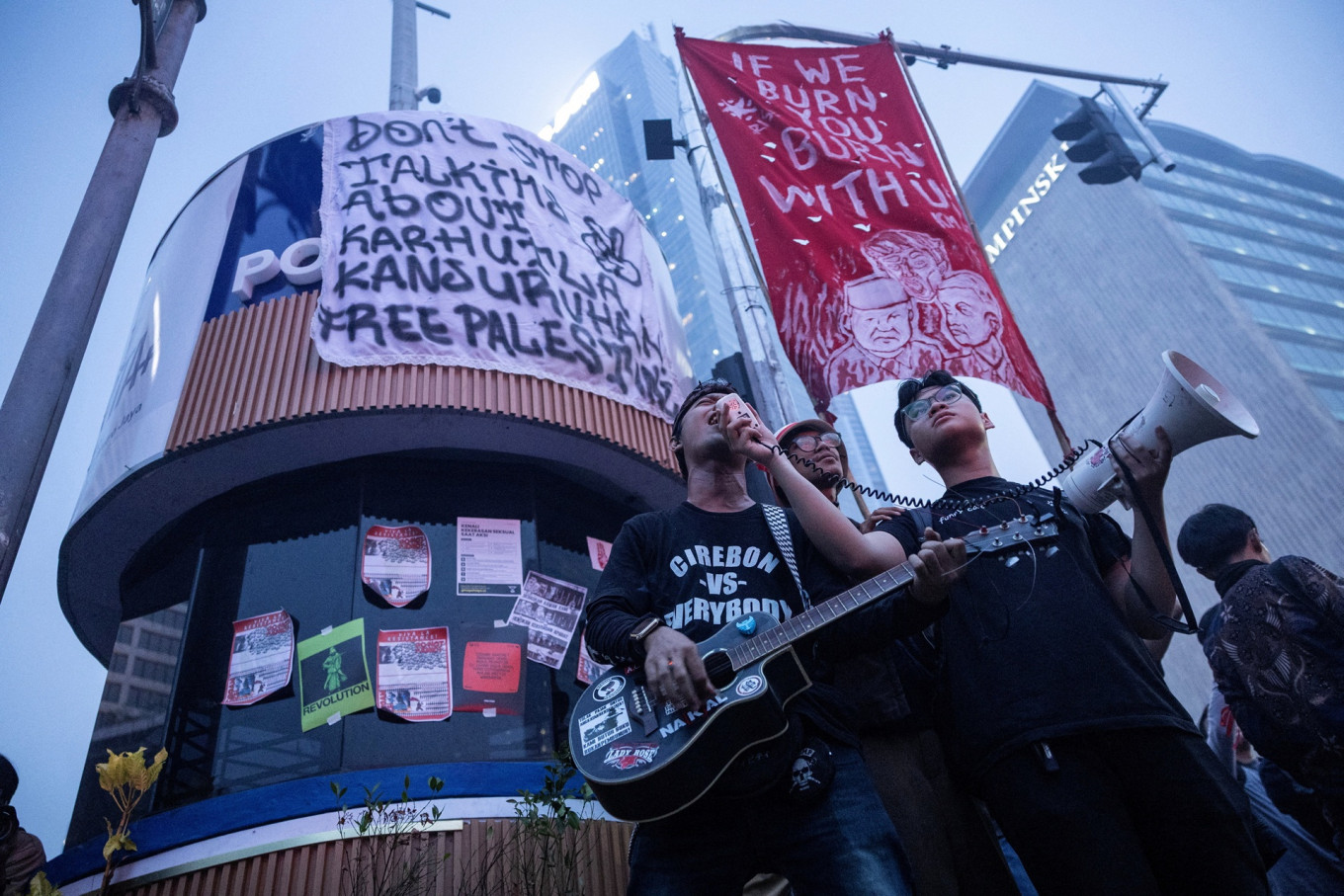 Protesters shout slogans on Oct. 28 during a protest against President Prabowo Subianto’s policies as well as his administration's handling of forest fires at the Hotel Indonesia traffic circle (Bundaran HI) in Central Jakarta. (Reuters/Willy Kurniawan)
A
lmost a century after the 1928 Youth Pledge (Sumpah Pemuda), Indonesia’s democratic landscape is undergoing a troubling regression. Rather than maturing, the nation's civic space is shrinking, reflected in tangible democratic backsliding that has seen civil liberties and political rights steadily decline over the past few years.
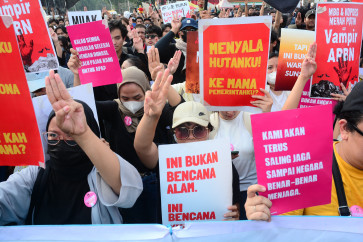
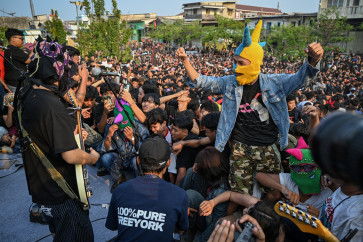
This tightening grip on democracy was vividly displayed in the tale of two contrasting demonstrations at Jakarta's Hotel Indonesia (HI) traffic circle. On Oct. 28, genuine student alliances and grassroots movements gathered to channel the authentic, dissenting spirit of 1928, demanding action on issues ranging from civil liberties to environmental crises.
However, their planned route met unexpected logistical hurdles. Heavy security barricades and physical resistance restricted their access to the public square.
Just one day later, on Oct. 29, the exact same space was cleared and fully facilitated for a pro-regime gathering consisting of influencers and featuring what the public calls "mahasewa" (fake, paid demonstrators donning university jackets). This selective facilitation raises questions about a heavily managed public sphere where the right to assembly seems unevenly distributed.
The peculiar nature of this second gathering was captured perfectly in a viral interview circulating on social media. When a journalist asked a jacket wearing participant which campus they represented, the individual stuttered and failed to answer the question.
To understand the weight of these recent events, one must revisit the radical roots of the original Youth Pledge. Born from the Second Youth Congress in colonial Batavia, the 1928 gathering was not a sponsored parade; it was an act of profound political defiance.

When youth organizations like Jong Java, Jong Ambon and Jong Sumatranen Bond dissolved their ethnic boundaries to declare one motherland, one nation and one unifying language, they were directly subverting the Dutch East Indies' institutionalized strategy of divide-and-conquer.