The Jakarta Post
Please Update your browser
Your browser is out of date, and may not be compatible with our website. A list of the most popular web browsers can be found below.
Just click on the icons to get to the download page.


Popular Reads
Top Results
No results found. Please check your search term and try again
Can't find what you're looking for?
View all search results
Popular Reads
Top Results
No results found. Please check your search term and try again
Can't find what you're looking for?
View all search resultsNot a true cooperative
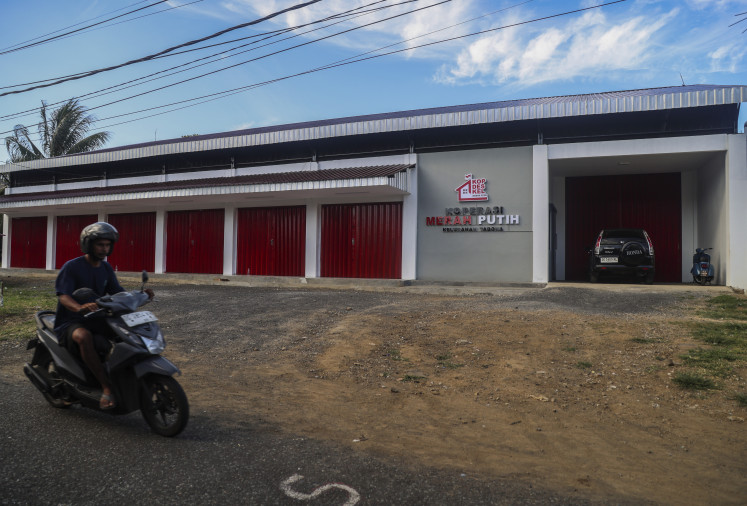
The Red and White Cooperatives program is becoming increasingly all-encompassing, yet it remains anything but a genuine cooperative.
Change text size
Gift Premium Articles
to Anyone
Share the best of The Jakarta Post with friends, family, or colleagues. As a subscriber, you can gift 3 to 5 articles each month that anyone can read—no subscription needed!
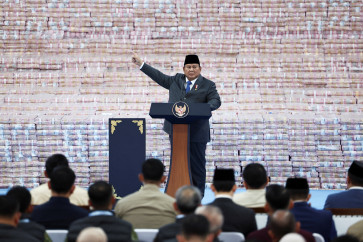
 President Prabowo Subianto salutes the crowd from his vehicle on July 21, 2025, ahead of inaugurating the establishment of 80,081 cooperatives under the Red and White Cooperatives initiative in a national rollout ceremony held in Bentangan village, Klaten, Central Java. (Courtesy of/BPMI Setpres) (Courtesy of/BPMI Setpres)
W
hen the government mandated the nationwide establishment of rural cooperatives in July 2025, the stated objective appeared clear: stimulate local economies and empower grassroots communities by securing access to basic goods, agricultural inputs, and microcredit. Today, however, the initiative is undergoing an aggressive, top-down expansion that distorts its foundational mandate and raises serious questions about civil governance and fiscal discipline.
The most recent policy detour permits cooperative-run clinics and pharmacies to provide primary healthcare covered by the National Health Insurance (JKN). While thousands of cooperatives have launched across Indonesia, their medical facilities remain sparse. By comparison, roughly 10,000 community health centers (Puskesmas), alongside accredited private clinics, already serve as the primary care backbone for JKN policyholders.
Duplicating these services risks undermining established providers. Why divert state resources into unproven parallel facilities rather than shore up the financially strained national insurer and rehabilitate existing public health infrastructure?
This healthcare venture is symptomatic of a broader institutional drift. In October, Cooperatives Minister Ferry Juliantono proposed routing civil service salaries and pensions through the cooperatives, an idea swiftly rejected by Finance Minister Suahasil Nazara, who reaffirmed that direct bank deposits remain the standard for 6.7 million state workers to prevent administrative bottlenecks and extra fees.
Meanwhile, authorities continue pushing cooperatives into mineral mining, crude palm oil, and heavy logistics, attempting to scale them into conglomerates equipped with cold-storage chains and retail networks.
Equally alarming is the deepening securitization of the program. Civil society groups and legal observers have expressed grave concerns over the prominent involvement of active military personnel in administering, securing, and rolling out these rural cooperatives. Under the guise of national food sovereignty and regional economic resilience, deploying armed forces into everyday civilian commerce directly revives the specter of the military’s dwifungsi (dual function). Cooperative enterprise thrives on civilian autonomy and participatory democracy, not command-and-control oversight enforced by military hierarchies.

Compounding these structural flaws is the program's exorbitant demand on state coffers. With an astronomical initial allocation numbering in the hundreds of trillions of rupiah across state budgets and state-backed financing facilities, the financial stakes are staggering. More dangerously, the executive branch has diverted substantial portions of the national village funds (Dana Desa). Reallocating up to 58 percent of the Rp 60 trillion ($3.3 billion) village fund pool directly guts village-level infrastructure, sanitation projects, and basic civic services to underwrite a centralized economic experiment.