The Jakarta Post
Please Update your browser
Your browser is out of date, and may not be compatible with our website. A list of the most popular web browsers can be found below.
Just click on the icons to get to the download page.


Popular Reads
Top Results
No results found. Please check your search term and try again
Can't find what you're looking for?
View all search results
Popular Reads
Top Results
No results found. Please check your search term and try again
Can't find what you're looking for?
View all search resultsWhy net zero is a bad deal for Indonesia
Using the UN's own climate and economic models, a new tool reveals that reaching global net zero by 2050 would cost $255 trillion while avoiding just $24 trillion in damage—delivering only nine cents on the dollar.
Change text size
Gift Premium Articles
to Anyone
Share the best of The Jakarta Post with friends, family, or colleagues. As a subscriber, you can gift 3 to 5 articles each month that anyone can read—no subscription needed!
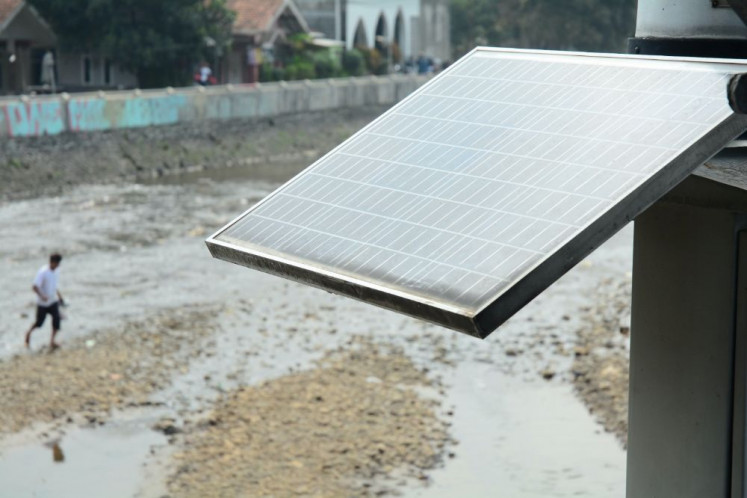
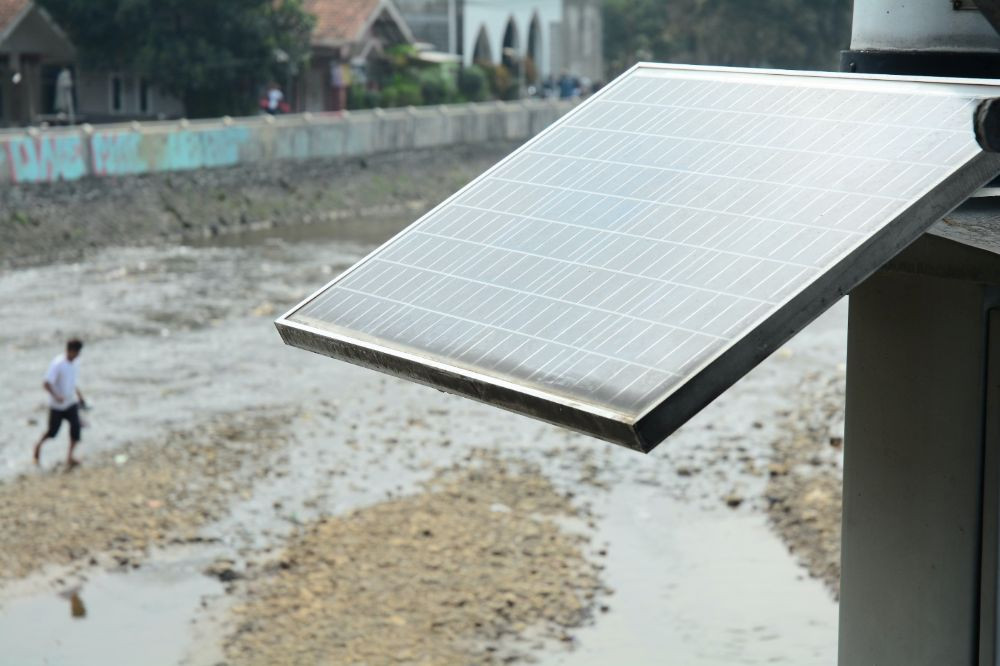 Solar response: A man crosses a stream on Oct. 11, 2026 near the Katulampa Weir in Bogor, West Java, beneath a photovoltaic panel that serves as an independent power source for an automated flood monitoring and early warning system. (JP/Iqro Rinaldi)
R
ight now, thousands of diplomats, bureaucrats and campaigners are meeting in Antalya, Türkiye, yet again for the 31st United Nations climate summit (COP31). The demand will be the one made repeatedly at previous conferences: net zero by 2050.
But what nobody will say is what that costs, or what it buys. That is odd, because the UN already owns the tools to find out. Yet, in the previous 30 summits, nobody used them to ask whether the policy pays. So I have.
I built NetZeroCostBenefit.com that lets anyone see what Indonesia, or any other country or group of countries, would achieve by reaching net zero in 2050, what it would cost, and what the climate benefit would be worth.
None of the inputs are mine: The climate model, MAGICC, is used throughout the UN’s own climate reports and can translate any country’s promised emissions cuts into lower temperatures by 2100. The costs come from the UN’s own surveys of economic models, and the damage estimates from the two most recent syntheses of the economics of warming. Anyone can check the arithmetic, though few delegates in Antalya will want to.
For its latest report and updates, the climate panel gathered nearly 1,000 model estimates of what climate policy costs. Almost none of them get anywhere near net zero by 2050, because it is so hard and costly. Only three models reach net zero starting from today’s actual emissions, rather than assuming cuts that began years ago.
They find that global net zero would cost between 3 percent and 19 percent of global GDP in 2050, because expensive energy throttles growth. My website uses the middle one, estimating a loss of 7.2 percent of GDP in 2050, measured from current policies.

The benefits come from the two most recent syntheses of the damage from warming, by one of the most quoted climate economists, Richard Tol, and the other by William Nordhaus, the only climate economist to win the Nobel prize in economics.