The Jakarta Post
Please Update your browser
Your browser is out of date, and may not be compatible with our website. A list of the most popular web browsers can be found below.
Just click on the icons to get to the download page.


Popular Reads
Top Results
No results found. Please check your search term and try again
Can't find what you're looking for?
View all search results
Popular Reads
Top Results
No results found. Please check your search term and try again
Can't find what you're looking for?
View all search resultsBanking industry update: The most challenging year since 1998
Although the authorities have granted many relaxations, loan demand will weaken across almost all sectors. The improvement of demand for loans will depend on economic growth.
Change text size
Gift Premium Articles
to Anyone
Share the best of The Jakarta Post with friends, family, or colleagues. As a subscriber, you can gift 3 to 5 articles each month that anyone can read—no subscription needed!
 Set as preferred source
T
his year will be extremely challenging for the banking industry in Indonesia. It will probably be the most challenging year since the 1998-1999 monetary crisis. Loan growth will decelerate and asset quality will weaken because of the sharp slowdown in economic activity, especially in the second and third quarters, as a result of large-scale social restrictions (PSBB).
Although the authorities have granted many relaxations, loan demand will weaken across almost all sectors. The improvement of demand for loans will depend on economic growth. We hope economic recovery will come soon, at least in the fourth quarter of this year, although it will not return quickly to the 5 percent growth rate before the pandemic.
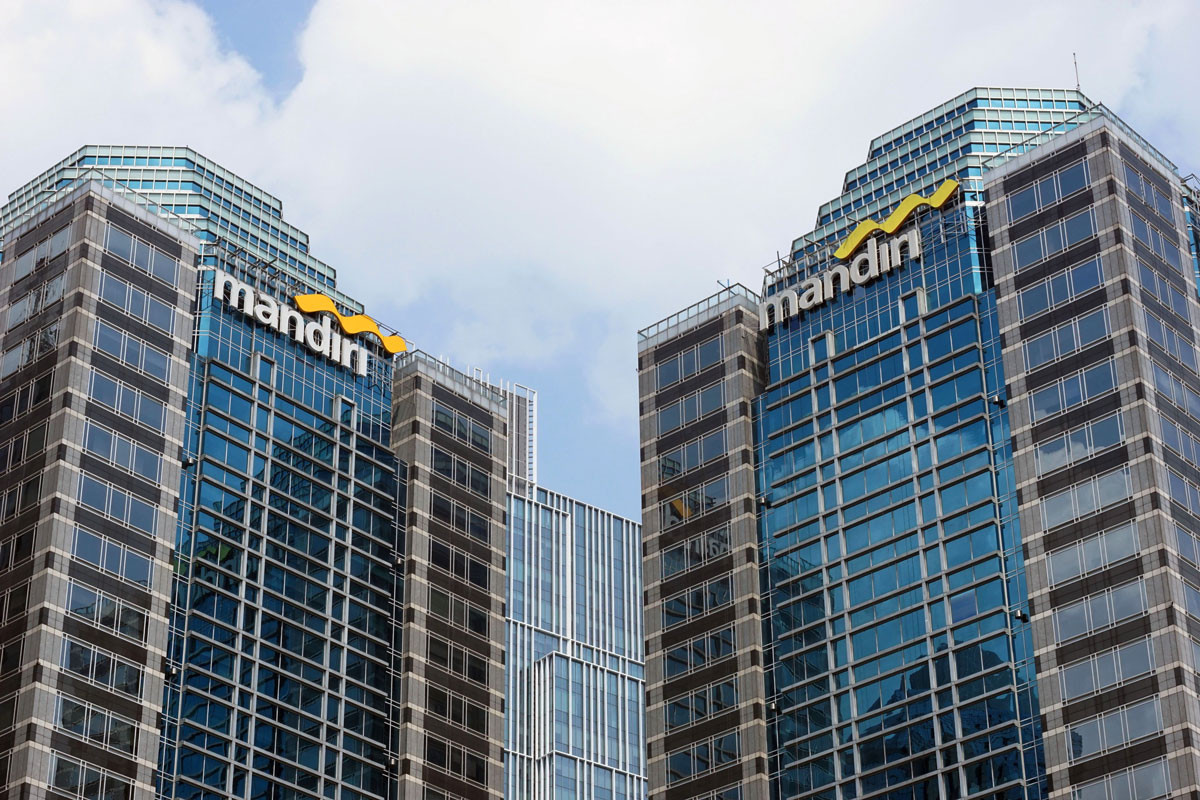
The government, under the Finance Ministry, expects the domestic economy to contract by between 0.4 percent and 1 percent this year. We at Bank Mandiri estimate that the domestic economy will grow very slightly at 0.02 percent this year, the lowest economic growth since 1998. We expect that loans will only grow about 1 to 2 percent this year – the weakest level since 1999.
Loan growth until March was strong at 8 percent. But it was more because of the depreciation of the rupiah, which made foreign exchange loans look larger. The depreciation of the rupiah made loans, especially forex loans denominated in rupiah, look higher. If we adjust for the rupiah’s depreciation, loans in the banking industry as of March 2020 only grew by 6.2 percent, lower than the previous month of 6.7 percent. This will certainly weaken in the coming months.
On the other hand, the nonperforming loan (NPL) ratio in Indonesia has remained stable. The NPL to total loans ratio fell to 2.77 percent in March, down from the previous month of 2.79 percent in February. But the ratio of special mention loans, those in danger of falling into nonperforming status, to total loans steadily increased over the same period to 6.29 percent – the highest level in a very long time.
The increasing number of special mention loans was because banks accelerated the restructuring process for borrowers that had been affected by the epidemic. The Financial Services Authority (OJK) has said that 99 banks have already restructured loans worth Rp 609.07 trillion (US$43.2 billion). With the enormous amount of restructuring, repayments will certainly be postponed, both for loan principle and interest. The postponement of the payments will have an impact on bank liquidity.
Relaxation policies undertaken by regulators – the government, OJK and Bank Indonesia (BI) – are mostly meant to give banks flexibility in managing their liquidity and assets, especially BUKU 4 and BUKU 3 banks (those with minimum capital of Rp 30 trillion and Rp 5 trillion respectively) because of their status as systemically important banks (SIB).