The Jakarta Post
Please Update your browser
Your browser is out of date, and may not be compatible with our website. A list of the most popular web browsers can be found below.
Just click on the icons to get to the download page.


Popular Reads
Top Results
No results found. Please check your search term and try again
Can't find what you're looking for?
View all search results
Popular Reads
Top Results
No results found. Please check your search term and try again
Can't find what you're looking for?
View all search resultsEquality of opportunity matters
While slogans and symbolic gestures are inspiring, and the Black Lives Matter movement is important, it is the implementation of practical policy that changes lives.
Change text size
Gift Premium Articles
to Anyone
Share the best of The Jakarta Post with friends, family, or colleagues. As a subscriber, you can gift 3 to 5 articles each month that anyone can read—no subscription needed!
 Set as preferred source
O
n Aug. 17 this year it will be a mere 75 years since the Proclamation of Indonesian Independence from the Dutch. In contrast, it has been 239 years since the Declaration of American Independence from British colonial rule.
For America’s black population, the lofty constitutional proclamation that, “All Men are Created Equal” is still profoundly contested as the nation-wide Black Lives Matter protests have revealed. Inspired by the killing of George Floyd, a broad global movement has now emerged with the key demand of ensuring “the social, economic, and political power necessary for people of color to thrive”.
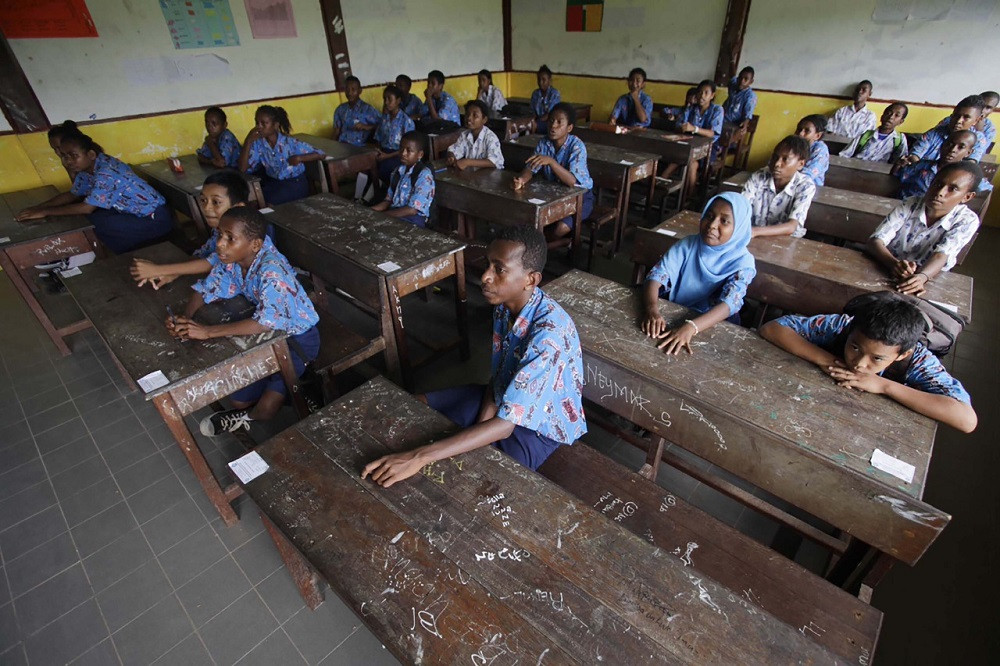
My question is, can these milestones be addressed in Indonesia with respect to the people of Papua?
An old expression says that, “an illustration is more convincing than a demonstration”. Three Indonesian Papuans—a career diplomat, a police commander and a director at the Indonesian National Development and Planning Board (Bappenas) share their insights into the structural changes that have provided each of them with an opportunity to thrive.
Fientje Maritje Suebu has served with the Indonesian Foreign Ministry for over 30 years. She is currently deputy chief of mission in New Dehli. Fientje is an ethnic Papuan born in Jayapura, who went to high school in Papua New Guinea, and graduated from Cendrawasih University.
Like all diplomats, she is a citizen of her country but also of the world, having held previous postings in Harare, Brussels and Ottawa. However, her greatest contribution as a diplomat has been her involvement in negotiations to secure the Indonesia-India comprehensive strategic partnership. So, what is the secret to Fientje’s success as a Papuan living in multi-ethnic Indonesia?
Fientje says, “As a senior diplomat, to be eligible for advancement, I must compete with other fellow senior diplomats from all over Indonesia. In my office there are Acehnese, Balinese, Bataks, Padangese, Javanese and other Melanesians from all over East Nusa Tenggara. I believe that I have reached my position on merit—because of my experience, my good work ethic and my ability. I hope that my example will give inspiration to the younger generation of Papuans. I have succeeded, and so can they.”