The Jakarta Post
Please Update your browser
Your browser is out of date, and may not be compatible with our website. A list of the most popular web browsers can be found below.
Just click on the icons to get to the download page.


Popular Reads
Top Results
No results found. Please check your search term and try again
Can't find what you're looking for?
View all search results
Popular Reads
Top Results
No results found. Please check your search term and try again
Can't find what you're looking for?
View all search resultsWhy skills development is even more imperative for Indonesia
Taking into account the increased unemployment rate of last year, which was 5.3 to 7.5 percent, the impact of the outbreak is a more pressing challenge for the labor market.
Change text size
Gift Premium Articles
to Anyone
Share the best of The Jakarta Post with friends, family, or colleagues. As a subscriber, you can gift 3 to 5 articles each month that anyone can read—no subscription needed!
 Set as preferred source
I
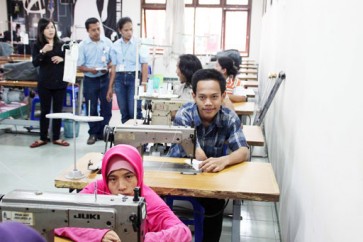
n its most recent update, the World Bank officially upgraded the status of Indonesia from low- to upper-middle income country. While the upgrade offers a positive impact by building trust and attracting better investments, improving the quality of Indonesia’s human resources through skills development is a critical requirement.
This is in line with the ILO’s Centenary Declaration for the Future of Work in 2019, which calls on governments to create a set of measures addressing the challenges of unprecedented transformational change in the world of work, focusing on the human-centered economic agenda.
The declaration focuses on three areas of action, namely increasing investments in people’s capabilities, the institutions of work and decent and sustainable work. However, this will not be an easy job as the country is facing an unexpected economic downturn because of the COVID-19 outbreak.
In April, the International Monetary Fund (IMF) projected that the Indonesian economy would grow by a mere 0.5 percent in 2020, but this growth rate is only applicable if the pandemic passes and the economy goes back to normal in the second half of the year. Many analysts even foresaw a contraction.
Furthermore, the demographic dividend is seen as a “two-edged sword”. In one hand, having a larger productive population (ages 15 to 65) than a nonproductive one will help the country’s savings and productivity.
In contrary, failing to reap the benefits of the golden window opportunity of the demographic dividend will keep the country stuck in a middle-income trap”. Worse, increasing unemployment in the long term may lead to social tensions and unrest.
Due to the outbreak, many businesses have laid off their employees. According to the Indonesian Chamber of Commerce and Industry (Kadin), 6 million workers have been dismissed. To address the issues, the government has corrected the market’s failure by allocating a stimulus package worth US$17.2 billion for the private sector.