The Jakarta Post
Please Update your browser
Your browser is out of date, and may not be compatible with our website. A list of the most popular web browsers can be found below.
Just click on the icons to get to the download page.


Popular Reads
Top Results
No results found. Please check your search term and try again
Can't find what you're looking for?
View all search results
Popular Reads
Top Results
No results found. Please check your search term and try again
Can't find what you're looking for?
View all search resultsWidespread use of rapid tests raises questions
More labs to run PCR tests to allow Indonesia to phase out rapid antibody tests.
Change text size
Gift Premium Articles
to Anyone
Share the best of The Jakarta Post with friends, family, or colleagues. As a subscriber, you can gift 3 to 5 articles each month that anyone can read—no subscription needed!
 Set as preferred source
T
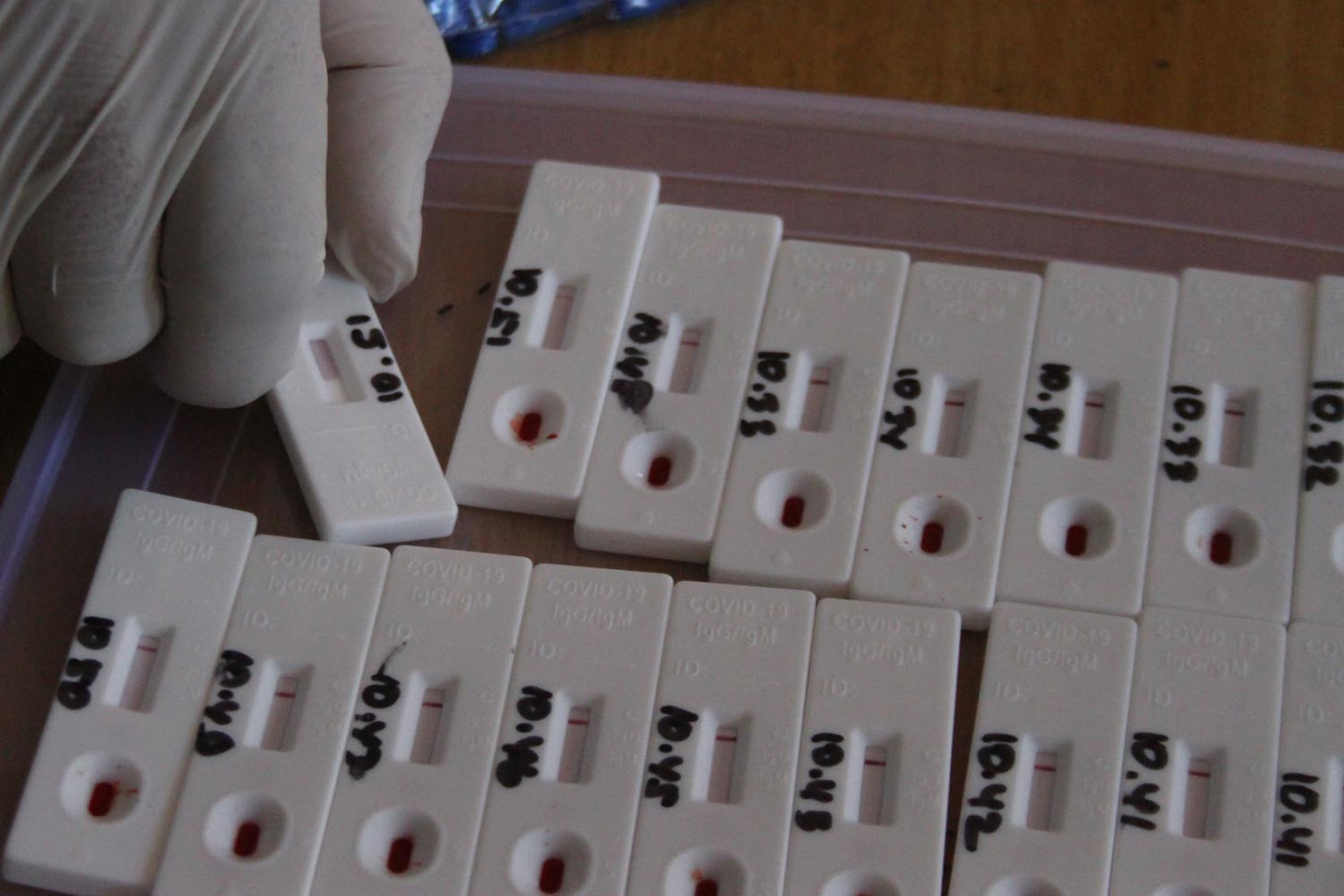
he widespread use of rapid antibody tests for COVID-19 as requirements for various activities during the pandemic, including for traveling in Indonesia, has sparked concerns among experts, who called for better government control over their use.
Post-market surveillance on rapid antibody test brands used in the country carried out by the Association of Indonesia's Clinical Pathology and Laboratory Medicine specialists (PDS PatKLIn) showed that many of them had sensitivity and specificity lower than 50 percent, the association's chairwoman, Aryati, said.
"With low sensitivity, chances of false negatives are high [...] While with low specificity, chances for false positives are high," Aryati, also a professor at Surabaya’s Airlangga University, told The Jakarta Post, on Monday.
The COVID-19 task force has recommended 155 brands from various producers, as of April 28. It said it was referring to a list issued by the World Health Organization (WHO) -- which did not endorse the brands but rather inventoried lists from national regulatory agencies -- and products with certification by the European Union, the United States Food and Drug Administration and the like.
Although the varying quality of the test kits was the main problem, Aryati said how laboratory workers carried out the tests and the absence of training for these workers had also affected the accuracy of the tests.
She pointed to examples of how the incorrect volume of the samples taken, the prolonged time to interpret the results and the sampling of capillary blood, rather than venous blood, could lead to false negatives or positives. In addition, many of those who had "nonreactive" rapid test results -- indicating no virus exposure -- did not take another test within 10 days after the first one, as opposed to the prevailing protocol, Aryati said.
The PDS PatKLIn issued a recommendation on July 6 for the COVID-19 task force not to require rapid tests for travelers, citing that the possibility of false negatives and positives "could have dangerous and harmful impacts". It also recommended against requiring polymerase chain reaction (PCR) tests as its sensitivity was only at between 60 and 80 percent, and given the time lag between samples taken and results announced -- which could be up to three weeks.