The Jakarta Post
Please Update your browser
Your browser is out of date, and may not be compatible with our website. A list of the most popular web browsers can be found below.
Just click on the icons to get to the download page.


Popular Reads
Top Results
No results found. Please check your search term and try again
Can't find what you're looking for?
View all search results
Popular Reads
Top Results
No results found. Please check your search term and try again
Can't find what you're looking for?
View all search resultsStunting prevention in Indonesia: Strategy, will and collective effort
Stunting is a multidimensional issue, but if Afghanistan and Bangladesh can make great progress, so can Indonesia.
Change text size
Gift Premium Articles
to Anyone
Share the best of The Jakarta Post with friends, family, or colleagues. As a subscriber, you can gift 3 to 5 articles each month that anyone can read—no subscription needed!
 Set as preferred source
T
he real problem with stunting is not its impact on physical stature, but its effect on brainpower. Stunting, as defined by the World Health Organization (WHO), is the impaired growth and development children experience from poor nutrition, repeated infection and inadequate psychosocial stimulation.
Multiple studies have found that malnutrition in the first 1,000 days of life, from conception to 2 years of age, impairs brain development in ways that are irreversible. The brains of stunted children do not develop properly and the cognitive impairment is visible in brain scans. It is no surprise that stunted children suffer from learning disabilities and are more likely to drop out of school.
The consequences of stunting are immediate and lifelong. In addition to experiencing reduced cognitive function and delayed motor development, stunted children develop additional health problems in adulthood and stunted women have smaller babies, oftentimes perpetuating the vicious cycle of poverty.
There is ample evidence that early intervention works. Every US$1 spent on reducing stunting in Indonesia generates $48 in economic returns. The right programs and guidance can make it possible for individuals to realize their potential.
Indonesia is among the five countries in the world with the highest number of stunting cases. While the country reduced its prevalence of stunting was from 37.2 percent in 2013 to 27.7 percent in 2019, more than one in four children are stunted and unable to realize their full potential.
The quality of Indonesia’s human capital outcomes varies geographically and socially. For example, the under-5 child mortality rate in non-electrified rural areas is double the rate in urban areas.
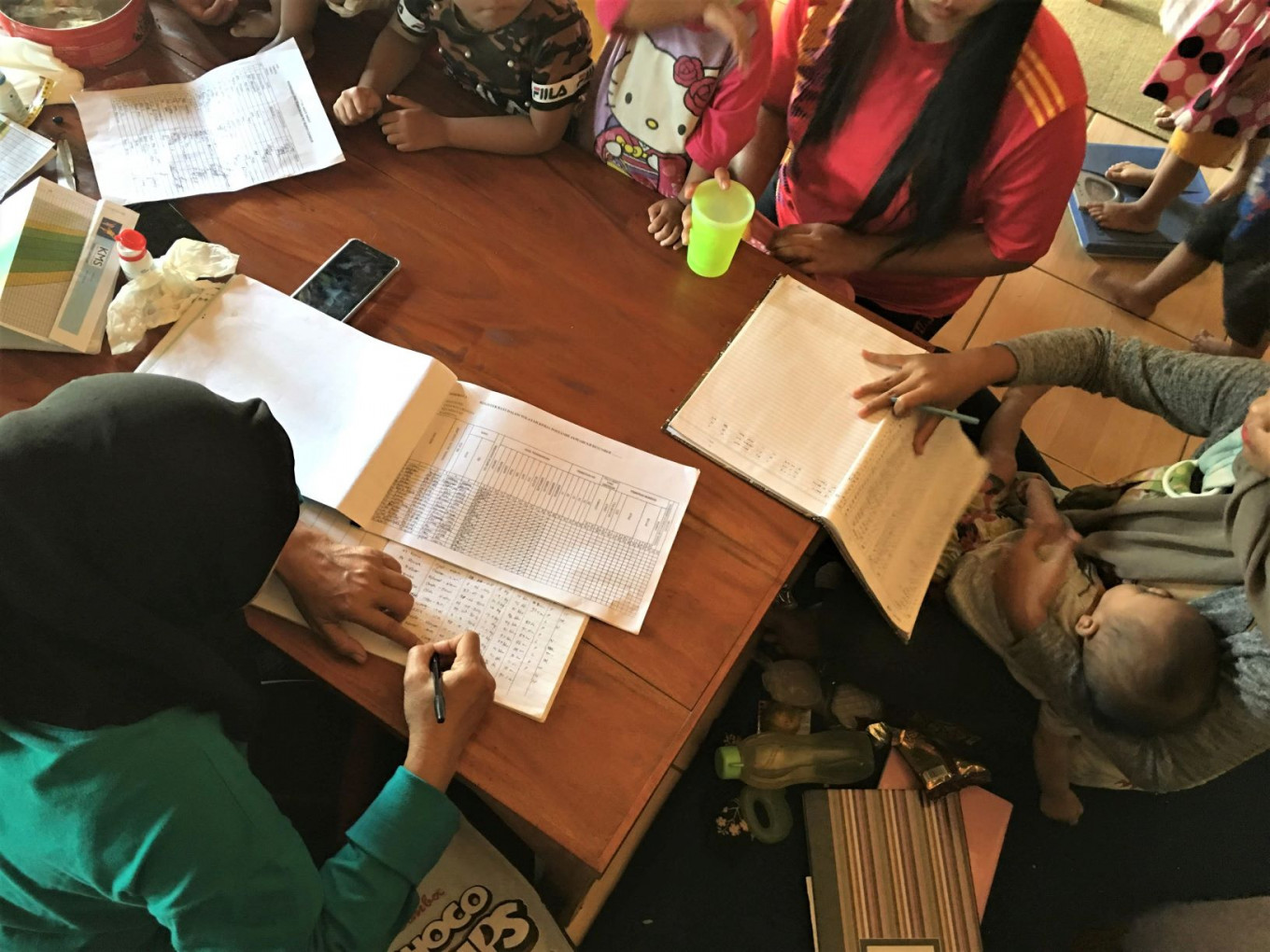
A look at the service delivery data in Indonesia shows that each separate program (such as supplementation of folic acid and micronutrients during pregnancy or access to safe water and sanitation) has reasonable coverage. The reason stunting has remained high is because millions of 1,000-day households are missing out on the complete package of services required to move the needle.