The Jakarta Post
Please Update your browser
Your browser is out of date, and may not be compatible with our website. A list of the most popular web browsers can be found below.
Just click on the icons to get to the download page.


Popular Reads
Top Results
No results found. Please check your search term and try again
Can't find what you're looking for?
View all search results
Popular Reads
Top Results
No results found. Please check your search term and try again
Can't find what you're looking for?
View all search resultsArguing for difference on indifferent council
Admittedly, not all issues yield progress. One rocky topic for Indonesian diplomacy is Palestine.
Change text size
Gift Premium Articles
to Anyone
Share the best of The Jakarta Post with friends, family, or colleagues. As a subscriber, you can gift 3 to 5 articles each month that anyone can read—no subscription needed!
 Set as preferred source
T
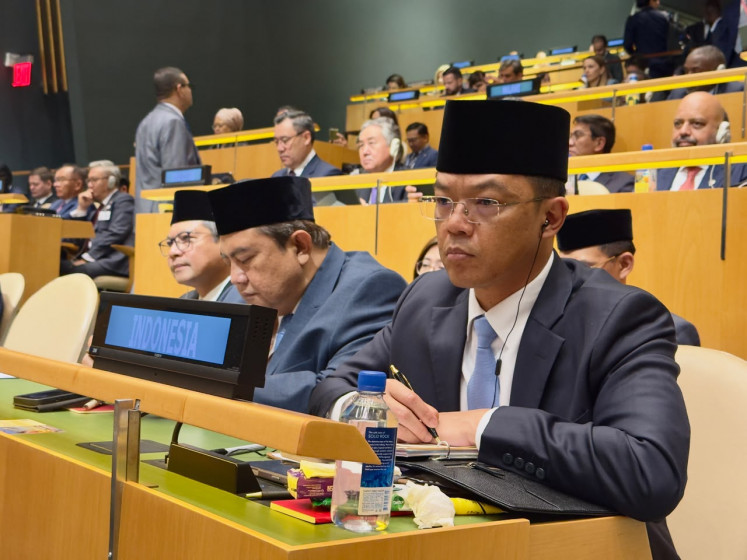
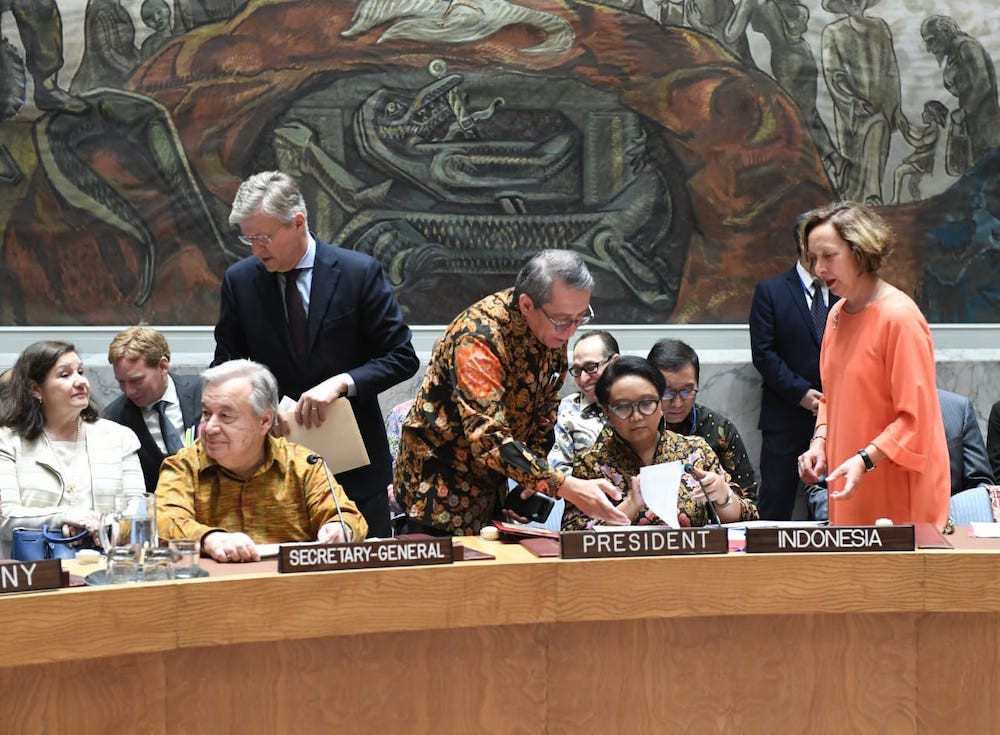
his is Indonesia’s second year sitting as an elected member of the United Nations Security Council (UNSC), raising the question as to whether Indonesia has made a difference on the council. If Indonesia has yet to make its mark, perhaps this August, during its UNSC presidency, the country can leave a lasting legacy.
It is a difficult period for members of the UNSC, as rivalries between great powers straddle its ability to issue substantial resolutions that can bring about global peace and order. We witness violence committed by armed groups, pandemic, territorial disputes intensification, as well as regional and domestic political posturing that the council chooses to sit on the fence and watch.
Of course, it would be a tremendous burden, if not entirely unfair, to expect Indonesia to save the world alone while the great powers choose to stall or fight among themselves.
Nevertheless, except for COVID-19, Indonesia has been aware of the arduous task of working toward global peace when it campaigned to win the UNSC seat in 2018. Then the United States began to threaten China with increased tariffs and Russian diplomats were expelled from several European countries after a spy poisoning case.
When Indonesia began its membership, the UNSC was experiencing a decline in the number of resolutions issued. In 2016, it issued 77 resolutions, including those substantive issues on fighting violent extremism in Syria. But in 2019, there were only 51 resolutions, 37 of which were extensions of previous mandates. As of last month, the council has issued 32 resolutions with more than half being extensions.
For the optimist among us, they may argue that there is persistence on the UNSC, but for some others yearning for a breakthrough, they may see the council as hedging sustainable peace by not taking drastic measures.
In the preparatory period, Indonesia, with other elected members, sent a letter to highlight “the need for fair burden-sharing and equal distribution of work among all members of the security council”. The letter urges UNSC reform from the dominance of the P5 (China, France, Russia, the United Kingdom, and the US) toward more meaningful participation from elected members by accepting them as “penholder” in drafting the council’s resolutions.