TheJakartaPost
Please Update your browser
Your browser is out of date, and may not be compatible with our website. A list of the most popular web browsers can be found below.
Just click on the icons to get to the download page.


Popular Reads
Top Results
No results found. Please check your search term and try again
Can't find what you're looking for?
View all search results
Popular Reads
Top Results
No results found. Please check your search term and try again
Can't find what you're looking for?
View all search resultsThe Battle of Warsaw 1920: A victory for Europe
Even though it was Poland that had won on the Vistula River, that victory concerned to a large extent the freedom of European nations from the totalitarian darkness of communism.
Change text size
Gift Premium Articles
to Anyone
Share the best of The Jakarta Post with friends, family, or colleagues. As a subscriber, you can gift 3 to 5 articles each month that anyone can read—no subscription needed!
T
here are crucial moments in history that define the world’s future. For Poland and Europe, one such moment in the 20th century was the day of Aug. 15, 1920. It was then that Poland, newly reborn in 1918, fought a decisive and victorious battle with the Bolshevik forces that aimed to spread the fire of the communist revolution all across Western Europe, devastated by the human and material losses of the Great War.
According to the British diplomat Edgar D’Abernon, it was the 18th decisive battle in world history. The Battle of Warsaw deserves to be listed on par with the D-Day as a critical turning point in the fight against totalitarianism in Europe.
Because of the Iron Curtain that divided Europe as a result of the Yalta Conference, the significance of this specific event to the history of Europe did not get imprinted in the world’s memory as prominently as it deserves. This concerns both mass culture and history textbooks. It is time to finally fill those gaps in European collective memory.
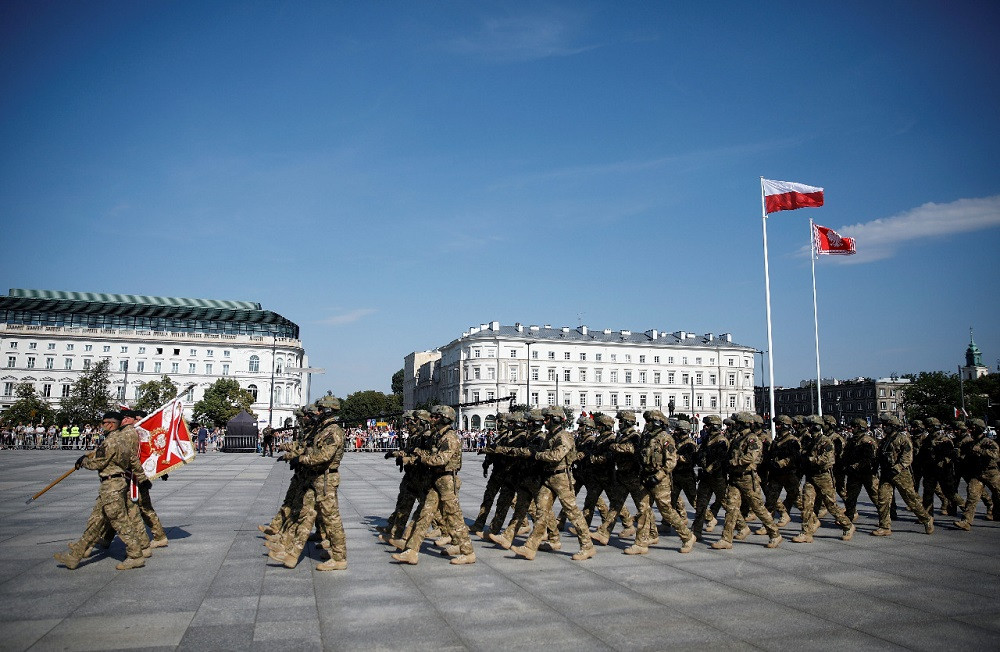
The anniversary of the Battle of Warsaw should be celebrated not only in Warsaw, Poland, but throughout Europe. Even though it was Poland that had won on the Vistula River, that victory concerned to a large extent the freedom of European nations from the totalitarian darkness of communism.
From a historical perspective, the year 1920 closed a series of events that began with the partitions of Poland by Prussia, Russia and Austria in the late 18th century. The Battle of Warsaw was the culmination of one of the most remarkable episodes of the building of a modern nation in European and global history. The nation without a state, emerging on the ruins of military and political defeat (including numerous Polish uprisings and collapses of successive substitutes of the state), Poland was erased from the map of Europe, which extended from the end of the 18th century to the end of World War I.
The first Polish phenomenon worth mentioning is the scale of transformation of the Polish society over 19th century from a feudal one to one of Europe’s most modern civil societies – and, as a matter of fact, without having any state institutions. An enormous network of social, cultural and sport institutions, like the “Sokół” gymnastic association, financial unions, scientific societies and school self-education societies can be compared only to reforms during the Meiji period enacted by the strong central power in Japan.
Soon after regaining independence in 1918, Poland adopted some of the most modern social and electoral legislations of the Western world. A shared sense of regained freedom prevailed over prejudice and a temptation to discriminate against wider segments of society. Poland had to build the unity and cohesion of the entire nation. The intellectual work undertaken at the end of the 19th century found its succession in the pro-state efforts once public institutions were regained after 1918.