The Jakarta Post
Please Update your browser
Your browser is out of date, and may not be compatible with our website. A list of the most popular web browsers can be found below.
Just click on the icons to get to the download page.


Popular Reads
Top Results
No results found. Please check your search term and try again
Can't find what you're looking for?
View all search results
Popular Reads
Top Results
No results found. Please check your search term and try again
Can't find what you're looking for?
View all search resultsForeign participation in banking M&A can enhance capital and efficiency
Many smaller banks do not possess unique business models or strong and steady cash flows to amass buffers like the big banks do.
Change text size
Gift Premium Articles
to Anyone
Share the best of The Jakarta Post with friends, family, or colleagues. As a subscriber, you can gift 3 to 5 articles each month that anyone can read—no subscription needed!
 Set as preferred source
M
ergers and acquisitions (M&A) activity is heating up in Indonesia’s banking industry after a relatively slow period in 2009-18. Acquisitions worth Rp10 trillion (US$7 billion) have taken place since the start of 2019, and foreign banks have dominated these acquisitions with 99 percent share by value.
This reminds us of a similar trend in 2003-05, when foreign banks were very active in M&A following the recapitalization of Indonesia’s banking system after the Asian Financial Crisis in the late 1990s.
The recent increase in M&A is being driven by foreign banks’ ambitions to expand into Indonesia, as well as support from the regulators through relaxation of the 40 percent shareholding cap for a few M&A cases where the foreign banks were helping with the banking system consolidation.
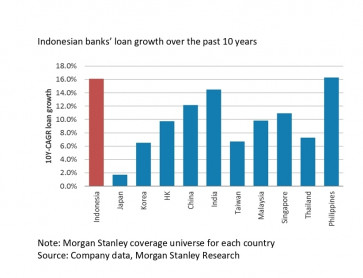
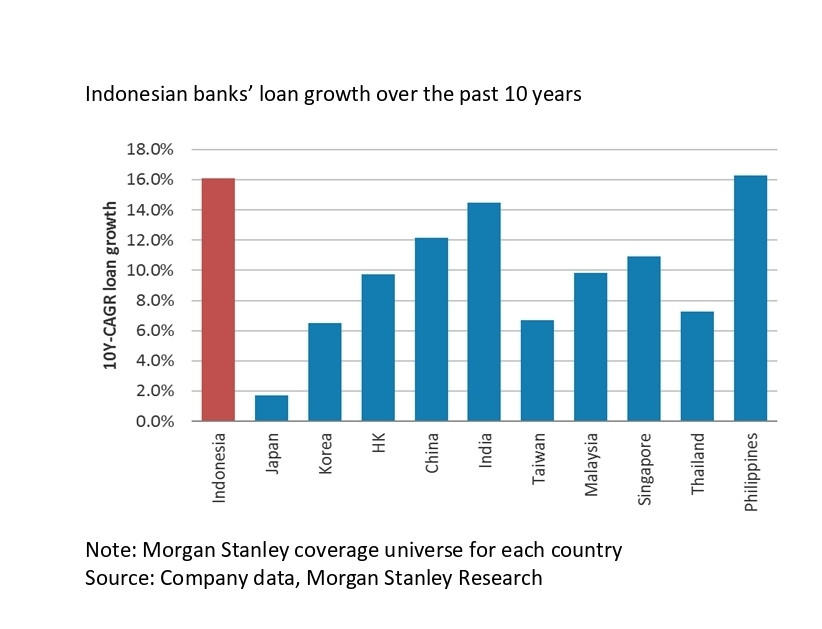
Growth and regional diversification appear to be the main motivations for foreign banks to acquire Indonesian banks, particularly for the Japanese and South Korean banks that have been active in the country recently. This is supported by a comparison of regional data, as Indonesian banks look attractive with 16 percent compounded annual loan growth in 2009-19 compared to 2 percent and 7 percent for Japanese and Korean banks under our coverage. Net interest margins for major Indonesian banks were also high at 5.9 percent in 2019, compared with 1.0 percent and 1.9 percent for Japanese and Korean banks.
We think higher foreign participation in the banking system will bring about more good than bad, in at least three ways:
Accelerating bank consolidation. The foreign banks that acquire Indonesian banks could help accelerate consolidation in the banking system by merging subsidiaries following acquisitions. We have seen this in the last few acquisitions, in which the acquirers merged the newly acquired banks with their existing operations, or the foreign banks acquired more than one bank and then merged them. This has reduced the number of banks in Indonesia from 116 in 2018 to 110 currently.
Higher efficiency through increased competition. Despite their strong loan growth and net interest margins, Indonesian banks have lagged regional peers in terms of cost efficiency. The major banks’ average cost-to-assets ratio was 3.3 percent in 2019 — the worst among major Asian bank peers, which ranged from 0.7 percent to 2.6 percent. We expect foreign banks to ultimately instill their good cost control in their Indonesia subsidiaries. This would raise efficiency in the system, pressuring other major Indonesian banks to respond.