The Jakarta Post
Please Update your browser
Your browser is out of date, and may not be compatible with our website. A list of the most popular web browsers can be found below.
Just click on the icons to get to the download page.


Popular Reads
Top Results
No results found. Please check your search term and try again
Can't find what you're looking for?
View all search results
Popular Reads
Top Results
No results found. Please check your search term and try again
Can't find what you're looking for?
View all search resultsInsight: Are democracies equipped to handle fast-moving economic crises?
Freedom House noted in March 2020 that we are entering the 14th year of consecutive decline in the health of democracy globally. Tracking the fate of the “third wave democracies”, Mainwaring and Bizzarro found that of the 91 democracies that emerged from 1974 to 2012, 34 experienced democratic breakdowns, while the quality of democratic practices stagnated in about 28 countries.
Change text size
Gift Premium Articles
to Anyone
Share the best of The Jakarta Post with friends, family, or colleagues. As a subscriber, you can gift 3 to 5 articles each month that anyone can read—no subscription needed!
 Set as preferred source
C
OVID-19 arrived not only amid a retreat of multilateralism and rising strategic rivalry between the United States and China, but also at a time of ongoing worrying trends for democracies worldwide.
Freedom House noted in March 2020 that we are entering the 14th year of consecutive decline in the health of democracy globally. Tracking the fate of the “third wave democracies”, Mainwaring and Bizzarro found that of the 91 democracies that emerged from 1974 to 2012, 34 experienced democratic breakdowns, while the quality of democratic practices stagnated in about 28 countries.
In fact, several of those regimes may now be considered democracies in name only. Illustrative examples include Putin’s Russia, Orban’s Hungary, Erdogan’s Turkey, and closer to home, Duterte’s Philippines.
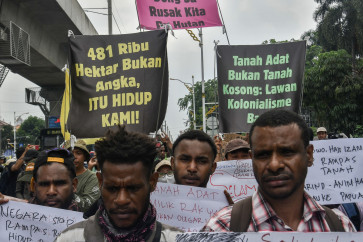
Despite significant achievements since 1998, in recent years Indonesia appears to be catching up with this global trend. The practice of democracy in Indonesia has faced challenges such as violence and discrimination against minorities, arbitrary use of blasphemy and defamation laws to curb free speech, separatist tension in Papua and systemic corruption. Developments that have unfolded since COVID-19 appear to reinforce this trend, as shown, among other examples, by attempts to silence the strongest forms of government criticism during the pandemic.
We argue that while democracies have many different features that could both hurt and help during an ongoing crisis, democracy works better when there is a well-informed and open society. Now, more than ever, Indonesia needs guardians of economic policies to be critical citizens that help ensure that policies formulated to handle the crisis are truly in line with public interest.
In the context of COVID-19, if the balancing act between containing the disease and minimizing the economic costs is not tread carefully, a public health crisis could quickly wreak havoc on the economy, which in turn, would erode support for democracy
Recent public opinion polls suggest that something similar might be taking place in Indonesia, although we should note that correlations do not necessarily imply a causal relationship. Perceptions of economic deterioration moved in tandem with the slump in perceptions of democratic performance.