TheJakartaPost
Please Update your browser
Your browser is out of date, and may not be compatible with our website. A list of the most popular web browsers can be found below.
Just click on the icons to get to the download page.


Popular Reads
Top Results
No results found. Please check your search term and try again
Can't find what you're looking for?
View all search results
Popular Reads
Top Results
No results found. Please check your search term and try again
Can't find what you're looking for?
View all search resultsNutrition of pregnant women: Interplay of sociocultural, access barriers
In Indonesia, nearly half of pregnant women are anemic, according to the 2018 Basic Health Research (Riskesdas).
Change text size
Gift Premium Articles
to Anyone
Share the best of The Jakarta Post with friends, family, or colleagues. As a subscriber, you can gift 3 to 5 articles each month that anyone can read—no subscription needed!
 Set as preferred source
I
n her 1949 book The Second Sex, Simone de Beauvoir states: “She [woman] is defined and differentiated with reference to man and not he with reference to her; she is the incidental, the inessential as opposed to the essential. He is the Subject, he is the Absolute — she is the Other.”
Though the book was released seven decades ago, its theory of women as “others” is practiced even today in many parts of the world.
Women have frequently been excluded from decision-making, including from discussions about their own health. In resource-poor settings, girls often suffer from poor nutrition during childhood and adolescence, which is further exacerbated during pregnancy.
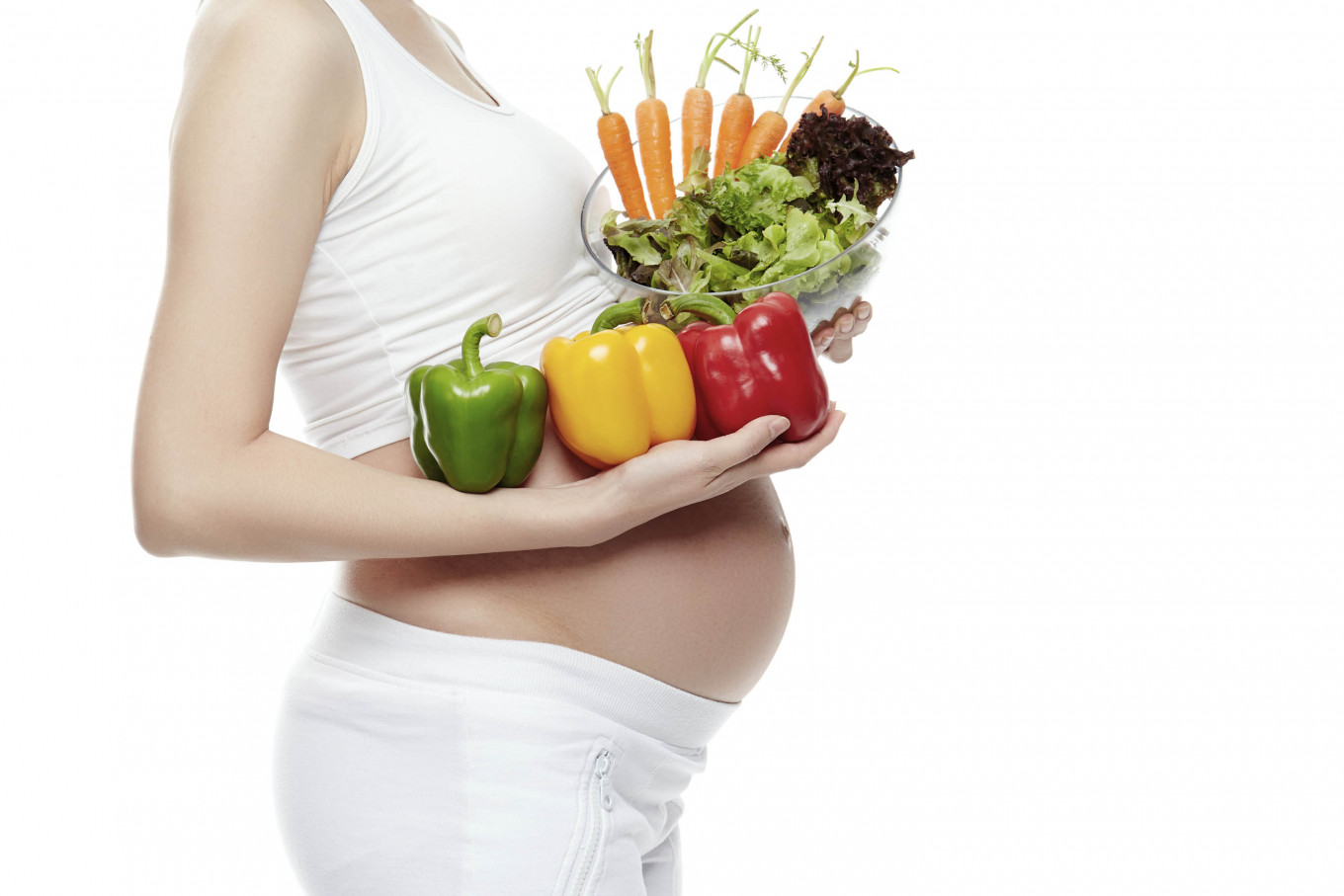
Women are often responsible for preparing the meals, yet they eat last and least, with no special consideration for their nutrition if they become pregnant. A malnourished mother is more likely to give birth to low birthweight and malnourished babies.
Prenatal nutrition and poor nutrition in infancy and early childhood are linked to stunting and the development of noncommunicable diseases in adulthood, including obesity, hypertension, heart disease and diabetes.
In Indonesia, nearly half of pregnant women are anemic, according to the 2018 Basic Health Research (Riskesdas). Anemia among pregnant women adversely affects the development of the fetus and increases the risk of mortality and morbidity for the mother and newborn. This has contributed to 27.67 percent of children suffering from stunted growth in the country (Riskedas 2018).
The government has been working to reduce stunting rates, including the launch of its national strategic Integrated Nutrition Interventions for Stunting Reduction and Prevention program in August 2017. Despite this, most communities have limited awareness about nutrition and its role in pregnancy and birth outcomes. For reduction efforts to be successful, a multistakeholder approach that addresses gender norms and involves families and communities is necessary.