The Jakarta Post
Please Update your browser
Your browser is out of date, and may not be compatible with our website. A list of the most popular web browsers can be found below.
Just click on the icons to get to the download page.


Popular Reads
Top Results
No results found. Please check your search term and try again
Can't find what you're looking for?
View all search results
Popular Reads
Top Results
No results found. Please check your search term and try again
Can't find what you're looking for?
View all search resultsTackling food waste will benefit RI: Experts
Companies yield $14 in return for every $1 invested in reducing food loss and waste, including by measuring waste and changing packaging.
Change text size
Gift Premium Articles
to Anyone
Share the best of The Jakarta Post with friends, family, or colleagues. As a subscriber, you can gift 3 to 5 articles each month that anyone can read—no subscription needed!
 Set as preferred source
L
ocal and global organizations are urging Indonesia to reduce its food waste and loss to not only ensure the availability of nutritious food but also to prevent environmental degradation and financially benefit individuals and businesses.
World Resources Institute (WRI) global director for food, forests and water, Craig Hanson, said companies yielded $14 in return for every $1 invested in reducing food loss and waste, including by measuring waste and changing packaging.
To tackle the problem, Craig cited a coalition of executives called "Champions 12.3" that had called on nations to integrate food loss and waste reduction into climate strategies, pursue the problems as part of COVID-19 responses and follow the “Target-Measure-Act” approach, as quoted by a recommendation paper published on Sept. 24.
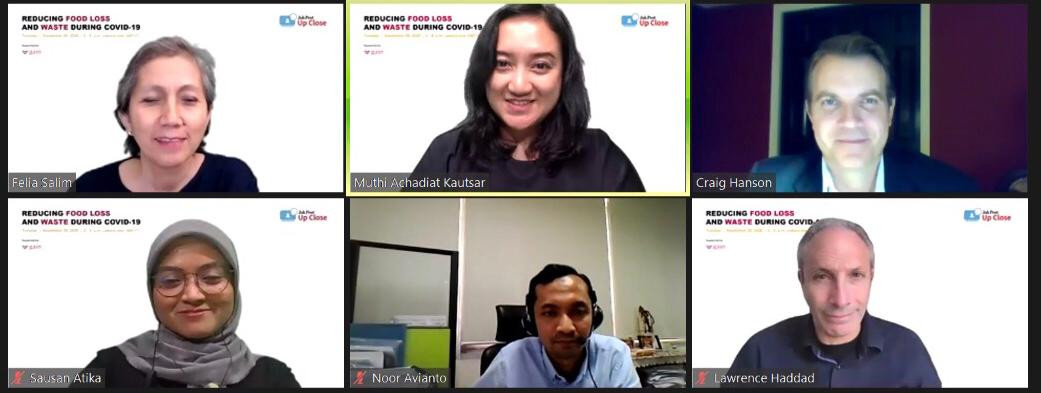
“Now is the time to really take food loss and waste seriously,” Hanson said in a webinar organized by The Jakarta Post and the Global Alliance for Improved Nutrition (GAIN) in conjunction with the International Day of Awareness of Food Loss and Waste on Sept. 29.
Indonesia wastes about 300 kilograms of food per person every year, making it among the largest food wasters in the world, Economist Intelligence Unit (EIU) data revealed.
GAIN executive director Lawrence Haddad said in Tuesday's webinar that food loss was equivalent to nutrition loss and environment loss. Most high nutrients are highly perishable, and the availability of nutritious food is crucial in Indonesia, where high rates of undernutrition and overweight prevail.
The 2018 Basic Health Survey showed that one in three toddlers experienced stunting and nearly half of pregnant Indonesian women suffered from anemia due to micronutrient deficiencies during the same year. COVID-19 is exacerbating the stunting problem as it reduces food accessibility and affordability for households, degrading overall nutrient intake, according to Health Ministry findings.