The Jakarta Post
Please Update your browser
Your browser is out of date, and may not be compatible with our website. A list of the most popular web browsers can be found below.
Just click on the icons to get to the download page.


Popular Reads
Top Results
No results found. Please check your search term and try again
Can't find what you're looking for?
View all search results
Popular Reads
Top Results
No results found. Please check your search term and try again
Can't find what you're looking for?
View all search resultsSustainability and democracy come under threat
Yet, while the government works to get the economy back on track, it must not come at the expense of more lost lives or the push toward a greener and more sustainable economy.
Change text size
Gift Premium Articles
to Anyone
Share the best of The Jakarta Post with friends, family, or colleagues. As a subscriber, you can gift 3 to 5 articles each month that anyone can read—no subscription needed!
 Set as preferred source
O
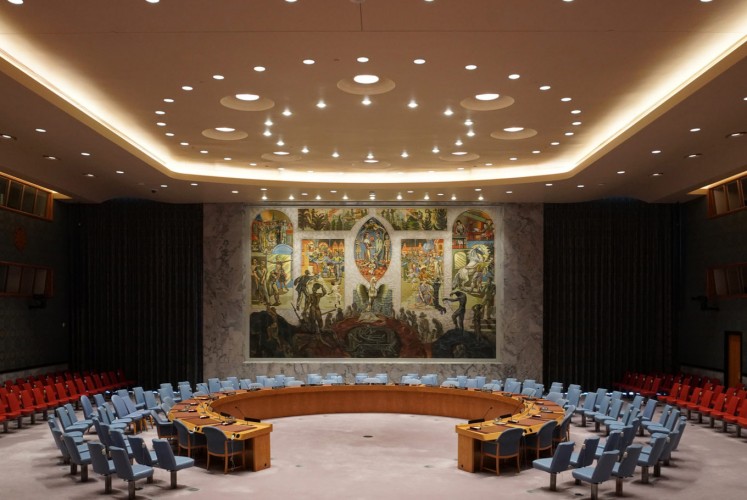
n Sept. 24, the United Nations secretary-general, Antonio Guterres, convened the Climate Ambition Roundtable to reinforce the critical message that addressing climate change remains a top priority and should not be neglected on the pretext of fighting the COVID-19 pandemic.
Meanwhile, the International Day of Democracy was celebrated on Sept. 15 amid gloomy assessments about the current state of democracy around the world, including in Indonesia, a country many had considered to be a rising star.
Guterres has expressed concern about both the fight against climate change and the preservation of democracy. He has declared on multiple occasions that humanity is losing the battle against climate change and also emphasized in a policy paper titled “COVID-19 and Human Rights, We are all in this together” published in April, the risks that the pandemic poses for eroding democratic principles like freedom of expression and freedom of assembly around the world.
Guterres is not the only one raising the alarm about the future of democracy and human rights, with democracy-focused organizations all around the world expressing equal concern.
For example, even before the pandemic, International IDEA, a global organization that promotes democracy, alerted us to this worrying trend in its report Global State of Democracy 2019: Addressing the Ills, Reviving the Promise.
The report highlights that “the practice of existing democracies has disappointed and disillusioned many citizens and democracy advocates” with many democracies, older and younger alike, facing new challenges.
Now back to climate change. On the positive side of the news, both China and South Korea have just made important announcements regarding their commitments to reducing their greenhouse gas emissions, with the former pledging to become carbon neutral by 2060 and the latter declaring a climate emergency and as consequence, pledging to achieve a net zero target by 2050.