The Jakarta Post
Please Update your browser
Your browser is out of date, and may not be compatible with our website. A list of the most popular web browsers can be found below.
Just click on the icons to get to the download page.


Popular Reads
Top Results
No results found. Please check your search term and try again
Can't find what you're looking for?
View all search results
Popular Reads
Top Results
No results found. Please check your search term and try again
Can't find what you're looking for?
View all search results‘Kecil-kecil cabe rawit’, stunting and 1,000 days
The 2018 Riskesdas (Basic Health Survey) estimated that 31 percent of Indonesian children under 5 were destined to a life devastated by stunting.
Change text size
Gift Premium Articles
to Anyone
Share the best of The Jakarta Post with friends, family, or colleagues. As a subscriber, you can gift 3 to 5 articles each month that anyone can read—no subscription needed!
 Set as preferred source
C
abe rawit (bird’s eye chili) are much smaller in size than regular chili peppers, but try chewing one, it could make you run to the nearest fire hydrant to douse the fire in your mouth!
That is why in Indonesia kecil-kecil cabe rawit refers to someone who is small in stature, but who can pack a punch, whether in smarts, bravery or some other special ability, talent or character. Gandhi (1.64 m), Genghis Khan (1.55 m), Lady Gaga (1.55 m) and Kamala Harris (1.57 m) are examples of kecil-kecil cabe rawit people. In Indonesia, our third president, B.J. Habibie (1.62 m) was the shortest, but purportedly also the smartest.
Indonesia is not short of short people, unfortunately most do not belong to the kecil-kecil cabe rawit category who are small due to genetics, but because they are under-fives and they are stunted.
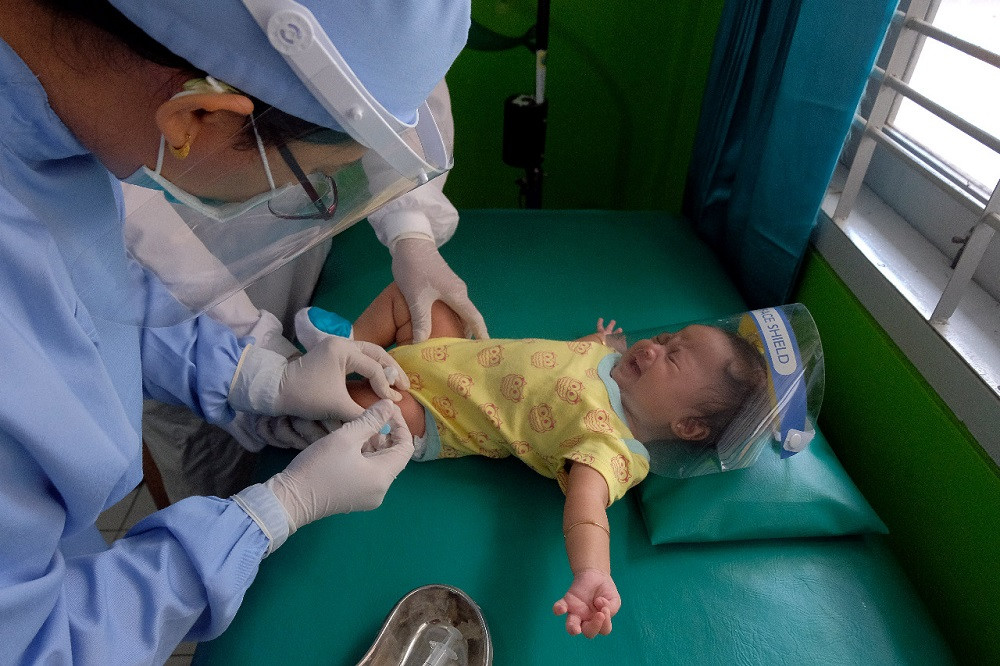
Stunting is caused not just by chronic malnutrition, repeated illness and infections and inadequate psychosocial stimulation, but also by the mother’s health during her pregnancy. Also, lack of access to basic services such as “basic immunization, breastfeeding, dietary diversity, drinking water and sanitation, early childhood education, food insecurity measurements where they live, and a birth certificate to make sure they are in the system”. There has to be a convergence of these key services, and in Indonesia, it is low.
The effects of stunting are devastating for the individual child, the family, community and indeed the nation. It means not only that a child is short, but also that he or she will be a lightweight, in body mass, and even worse, it will permanently limit the child’s physical and cognitive capacity. The ramifications will be felt lifelong, in terms of health, education, employment and earnings, creating a vicious cycle of underdevelopment and poverty that created the stunting in the first place. Once stunting has occurred, it is irreversible.
In 2018, 13 million children under 5 were stunted and 4.5 million were wasted in East Asia and the Pacific. The 2018 Riskesdas (Basic Health Survey) estimated that 31 percent of Indonesian children under 5 were destined to a life devastated by stunting.
Wow! That is already a staggering number but in certain areas it is even higher. There are 10 areas identified as having the worst prevalence of stunting - East and North Nusa Tenggara, West Sulawesi, Gorontalo, Aceh, Central, South and West Kalimantan, and North and Central Sulawesi – up to 48 percent and possibly higher.