The Jakarta Post
Please Update your browser
Your browser is out of date, and may not be compatible with our website. A list of the most popular web browsers can be found below.
Just click on the icons to get to the download page.


Popular Reads
Top Results
No results found. Please check your search term and try again
Can't find what you're looking for?
View all search results
Popular Reads
Top Results
No results found. Please check your search term and try again
Can't find what you're looking for?
View all search resultsWhat the West needs to understand about the cartoon protests
What angered Muslims was President Macron’s statement that “we will not give up caricatures and drawings, even if others back away”.
Change text size
Gift Premium Articles
to Anyone
Share the best of The Jakarta Post with friends, family, or colleagues. As a subscriber, you can gift 3 to 5 articles each month that anyone can read—no subscription needed!
A
s if COVID-19 and the economic recession were not enough, the world today has to bear with a wrangle between France and the Islamic world, sparked by controversy over President Emmanuel Macron’s recent statements about Islam. Macron made his comments after the gruesome beheading of French teacher Samuel Paty, who had shown a cartoon of Prophet Muhammad to his students as part of a class discussion.
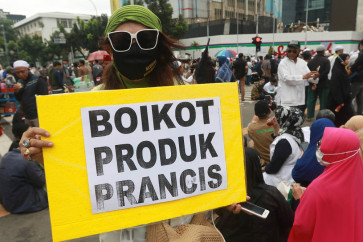
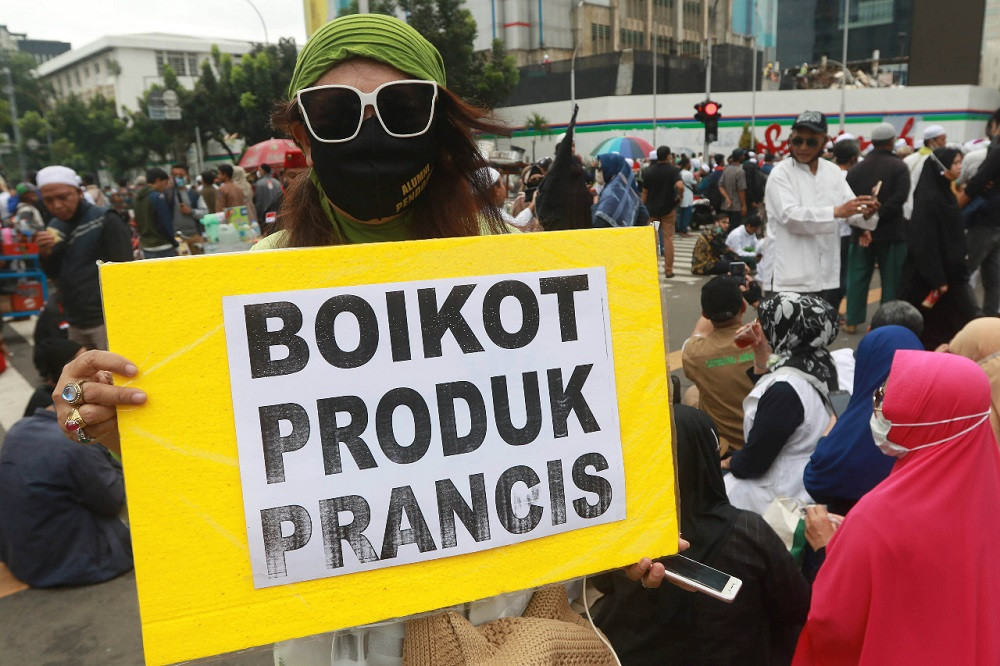
To be sure, Muslims do not condone — indeed they condemn — the killing of the teacher. What angered Muslims was President Macron’s statement that “we will not give up caricatures and drawings, even if others back away”. In response, Muslims around the world —in Indonesia, Malaysia, Bangladesh, Pakistan, Turkey, Africa and the Middle East — took to streets. It has also led to diplomatic tension between France and several governments that have condemned Macron’s statement, as well as calls to boycott French products.
This Macron controversy, which has calmed down a little, is yet another episode in a long-standing squabble between the West and the Islamic world regarding a caricature of Prophet Muhammad.
This “cartoon debate” is not likely to be settled anytime soon because each side sees it from a totally different perspective. The West sees it strictly from the viewpoint of freedom of speech, while Muslims sees it as an assault on their religion.
I am a Muslim who studied at a madrasah (Islamic boarding school) in Indonesia and then spent half of my life studying and working in the West. I have yet to meet a Westerner who genuinely understands why Muslims are outraged by the cartoon issue. From their biased viewpoint, the mockery of the cartoon is a trivial matter.
But in Islam, Prophet Muhammad is sacrosanct. He is the last in a long line of Prophets, and Allah addressed humanity through his spoken words, which are recorded in the Holy Quran. When one becomes a Muslim, he/she only needs to recite shahadat (attestation) that there is no God but Allah and Muhammad is His messenger. Five times a day, as they pray, they repeat this testimony.
In Muslim gatherings, including Friday prayer, every time the imam mentions the Prophet’s name, the whole congregation repeats it and says “peace be upon you”. When millions of Muslims perform the pilgrimage in Mecca, they stop by in Medina to pay their respects at the tomb of the Prophet, where, overcome with emotion, they weep. To a Muslim, Prophet Muhammad’s life, his thoughts, words, actions — to the smallest detail, form a guidance in life. That is why Muhammad is the most common name in the world.