The Jakarta Post
Please Update your browser
Your browser is out of date, and may not be compatible with our website. A list of the most popular web browsers can be found below.
Just click on the icons to get to the download page.


Popular Reads
Top Results
No results found. Please check your search term and try again
Can't find what you're looking for?
View all search results
Popular Reads
Top Results
No results found. Please check your search term and try again
Can't find what you're looking for?
View all search resultsReady for the dry years: Building resilience to drought in Southeast Asia
It is crucial that we understand how recurrent droughts and the current pandemic are interacting, to identify appropriate policies that can address these crises simultaneously.
Change text size
Gift Premium Articles
to Anyone
Share the best of The Jakarta Post with friends, family, or colleagues. As a subscriber, you can gift 3 to 5 articles each month that anyone can read—no subscription needed!
 Set as preferred source
S
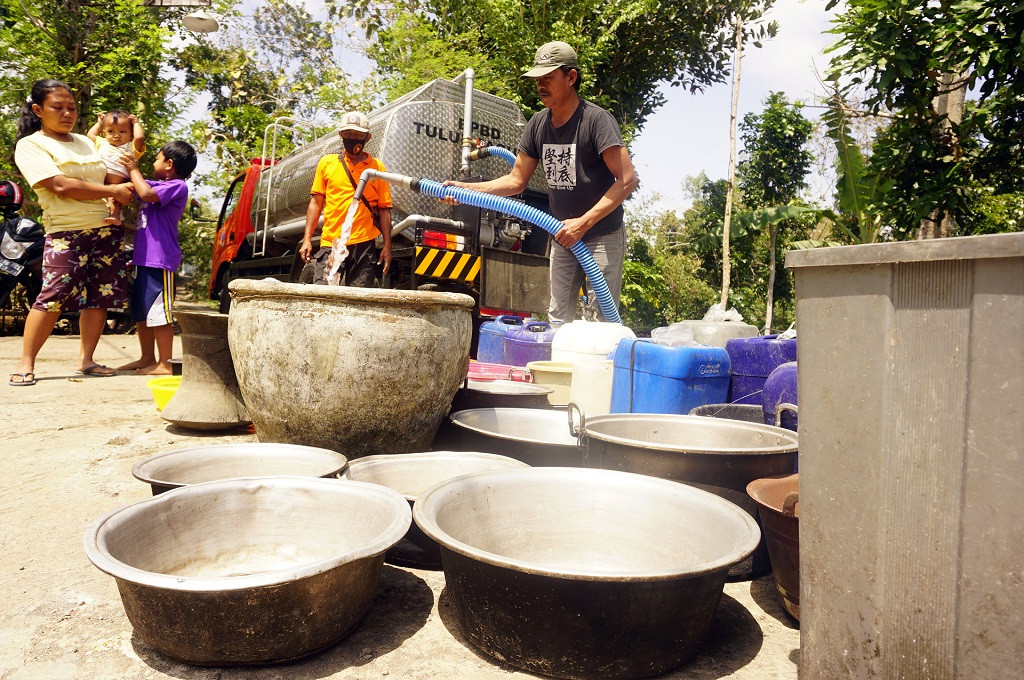
outheast Asia has long endured severe droughts, which occur on average every five years. The prolonged 2015 and 2018 droughts were the worst on record for two decades. They simultaneously affected more than 70 percent of the land area, with over 325 million people exposed.
No ASEAN member states was spared from the devastating impacts including the disruption to livelihoods and food security, as well as forest fires and haze.
The drivers of drought risk in South-East Asia are inherently complex, resulting in considerable year-to-year variations. Drought is heavily influenced by various climatic drivers, mainly the El Niño-Southern Oscillation (ENSO) and Indian Ocean Dipole (IOD). Yet, despite this complexity, clear trends point to an intensifying drought risk across the region.
New analysis of observed data and climate projections in the second edition of Ready for the Dry Years: Building Resilience to Drought in Southeast Asia, a joint report by the United Nations Economic and Social Commission for Asia and the Pacific (ESCAP) and Association of South-East Asian Nations (ASEAN) reveals a statistically significant increase in temperature from 1981-2020, that is expected to continue. This means that drought severity will increase as the climate gets warmer.
This urgency has been enhanced by the COVID-19 pandemic, which has converged with the climate crisis. Both disasters have simultaneously disrupted people’s health, livelihoods and supply chains across the region. These compounding impacts have led to severe economic stress and undermined the ability of the region to deal with current and future disaster risks.
It is crucial that we understand how recurrent droughts and the current pandemic are interacting, to identify appropriate policies that can address these crises simultaneously.
ASEAN and ESCAP are working together to prevent the destructive impacts of droughts by promoting a paradigm shift towards more adaptive drought risk management and governance. This cooperation is anchored in a forward-looking, science-based approach to drought risks. The adaptive policy interventions must support the most vulnerable and those furthest behind in the region.