The Jakarta Post
Please Update your browser
Your browser is out of date, and may not be compatible with our website. A list of the most popular web browsers can be found below.
Just click on the icons to get to the download page.


Popular Reads
Top Results
No results found. Please check your search term and try again
Can't find what you're looking for?
View all search results
Popular Reads
Top Results
No results found. Please check your search term and try again
Can't find what you're looking for?
View all search results[INSIGHT] Poor virus handling: Warning to reshape RI’s scientific literacy
The government has made a series of imprudent decisions in handling the COVID-19 pandemic.
Change text size
Gift Premium Articles
to Anyone
Share the best of The Jakarta Post with friends, family, or colleagues. As a subscriber, you can gift 3 to 5 articles each month that anyone can read—no subscription needed!
 Set as preferred source
A
fter one year since the emergence of the coronavirus in December 2019, Indonesia is still nowhere near controlling it. We have also learned that not everyone has a sufficient foundation of knowledge to cope with a large-scale pandemic in Indonesia. Not only can civilians unknowingly follow incorrect information and conspiracy theories, but also government officials are, to some degree, lacking proper scientific understanding as seen from their confusing policy-making during the pandemic.
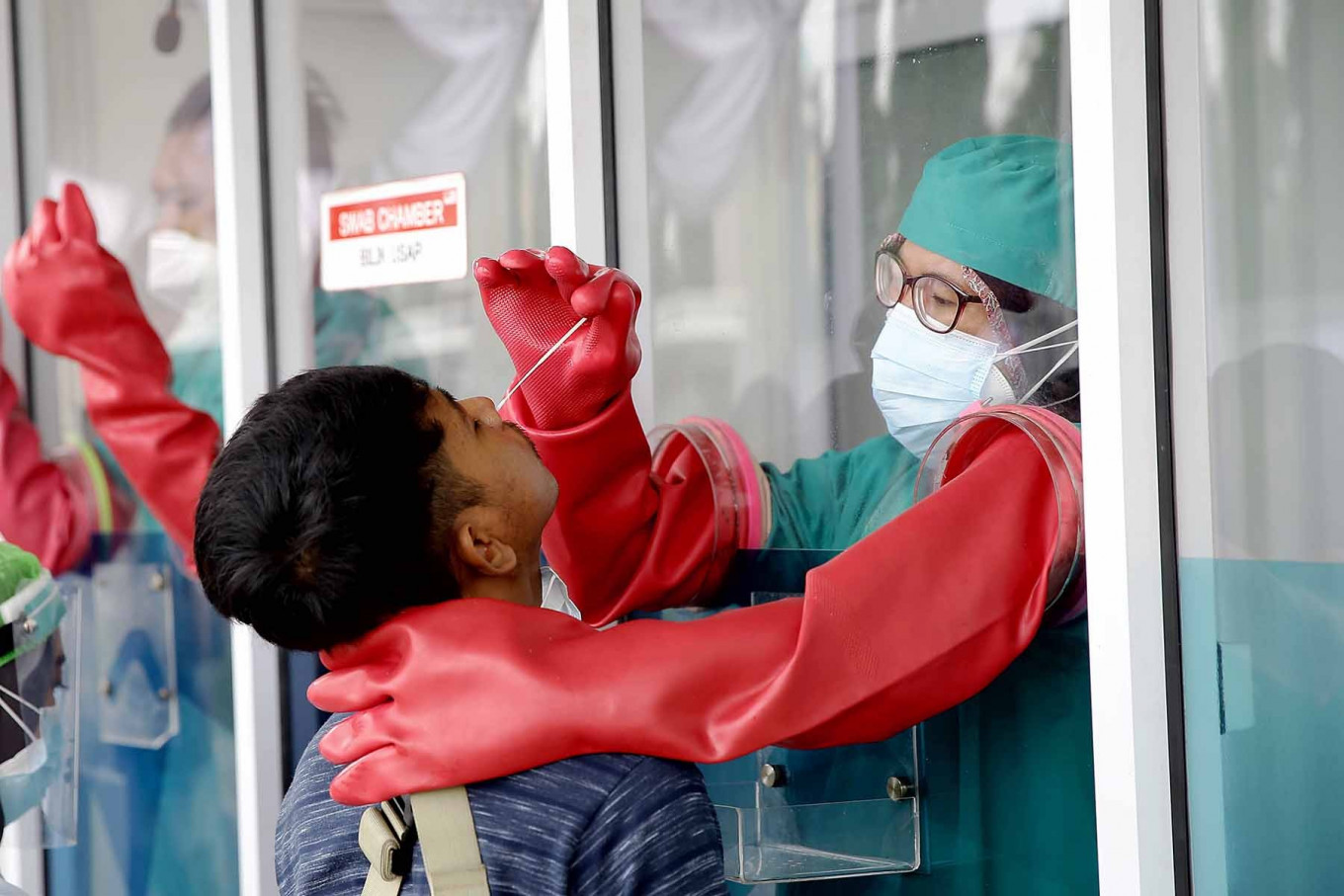
The government has made a series of imprudent decisions in handling the COVID-19 pandemic. At the beginning, when the public demanded more diagnostic kits to curb the spread of the disease, the government went for the rapid test option despite resistance from medical professional organizations and a WHO statement saying that rapid tests should only be used for epidemiological studies. Despite all the scientific grounding, rapid tests are still widely used in Indonesia.
One of the most controversial episodes was when the Agriculture Ministry introduced its so-called Anti-Corona Necklace, made from eucalyptus extract. The ministry officials claimed it could kill the coronavirus in minutes. It was an entirely unfounded claim without any reliable scientific basis. The product, which was initially planned for mass production, did not even go through clinical trials, nor had it been published in a peer-reviewed journal and thus was met with resistance from the public and scientists.
More recently was the government's initiative to start mass COVID-19 vaccination in November 2020 despite none of the vaccines having passed phase 3 clinical trials and a lack of sufficient publications on safety and efficacy, which means the vaccine has no safety guarantee. Fortunately, the government canceled this plan after heeding the advice of several medical professional organizations not to start mass vaccination until sufficient scientific data on safety and efficacy had been gathered.
This has made it obvious that we are not only fighting the coronavirus pandemic, but also severe misinformation and illiteracy. This has also resulted in many people losing their trust in health workers, accusing them of intentionally seeking financial gain from the pandemic or deliberately increasing the number of COVID-19 patients to multiply revenue.
This finding is not intriguing since research on the World`s Most Literate Nation by Central Connecticut State University in 2016 put Indonesia 60th out of 61 surveyed nations. Moreover, numerous studies agree that conspiracy theories usually arise as a result of a lack cognitive tools to process logical reasoning. Therefore, scientific illiteracy or misinformation is indeed a severe COVID-19 comorbidity we have to deal with seriously during this pandemic.
Based on a recent survey by Statistics Indonesia (BPS), 17 percent of Indonesians, or around 45 million people, do not believe that COVID-19 exists despite all the scientific evidence. Similarly, in a survey by the University of Indonesia on September, 21 percent of respondents said they believed COVID-19 was a conspiracy of global elites. I believe that almost all medical workers in the field have met at least one person who does not believe in COVID-19.