The Jakarta Post
Please Update your browser
Your browser is out of date, and may not be compatible with our website. A list of the most popular web browsers can be found below.
Just click on the icons to get to the download page.


Popular Reads
Top Results
No results found. Please check your search term and try again
Can't find what you're looking for?
View all search results
Popular Reads
Top Results
No results found. Please check your search term and try again
Can't find what you're looking for?
View all search resultsPapua: Reminiscence of the past, hope of the future
Today, Papua’s regional gross domestic product (GDP) growth has in recent years exceeded the national figure, and in West Papua the growth has been steadily rising every year.
Change text size
Gift Premium Articles
to Anyone
Share the best of The Jakarta Post with friends, family, or colleagues. As a subscriber, you can gift 3 to 5 articles each month that anyone can read—no subscription needed!
 Set as preferred source
F
or the better part of history post-1945, the discourse on Papua has been on inequity. As a young nation still trying to find its own footing, Indonesia may have neglected development in the country’s easternmost region. This lack of development is deemed part of Papua’s present problems.
Yet highlighted by efforts to bridge the gap in development, today the eastern regions of Indonesia showcase remarkable growth and hope. Amidst this optimism, problems of the past still linger, turning Papua into both the reminiscence of our past and the hope of our future.
Despite enjoying consistently high economic growth from the 1970s to the first half of the 1990s, Indonesia’s strategy to distribute wealth from the growth centers of Bali, Java, Kalimantan and Sumatra to the eastern provinces missed some of its goals. Some regions such as Papua and West Papua were not able to enjoy development on a par with the western provinces. The implications were wide as politically, socially and economically, some regions became much less advanced than others – giving rise to discontent and feelings of discrimination.
The dawn of the Reform Era proved to be the turning point, as Indonesia made significant advances toward the fulfillment of democracy – notably by holding its first ever direct presidential election in 2004. This has finally brought unequal development into the spotlight; as an issue that needs to be heavily prioritized. And so it has.
Since the inception of the special autonomy status in 2001, Papua, and a few years later West Papua, has enjoyed relatively good progress. Today, Papua’s regional gross domestic product (GDP) growth has in recent years exceeded the national figure, and in West Papua the growth has been steadily rising every year. Regional GDP per capita of Papua today stands at more than Rp 56 million (US$4,000), surpassing its initial target of Rp 40 million by 2025 as first mandated in its long-term plan in 2005.
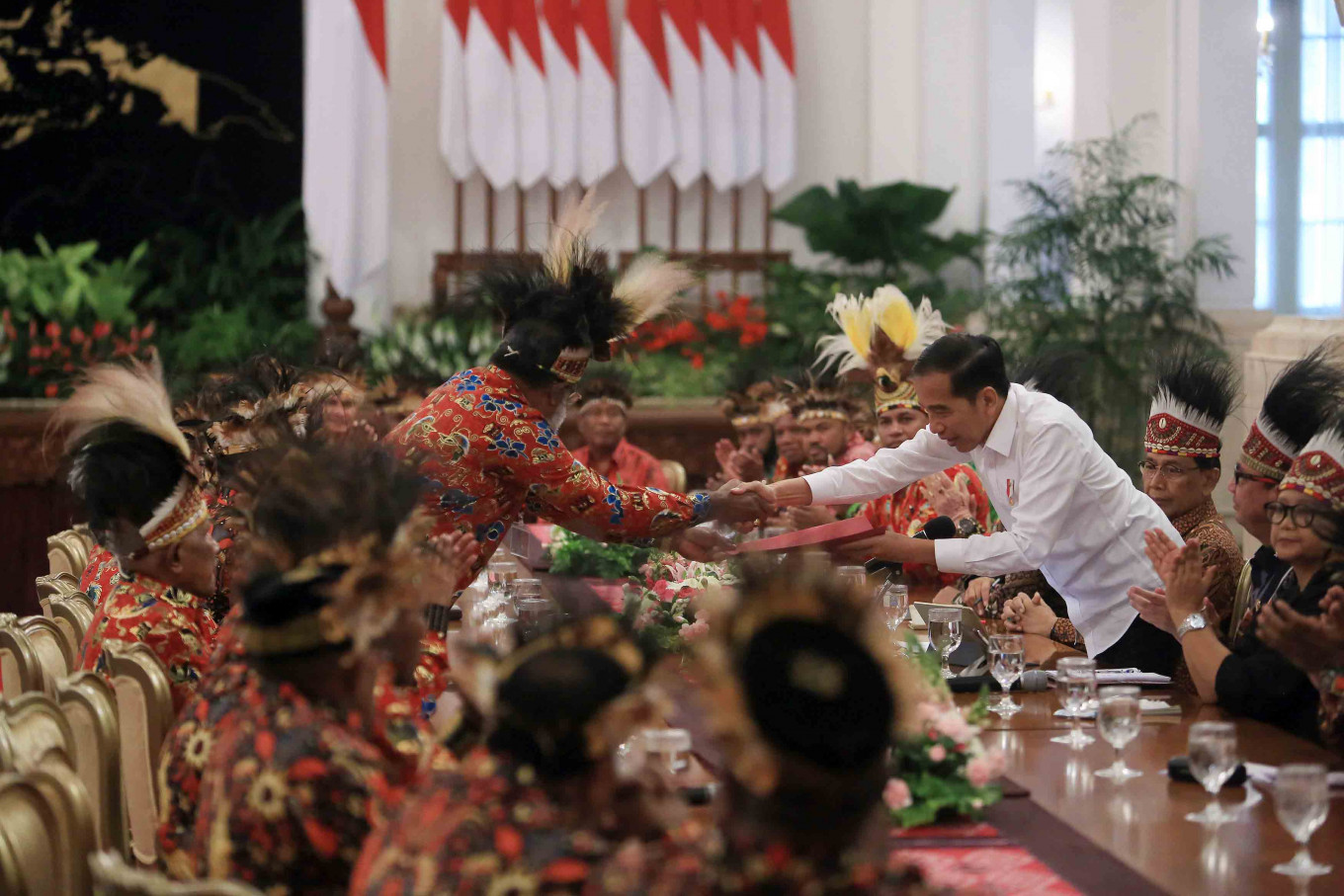
Development in the economy is echoed by development in politics. During the 2019 presidential election, even Jakarta’s record-breaking voter turnout of 79 percent pales in comparison to the figure in Papua and West Papua, which recorded 94 and 88 percent respectively. There is no sense of apathy toward politics, instead there is a sense of belonging, as people understand their vote matters and want to be part of the development.
Moreover, 91 percent in Papua and 80 percent in West Papua voted for the incumbent President Joko “Jokowi” Widodo. This proves a good satisfaction level toward the government as people believe they have received the benefits and want more of the same for the next five years.