The Jakarta Post
Please Update your browser
Your browser is out of date, and may not be compatible with our website. A list of the most popular web browsers can be found below.
Just click on the icons to get to the download page.


Popular Reads
Top Results
No results found. Please check your search term and try again
Can't find what you're looking for?
View all search results
Popular Reads
Top Results
No results found. Please check your search term and try again
Can't find what you're looking for?
View all search results[INSIGHT] Save one, save 1,000: Serious government intervention needed to protect health workers
Medical doctor and current coordinator of COVID-19 doctors at INCO Sorowako Hospital; recipient of the Education Endowment Fund (LPDP) scholarship for a master program at University College London
Change text size
Gift Premium Articles
to Anyone
Share the best of The Jakarta Post with friends, family, or colleagues. As a subscriber, you can gift 3 to 5 articles each month that anyone can read—no subscription needed!
 Set as preferred source
While Indonesia’s testing rate for COVID-19 remains below the international standard, the number of infections and deaths in the country is the highest in Southeast Asia. Although we have been battling the pandemic for more than nine months, we have failed to learn from our mistakes and from the successes of other countries.
Indonesia`s flaws since the beginning are nothing different. Poor performance in testing, tracing and treatment, and the government’s failure to enforce a stringent COVID-19 policy are the issues that have prevailed through to the end of this year. However, this also indicates that the health sector is by no means a priority in Indonesia, even during a pandemic.
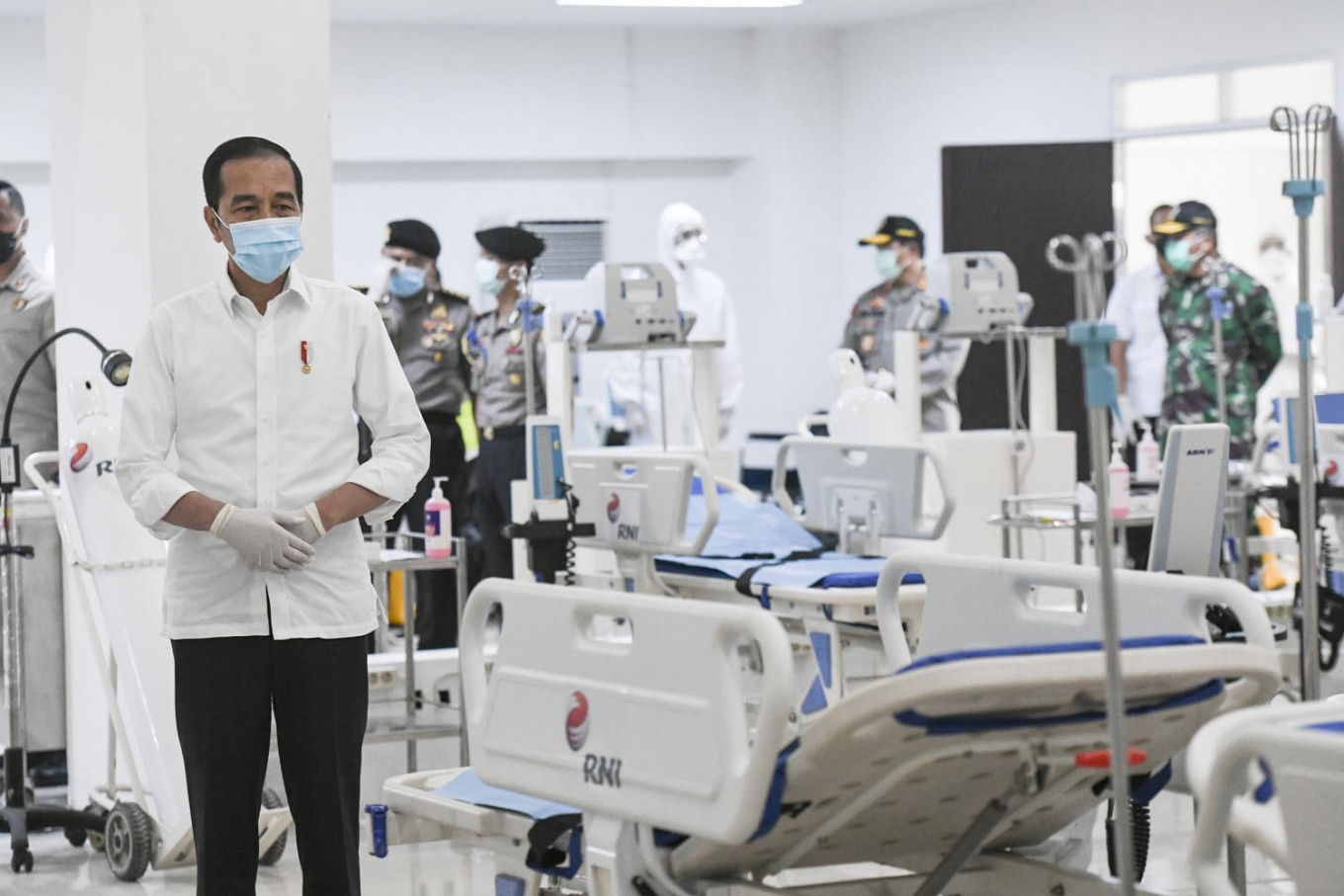
Since Indonesia’s two initial cases of COVID-19 were announced, neither the healthcare sector nor the safety and security of health workers have received the proper attention they deserve. The government, to some extent, is more concerned about the economy than putting its maximum efforts in saving public health. As a result, not only have thousands of people died from COVID-19, but the country’s fatality rate for frontline health workers also exceeds that of any other country in Southeast Asia.
Unfortunately, although the death toll among health workers reached 200 by Dec. 13, we have not seen any meaningful policy interventions from the government to address this issue.
The latest indication of the government’s negligence was its push to proceed with the regional elections on Dec. 9 despite the upward trend in the daily infection rate, with a record 8,369 cases on Dec. 3. It is no wonder that many puskesmas (public health centers) are facing an unnecessary surge in COVID-19 cases that have exposed their health workers to greater risk.
The elections took place in 270 regions anyway, leaving health workers to be held accountable for the public health consequences of the political event, including a foreseeable rise in COVID-19 cases in those regions. The Indonesian Medical Association (IDI) was among those that called for the elections to be postponed.