The Jakarta Post
Please Update your browser
Your browser is out of date, and may not be compatible with our website. A list of the most popular web browsers can be found below.
Just click on the icons to get to the download page.


Popular Reads
Top Results
No results found. Please check your search term and try again
Can't find what you're looking for?
View all search results
Popular Reads
Top Results
No results found. Please check your search term and try again
Can't find what you're looking for?
View all search resultsWork and the future
If we do not provide a platform for people to engage and express their point of view on automation or new technologies, they might be left behind.
Change text size
Gift Premium Articles
to Anyone
Share the best of The Jakarta Post with friends, family, or colleagues. As a subscriber, you can gift 3 to 5 articles each month that anyone can read—no subscription needed!
 Set as preferred source
R
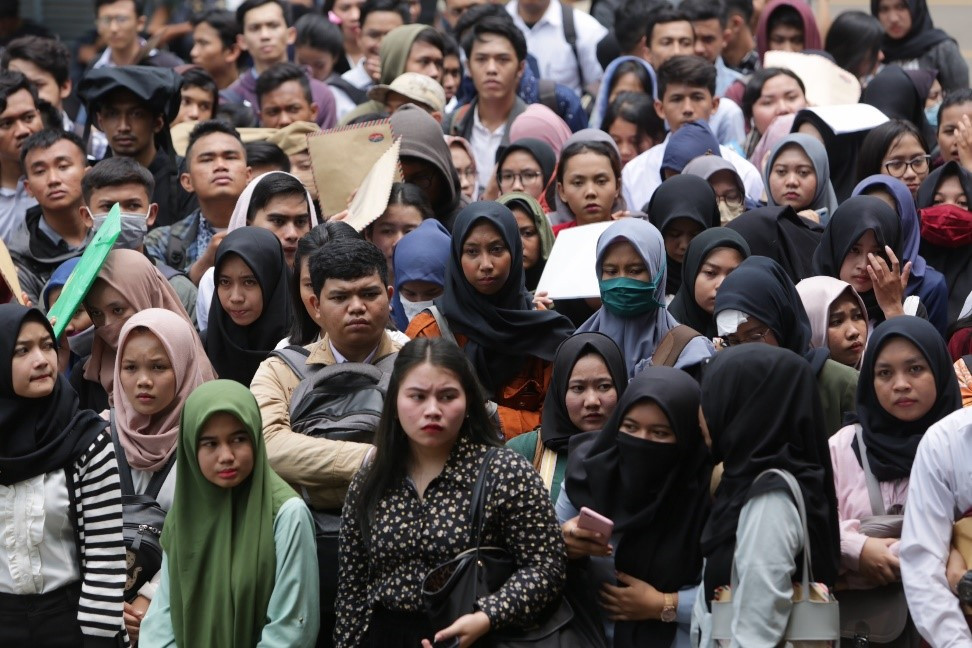
esearch shows that a lot of job types will be phased out in the coming decades. A World Economic Forum (WEF) report shows an ongoing shift in the division of labor between humans, machines and algorithms, which might disrupt up to 85 million jobs worldwide in the next five years. At the same time, 97 million new roles may emerge. By 2025, industry expects to displace roughly 6 percent of the total workforce and one in two workers will need reskilling, and 40 percent of those in the same roles will need to update their skills to adapt to the changing labor market (WEF, 2020).
As the pace of change in the labor market is happening very quickly, it is important to act promptly and start a meaningful discussion of its future in depth.
The global pandemic has accelerated the changes people experience in the way they live, work and learn. The International Labor Organization, in addition, has warned that automation and technology will have a disproportionately negative impact on the working possibilities of young people, women and other vulnerable groups.
Just in the Group of 20 countries alone, 154 million youngsters go without education, employment or proper training. Shockingly, two out of three are women and this statistic has not changed in the last few decades. Some 44 million employees in the G20 under 30 are unemployed and 36 million of them remain in poverty as their jobs do not provide them either with a decent wage or any social safety net (WEF, 2020).
At the same time, the COVID-19 pandemic has caused school closures and forced students into learning from home. This makes the whole situation very complicated as not all students have access to the internet or the required devices for access. This results in accumulated problems for the most vulnerable.
The global survey released by Save the Children (2020) shows that more than 1.6 billion learners worldwide experienced closure of their school facilities due to the pandemic. Fewer than 1 percent of children from poor families have access to the internet for remote learning. Under these conditions, they have no chance to enjoy quality education the way the more well-to-do have. The implication of this will be that the poor will have difficulty competing with even the middle class in the job market after they graduate. For this reason, the state has to defend the marginalized, those that do not have access to basic information, finance or resources.
If we do not provide a platform for people to engage and express their point of view on automation or new technologies, they might be left behind.