The Jakarta Post
Please Update your browser
Your browser is out of date, and may not be compatible with our website. A list of the most popular web browsers can be found below.
Just click on the icons to get to the download page.


Popular Reads
Top Results
No results found. Please check your search term and try again
Can't find what you're looking for?
View all search results
Popular Reads
Top Results
No results found. Please check your search term and try again
Can't find what you're looking for?
View all search resultsIndonesian thought leadership critical for Indo-Pacific strategies
One of the first things Indonesia must do is lead, listen and counsel ASEAN accordingly.
Change text size
Gift Premium Articles
to Anyone
Share the best of The Jakarta Post with friends, family, or colleagues. As a subscriber, you can gift 3 to 5 articles each month that anyone can read—no subscription needed!
 Set as preferred source
P
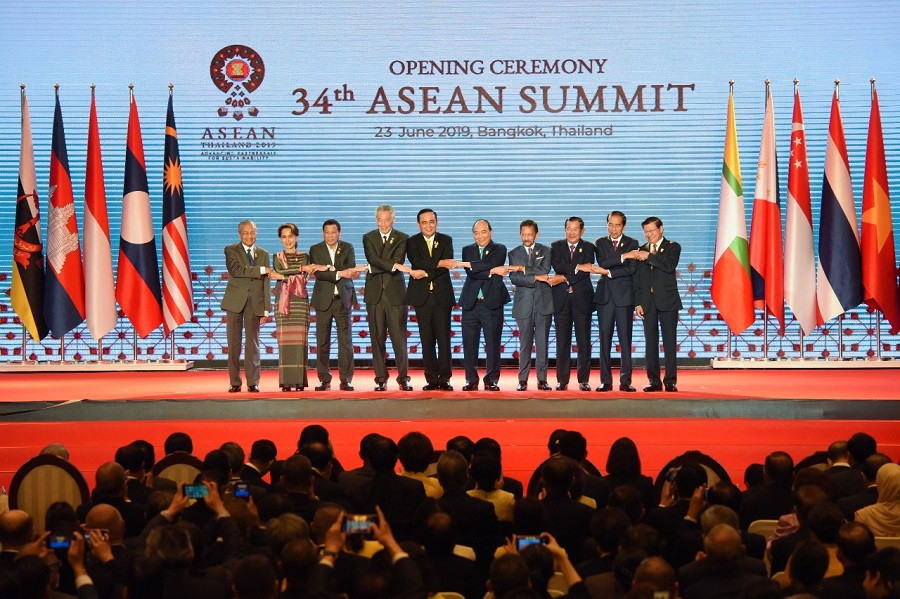
rior to the global recognition of the concept of the Indo-Pacific – which is dominating the nomenclature of the region in current international relations discourse, much to the advantage of Jakarta – Indonesia's foreign policy, despite the country’s vast geography, works within the quadruple contexts of the United Nation, the Non-Alignment Movement (NAM), more recently the Group of 20, of which Indonesia is a full member, and ASEAN. It could be called a matrix of four.
Thus, while Asia writ large has served as the backdrop of Indonesian foreign policy, Jakarta is always looking for a larger avenue, equal to its size and ambition. The "global maritime fulcrum" is one such concept, as is "dynamic equilibrium" and the "ASEAN Community as part of the International Community".
But without a more nuanced understanding of Asia, Indonesia will also miss out on its many strengths. To begin with, when Japanese Prime Minister Suga Yoshihide made his maiden trip abroad, he chose Indonesia and Vietnam. The reasons were simple;
Vietnam is a key part of Indo-China that has always had the anticolonial mentality of resisting foreign invasions, while Indonesia is an archipelago politely masquerading as a state. It is against any form of colonialism that can violate its sovereignty, which in more ways than one is Indonesia's "sakti" (sacred power).
But as vast as Indonesia is, some historians have averred that the word "Asia" was derived from the Phoenician word “asa” which means "east". The Ancient Romans picked up the word from the Greeks. Indonesia has always understood its power in the context of how various colonial powers might want to ensnare it.
This includes the East India Company, the Dutch East India Company, the Japanese Imperialist Forces, only to begin to end with the formation of the NAM and the creation of ASEAN on Aug. 8, 1967.
Indonesia is indeed part of the enlarged geography of the Indo-Pacific, enclosed by the Indian Ocean, Natuna Island near the gateway to the South China Sea and the South Pacific.