The Jakarta Post
Please Update your browser
Your browser is out of date, and may not be compatible with our website. A list of the most popular web browsers can be found below.
Just click on the icons to get to the download page.


Popular Reads
Top Results
No results found. Please check your search term and try again
Can't find what you're looking for?
View all search results
Popular Reads
Top Results
No results found. Please check your search term and try again
Can't find what you're looking for?
View all search resultsThe Last Man in Waluya Sejati Abadi
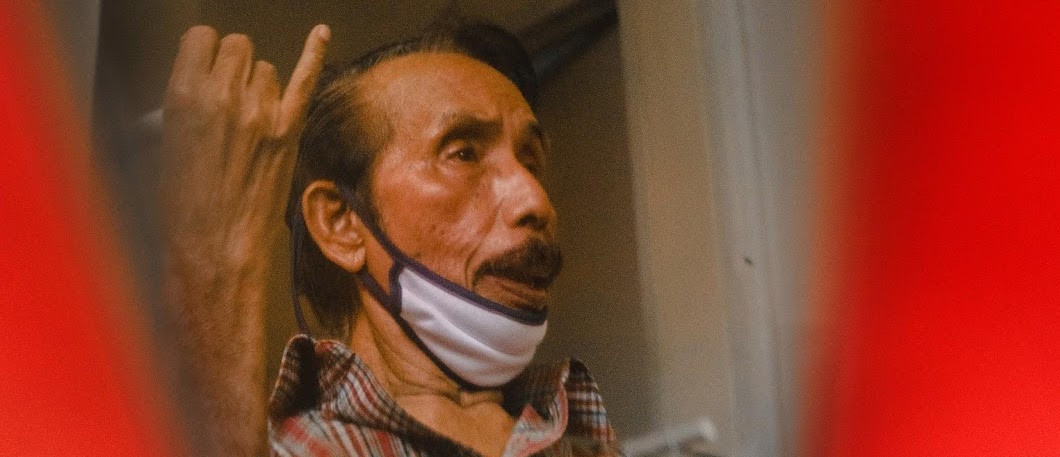
He is the last man standing in a nursing home dedicated to former political prisoners. But Lukas Tumiso doesn’t want your pity as he discusses perseverance, scandal and survival in the first of this two-part story.
Change text size
Gift Premium Articles
to Anyone
Share the best of The Jakarta Post with friends, family, or colleagues. As a subscriber, you can gift 3 to 5 articles each month that anyone can read—no subscription needed!
 Set as preferred source
Part 1. Regaining life
Lukas Tumiso refuses to mourn the things he’s lost. He has left remnants of better days around him, pictures and books from a faraway time, reminders of his desire to carry on. They sustain him in this difficult time. “There were 27 of us here, and another 54 on the waiting list,” the 81-year old said. “But one by one they passed away, and now I’m the only one left.”
Panti Waluya Sejati Abadi, the nursing home where he lives, has been deserted for over a year. All its residents have either died or moved away during the pandemic, leaving Lukas alone. No nurse checks on him, no staff ensures his safety. But the paint is new, the roof recently fixed and the smell of freshly cooked lunch lingers in the kitchen. Neighbors drop by almost every hour, exchanging pleasantries and food. There is life in this building.
Initiated in 2004, Waluya Sejati Abadi was set out to be a safe haven for former political prisoners who fell into hard times in their old age. Specifically, those whose lives were turned upside down by the 1965-66 massacre of suspected Communist sympathizers, which left millions dead and scores more jailed, sent to forced labor camps, and disenfranchised for life.
Nestled in a small neighborhood in Senen, Central Jakarta, Waluya Sejati Abadi was a treasure trove of stories from a part of Indonesian history many would rather forget. It was home to former party agitators, jailed activists and hardened survivors. Like an army of fabulists, they would regularly host researchers, activists and curious students. Telling their story was a way of preserving themselves in eternity.
Lukas was among them. Once a respected school teacher, his membership in a youth organization with suspected links to the now-defunct Indonesian Communist Party (PKI) landed him in hot water. He was arrested in 1969 and sentenced to indefinite exile in the forced labor camp in Buru, a remote island near Sulawesi. He stayed there, his fate uncertain, for 10 long years.
In Buru, he struck up a lifelong friendship with fellow inmate Pramoedya Ananta Toer, a celebrated author arrested for his membership in the leftist cultural organization LEKRA. Upon Lukas’ release in 1979, he smuggled the manuscript of Pramoedya’s magnum opus, Bumi Manusia (This Earth of Mankind), in the folds of his ragged luggage. The book shook Indonesian society to its very foundations, and the rest, as they say, is history.